Record copper prices are reshaping India's metals and electricals chain, putting the copper GST cut debate at the center of a growing copper working capital challenge.
With the London Metal Exchange price crossing USD 14,700 a ton this month, the cost of financing copper inventories and processing has risen sharply across the manufacturing value chain.
The Indian Primary Copper Producers Association is pressing for a copper GST cut, seeking to reduce GST on a range of copper products from 18 percent to 5 percent.
It argues that up to USD 3.6 billion of working capital is stuck in tax payments. The strain is spreading from smelters to cable makers, who are cutting stocks to days.
The development adds another layer to the broader Indian copper manufacturing story as producers prepare for rising domestic demand.
Yet the deeper challenge is structural: India wants more copper smelting capacity and refining capacity but lacks the concentrate to feed it. Tax, liquidity and copper raw material security now collide.
The Indian Primary Copper Producers Association want GST on a range of copper products cut from 18 percent to 5 percent. The proposed copper GST reduction comes as record copper prices in India and global markets are increasing the amount of capital required to finance every stage of the supply chain.
The association's president, Rohit Pathak, says the change could unlock as much as USD 3.6 billion of working capital tied up in tax payments. Copper prices have set repeated records this year, and crossed USD 14,700 a ton on the LME this month.
The GST burden scales with the market. Because tax is calculated on transaction value, every rally in copper prices enlarges the base on which the levy applies. For producers, this can increase the financing requirement between procurement, processing and eventual sale.
Pathak says Hindalco Industries operates on a roughly three-month concentrate cycle, so tax paid on feedstock stays locked through processing and sales. The issue becomes particularly significant for producers dependent on imported raw materials and long copper supply chains.
Industry leaders say the levy diverts capital from a sector in the middle of a multibillion-dollar investment push.
Three pressure points stand out:
Also Read: Synthetic Engine Oils Optimizing Friction, Wear, and Fuel Economy
Cable makers and dealers are sharply reducing inventories, now measured in days rather than weeks, as stockpiling becomes costly. The trend highlights the growing importance of copper inventory management as manufacturers try to control cash tied up in raw materials.
Tighter inventory management protects cash, but it removes the cushion that once absorbed swings in copper input costs. Lean stocks leave little room for error, a slight delay in raw-material arrivals can lead to immediate production halts.
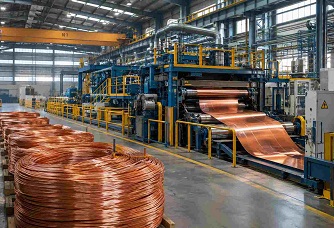
Copper feeds a wide range of downstream copper manufacturing, including:
Suppliers under fixed-price tenders, or smaller units with limited bargaining power, may have to absorb the high input cost and accept thinner margins, while producers with metal-linked pricing can pass on increases to the consumers.
The tax debate sits inside a larger structural problem. The Ministry of Mines' Copper Vision Document identifies limited domestic raw-material availability, import dependence, processing-technology gaps and competition from imported refined copper as core challenges.
The Ministry of Mines' Copper Vision Document also identifies the need to strengthen raw-material security, recycling and copper processing capabilities.
Union Minister G. Kishan Reddy has highlighted copper's importance to energy transition, infrastructure, EVs and solar power, while the government's vision calls for an additional 5 million tons per annum of smelting and refining capacity by 2030.
Refining is capital-intensive and Indian refiners face borrowing costs of 8-9 percent. The expansion would require substantial capital expenditure, processing technology and supply-chain development.
If more cash is absorbed by working-capital requirements caused by high metal prices and taxation, less liquidity is available for investments that could expand domestic capacity.
Also Read: Smart Electronics Manufacturing Powered by Advanced AIDC
A rate cut could help in three ways:
But GST alone cannot solve:
The Copper Vision Document calls for greater recycling, secondary refining, additional smelting and refining capacity, and overseas mineral assets. Any rate change would also be for the GST Council to weigh against revenue considerations.
The likelier outcome is that GST relief eases cash pressure while the harder work of securing raw material and closing processing gaps continues.






We use cookies to ensure you get the best experience on our website. Read more...