

Undergoing a transformational phase, India’s industrial lab and IVD supply chain landscape is leapfrogging from conventional distribution models to modern, structured alternatives. Driven by tightening compliance focus, operational changes are reshaping functionality across levels. In vitro diagnostics are increasing in demand, currently forming 10 percent of the broader medical landscape.
Simultaneously, controlled room environments for temperature-sensitive materials demands accurate monitoring capability. As accreditation frameworks become more stringent, and healthcare infrastructure expands, laboratories need unified, and structured solutions with precise forecasting capabilities.
This is where Fusiongreen Healthcare has emerged as a beacon of hope. Having identified how rapidly the sector was evolving, Fusiongreen understood that traditional distribution models were not enough to sustain advancement. Committed to rectifying the challenge, the firm developed an integrated framework that comprises sales, service, logistics, inventory management, credit control, and application support solutions.
With its robust systems that have strengthened temperature-controlled logistics, leveraging data-driven insights, the company assures seamless execution. Its end-to-end capabilities rooted in the principles of accountability and transparency make the firm a preferred partner in India’s growing laboratory and IVD ecosystem’s advancement.
Building Solutions Beyond Distribution
Since its establishment, Fusiongreen has not only focused on advancing its solutions internally, but also expanded its collaborations with external partners. Currently, the firm is working alongside a startup that is facilitating implementation of data loggers in a fixed and separated format. It is also working in partnership with China-based companies, ensuring that it does not operate as a service provider, but as an integrated channel partner.
What integrally sets the company apart is its calculated shift from the role of a transactional distributor towards a significant restructuring into a professionally managed multi-specialty organization. Where most businesses continue to push the buy-supply-close cycle, Fusiongreen opted for refinement aligned with the emerging needs of the industry.
Instead of functioning as a passive intermediary between manufacturer and laboratory, Fusiongreen built a demand-creation engine supported by cross-functional accountability. Nearly the entire business is generated through proactive market engagement encompassing clinical discussions, workload assessments, and structured product positioning. This allows the company to guide laboratories toward solutions that are commercially viable, operationally sustainable, and technologically appropriate.
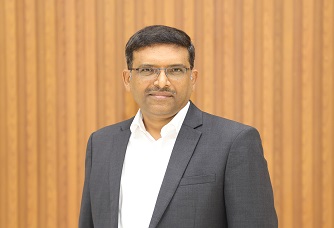
“When I began, the focus was simple, sell the product and close the payment. Over time, I realized that approach was short-sighted. Today, before recommending any system, we evaluate workload, return on investment, and long-term sustainability. Our responsibility does not end with installation; it begins there. We position technology only where it can genuinely deliver value”, shares Senthil Nathan Manickam, Managing Director, Fusiongreen Healthcare.
This wider solutions-focused position distinguishes Fusiongreen in a market where expenditure decisions significantly affect laboratory stability. Rather than pushing products, the company curates solutions, safeguarding viability.
The Superpower of Disciplined Forecasting
While temperature-controlled logistics often receives attention, a less visible challenge is disrupting laboratory supply chains. This challenge is forecasting indiscipline. Historically, laboratories operated with structured monthly purchase orders, predictable supply cycles, and defined payment timelines.
Fragmented purchase orders, inadequate minimum stock planning, and inconsistent procurement cycles create pressure not only for distributors but also for manufacturers and end-users.
Fusiongreen addresses this through coordinated planning conversations with both principals and customers, advocating for structured inventory buffers and predictable procurement timelines. It advocates for at least a 15-day buffer at the customer end to prevent delays.
“Earlier, laboratories followed structured monthly procurement cycles. Today, forecasting gaps create unnecessary lags across the chain. If principals do not have stock and customers do not plan inventory, the entire ecosystem slows down. We work closely with both sides to ensure at least a 15-day buffer and disciplined planning. Stability in forecasting is what protects service continuity”, adds Senthil.
This dual-sided coordination strengthens reliability across the supply chain. It also reflects Fusiongreen’s maturity in recognizing that distribution excellence is not only about movement but synchronization.
Leveraging Geography as a Strategy
One of Fusiongreen’s most strategic decisions has been its geography-led expansion model across Tamil Nadu. Rather than scaling uniformly, the company analyzed behavioral, economic, and operational differences within the state and structured its presence accordingly.
Chennai and Coimbatore represent higher capital readiness and faster adoption of premium diagnostic systems. Southern districts such as Madurai demonstrate strong procedural volume growth but often operate within tighter capital frameworks. Service expectations, trust networks, and purchasing behavior vary significantly between these regions.
Instead of treating these markets homogenously, Fusiongreen established independent operational clusters each with dedicated cross-functional teams capable of addressing local nuances without compromising central oversight.
Where most businesses continue to push the buy-supply-close cycle, Fusiongreen opted for refinement aligned with the emerging needs of the industry
“Strategy cannot depend purely on customer demand; it must depend on geography. Chennai, Coimbatore, and the southern belt each behave differently: spending power, trust patterns, and technology adoption vary. We divided Tamil Nadu into segments and placed structured teams in each region. That regional understanding allowed us to scale sustainably instead of expanding blindly”, further states Senthil.
This geo-calibrated approach has enhanced responsiveness and trust. Engineers are positioned strategically across regions, minimizing downtime through faster on-ground intervention. In diagnostics, where uptime directly impacts patient reporting timelines, this proximity becomes a competitive advantage.
Looking to the Future
For Fusiongreen Healthcare growth has been accompanied by infrastructural enhancement. The company’s recent move to a new facility in Guindy signals spatial expansion alongside institutional fusion. Simultaneously, Fusiongreen is moving toward formalized ISO processes, embedding standard operating procedures into its workflow. Moreover, advanced technologies such as automation are forming a big part of its modern structure. Automation has been introduced in billing, inventory tracking, and logistics handling to reduce manual inefficiencies while preserving human oversight in clinically sensitive domains.
Looking ahead, Fusiongreen’s ambition extends beyond channel excellence. The company envisions integrating specialized healthcare logistics capabilities into its ecosystem. Temperature-sensitive medical products demand more than conventional transport. Pre-installation verification, calibrated packaging, controlled transit environments, and documented traceability are increasingly becoming non-negotiable. Rather than outsourcing this critical function to generic logistics networks, Fusiongreen aims to institutionalize it within a structured framework aligned with its existing service and forecasting systems.
“Our long-term mission is to provide a complete end-to-end ecosystem, right product, right customer, right temperature, and right time. Healthcare logistics cannot be casual. If we integrate structured transport with our service, forecasting, and compliance systems, we can eliminate gaps entirely. That is the direction we are building toward”, concludes Senthil.
This forward-looking vision reinforces Fusiongreen’s identity not merely as a participant in India’s laboratory supply landscape, but as an architect of operational stability within it. Jetting to the future, the company demonstrates a strong promise of advancement that drives industry-wide reform.
Intentional Reforms that Spell Success
Fusiongreen’s adaptability is driving its current and envisioned changes. The firm is undergoing rampant transformation that marks tremendous expansion.
Its Ashok Nagar facility is transformed into a dedicated service and demo center under Fusiongreen Professional Services (FGPS). The facility features a centralized toll-free communication structure that routes sales, service, and application queries through a coordinated support system.
Fusiongreen’s expertise has elevated its stature to that of a skilled manager, with numerous labs inviting the company to manage broader supply categories, often extending into consumables and allied materials.
Committed to clarity and coordination, the company supports group-workflows with multiple stakeholders, minimising instances of ambiguous implementations. Doing this, Fusiongreen promotes quicker resolution cycles.





We use cookies to ensure you get the best experience on our website. Read more...


