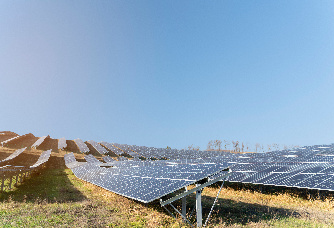
Solar manufacturing gap is becoming a question for India’s supply chain as Waaree Renewable Technologies secures a 450 MWp solar EPC project in Bikaner, Rajasthan.
The company received a Letter of Award from a domestic independent power producer for turnkey execution, with completion scheduled for FY2027–28.
The award adds to its unexecuted order book of more than Rs 5,500 crore.
Beyond the contract, the development raises a question: whether India’s solar equipment manufacturing base can supply the modules, cells and components needed as utility-scale projects advance.
The distinction between module assembly and domestic manufacturing capacity will shape supply-chain resilience.
The project covers design, engineering, inspection, procurement, supply, delivery, erection, testing and commissioning.
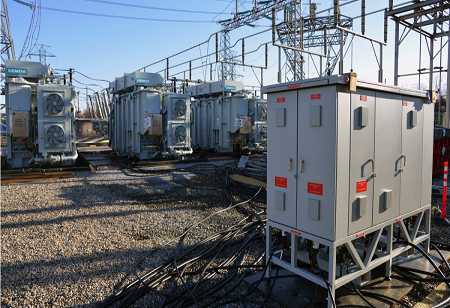
Solar EPC procurement creates potential demand for photovoltaic modules, inverters, mounting structures, cables, transformers and electrical protection systems.
These solar power plant components connect manufacturing businesses with project developers and EPC contractors, making procurement decisions relevant to domestic suppliers across the value chain.
However, a large project award does not automatically translate into an equivalent increase in Indian manufacturing output. The actual impact depends on the origin of equipment, supplier selection, inventory availability and the extent of domestic value addition.
For manufacturers, the opportunity lies in supplying reliable equipment at competitive costs while meeting technical specifications and delivery schedules.
Also Read: Industrial Transformation in 2026: Key Trends to Watch
India’s manufacturing gap extends beyond domestic module assembly to a shortage of key upstream inputs such as solar ingots, wafers and cells.
A September 2026 analysis by the Institute for Energy Economics and Financial Analysis (IEEFA) estimated India's solar module manufacturing capacity at approximately 233 GW in June 2026.
The report highlights the uneven development of the domestic supply chain, with the module capacity standing at nearly seven times that of cell and 11 times that of ingot-wafer capacity.
The Council on Energy, Environment and Water has also identified cost disadvantages, import dependence and technology development as challenges for solar cell manufacturing in India.
Expanding solar wafer manufacturing and cell production could help strengthen domestic sourcing, reduce exposure to external supply disruptions and deepen the Indian solar manufacturing value chain.
The opportunity is not simply to increase manufacturing capacity, but to connect equipment production with the requirements of utility-scale solar projects.
Developers and EPC companies need dependable suppliers capable of meeting technical standards, delivery timelines and cost expectations.
For Indian manufacturers, the growth of large solar projects can create opportunities across module production, power electronics, mounting systems and other electrical equipment.
Greater domestic capacity in cells and wafers, alongside module manufacturing, could improve supply-chain integration.
Waaree's latest order therefore offers a useful indicator of continued project activity, rather than proof of a specific increase in domestic equipment demand.
For India's energy manufacturing sector, the longer-term test will be whether renewable energy deployment supports a competitive, integrated supply chain instead of relying predominantly on downstream assembly.







We use cookies to ensure you get the best experience on our website. Read more...