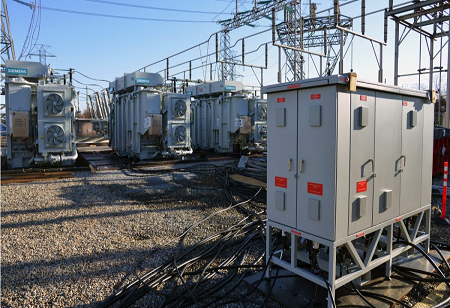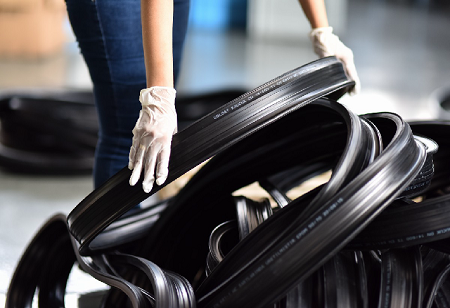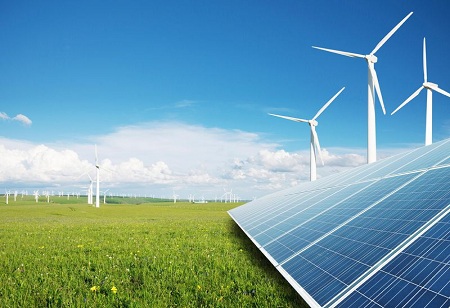
ACME Solar BESS deployment is highlighting how India’s renewable-energy projects are increasingly being designed around storage rather than generation alone.
ACME Solar Holdings has commissioned 107.36 MW/437.49 MWh of battery energy storage capacity across two projects in Rajasthan, taking its operational BESS portfolio to 4.96 GWh.
The commissioning covers 53.73 MW/222.969 MWh at its firm and dispatchable renewable energy (FDRE) project in Chittorgarh and 53.63 MW/214.52 MWh at its assured peak power project in Bikaner. Commercial operations are scheduled from October 2.
The more significant development, however, is what the commissioning says about the changing structure of renewable projects.
With India’s renewable generation rising, storage is becoming an increasingly important layer for converting intermittent electricity into power that can be supplied when required.
Solar generation does not necessarily coincide with periods of highest electricity demand. This creates a requirement for technologies that can store electricity and discharge it during peak-demand periods.
Recent Crisil analysis estimates that India could commission 45–50 GWh of BESS capacity over the current and next financial year, compared with about 1 GWh at the end of FY26.
This expansion is closely linked to the increasing use of storage-linked renewable projects. BESS accounted for nearly 40 percent of capacity auctioned in FY26, compared with about 5 percent in FY24 and FY25, according to Crisil.
The trend indicates that battery storage is moving from being an additional component of renewable projects toward becoming an integral part of how electricity is delivered.
Also Read: Manufacturing in Maharashtra 2026: Industries, Hubs & Investments
ACME Solar’s latest commissioning provides a practical example of this transition. The Chittorgarh project is particularly notable because its BESS component has been commissioned while the associated renewable-generation component remains under development.
The project is planned with a total BESS discharge capacity of 250 MW and storage capacity of 1,069 MWh. The Bikaner project is also being developed at a considerably larger scale, with a planned 300 MW discharge capacity and 1,200 MWh of storage.
ACME Solar expects the BESS capacity for the full 300 MW project to be commissioned within FY27. This project structure puts the focus on the ability of storage assets to support firm power delivery, rather than simply measuring renewable projects by their installed generation capacity.
The rapid deployment pipeline also exposes a supply-chain challenge. Crisil estimates that 50–55 GWh of BESS capacity is scheduled for commissioning across FY27 and FY28.
However, around 21 percent of under-construction capacity, equivalent to about 12 GWh, faces weak return potential amid higher battery prices.
Equipment procurement is another concern. India continues to depend on overseas suppliers for batteries and other critical components, while limited implementation experience among some project sponsors could create additional execution risks.
For developers such as ACME Solar, therefore, scaling BESS is not only a question of adding storage capacity. It also involves securing batteries and associated equipment, managing project economics and integrating storage with renewable-generation assets.
The ACME Solar commissioning points toward a broader change in project design: renewable capacity is increasingly being paired with technologies that can control when electricity is delivered.
Government projections already point to a requirement of 34 GWh of BESS capacity by 2026–27 and 236 GWh by 2031–32, with estimated investment of about Rs 3.49 lakh crore by 2031–32.
For India’s renewable industry, the emerging opportunity therefore extends beyond adding solar and wind capacity.
Battery systems, power-conversion equipment, energy-management systems and other storage infrastructure will increasingly determine how effectively renewable electricity can be converted into firm and dispatchable power.
.jpg "Saksham Enterprises: Optimizing Mission- Critical HVAC Infrastructure For The High Precision Sector")

.jpg "JDS Group of Companies: Innovating Smart Solutions For Modern Power Transmission & Distribution Infrastructure")


We use cookies to ensure you get the best experience on our website. Read more...