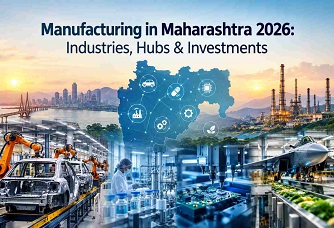
Manufacturing in Maharashtra rests on automotive, engineering, chemicals and pharmaceuticals, concentrated in the Pune–Mumbai–Nashik belt.
EVs, electronics, aerospace and advanced manufacturing are the emerging layer.
The state is India's largest sub-national economy and, by the Economic Survey's count, its top destination for foreign direct investment.
For investors, the Maharashtra Industries, Investment & Services Policy 2025 (MIISP 2025) sets the incentive rules for location, sector and capital-expenditure decisions for the next five year. It shifts subsidies toward gross SGST reimbursement and adds support for priority sectors.
Key Takeaways:
- Growth is outpacing the national average, backed by the largest FDI share of any state and Rs 5.57 lakh crore in exports.
- Automotive/EV, pharma/chemicals, electronics, engineering/defense and food processing anchor the state, with EVs and defense seeing the newest large investments.
- Pune leads on overall connectivity and supplier density, Mumbai-Thane-Raigad on port access, and Gadchiroli is emerging as a sixth hub via a proposed steel city.
- Major players span sectors and hubs - Tata Motors and Mahindra in Pune, JSW across Raigad/Sambhajinagar/Nagpur, Serum Institute and Lupin in pharma.
- MIISP 2025 ties incentives to a taluka's development tier (Group A–D+), so identical investments earn very different subsidy levels depending on location.
- EV/battery components, electronics, specialty chemicals, aerospace/defence and industrial automation are the five areas where existing clusters and policy support overlap most.
- The critical gateway step is securing an Eligibility Certificate via the Invest Maharashtra portal before production starts