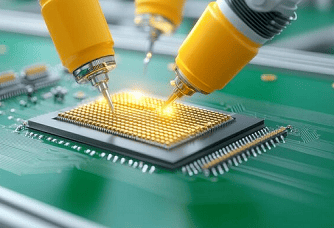
The semiconductor world just hit a new milestone as ASML’s High-NA EUV machine — a USD 400 million lithography system — is now ready to push AI chip manufacturing into full mass production, a move that could dramatically accelerate next-generation hardware development.
This High-NA EUV breakthrough comes at a time when demand for advanced chips is exploding, especially for AI-optimized processors used in data centers and cloud computing.
ASML, the Dutch firm dominating extreme ultraviolet lithography, confirmed that its new High-NA EUV machines have processed more than 500,000 silicon wafers with about 80 percent uptime, meeting the technical readiness required for high-volume chipmaking.
These systems, which cost roughly USD 400 million each, deliver far higher resolution and precision than the previous generation of tools, and are crucial for producing cutting-edge AI chips that power technologies like generative models and advanced neural networks.
Also Read: Smart Factory Strategies for Agile Electronics Manufacturing
At a recent technology conference in San Jose, ASML’s leadership underscored that the High-NA EUV tools are technically ready and that the company will present supporting data to reinforce their impact on future chip production. However, widespread adoption still hinges on chipmakers completing extensive testing and integrating the systems into their fabs — a process expected to take two to three years. Even with that lead time, the groundwork for revolutionizing AI chip manufacturing is now laid.
Sanjay Mehrotra — CEO, Micron Technology at the inauguration of Micron’s semiconductor facility in Sanand, Gujarat, highlighting India’s role in global AI chip supply chains said, “There is no artificial intelligence without data, and there is no data without memory and storage. And the memory and storage that powers AI for everyone, that is what Micron builds.”
The arrival of these machines marks a major shift for AI chip production. Traditional EUV tools already play an essential role in producing advanced nodes, but High-NA EUV systems offer a leap in capability that will help manufacturers simplify complex process steps, increase yield, and speed up production timelines. ASML’s expansion into this next tier of lithography technology reflects the industry’s urgent push to keep pace with growing AI workloads and computational demands.
Dr. Randhir Thakur — CEO & MD, Tata Electronics explaining Tata’s entry into semiconductor fabrication in Dholera, Gujarat saud, “This marks the beginning of a new era for India. Tata Electronics is proud to play a prominent role in strengthening the global semiconductor ecosystem. Our partnership provides access to a broad technology portfolio and will support our ambitions of ‘Make in India, For the World.’”
Also Read: Compressed Air Tech Breakthroughs That Are Reshaping Manufacturing
Beyond next-gen EUV hardware, ASML is also broadening its tools portfolio to include advanced packaging and chip-stacking technologies, recognizing that future AI chips will demand more integration and efficiency than ever before. Internal changes at the company now prioritize engineering innovation to address these complex manufacturing challenges, reinforcing ASML’s leading position in a rapidly changing semiconductor landscape.
In simple terms, this new High-NA EUV platform is more than just expensive hardware. It represents a turning point for how the most powerful AI chips will be made, positioning the industry to meet massive growth in demand while cutting down manufacturing complexity. As these machines enter wider use, they could reshape the very foundation of tomorrow’s AI technology.
Data and Industry Figures:
.jpg "Saksham Enterprises: Optimizing Mission- Critical HVAC Infrastructure For The High Precision Sector")
.jpg "JDS Group of Companies: Innovating Smart Solutions For Modern Power Transmission & Distribution Infrastructure")




We use cookies to ensure you get the best experience on our website. Read more...