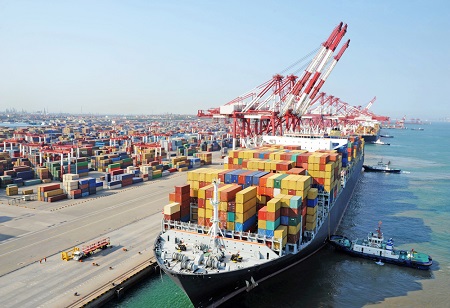
TVS Srinivas, Business Head – Mineral and Aggregate Crushing Systems (MACS), TKIL Industries, in an interaction with Industry Outlook, discusses how India’s mining and infrastructure sectors are rapidly embracing advanced engineering, automation, and digitalization to drive operational efficiency. He further highlights the impact of integrating smart designs, predictive maintenance, and sustainable solutions in reducing downtime and supporting India’s vision for technologically advanced, environmentally responsible, and future-ready industrial growth.
How is India’s mining and infrastructure sector leveraging advanced engineering practices to enhance operational efficiency amid rising automation and digitalization trends?
India’s mining and infrastructure industry is soon set to incorporate cutting-edge engineering and technological advancements. As mining and handling of bulk materials continue, the adoption and implementation of automation, telematics, IoT-based monitoring systems, and data analytics are being implemented at mining facilities and operations. These technologies and tools enable facilities and operations to monitor specific machines and equipment on an uninterrupted and continuous basis. It helps provide information regarding fuel consumption and productivity.
To illustrate clearly, at TKIL Industries, we combine intelligent designs with reliable automation solutions within our Mineral & Aggregate Crushing Solutions, ensuring optimal performance, reduced energy consumption, and better site integrations. Our designs focus on smooth digital connections and intelligent analytics that can assist operations teams in optimizing plant performance and align with India’s vision for digital and efficient industries.
Also Read: Why Bearing Selection is Critical to Machinery Lifespan and Performance
Which engineering innovations are currently addressing the critical challenge of equipment downtime and predictive maintenance across large-scale Indian mining operations?
To achieve productivity in today’s mining industry, it is essential to minimize the frequency of equipment failures through improved predictive maintenance as a result of IoT sensors, machine data analytics, and Artificial Intelligence (AI). By being able to detect early signals of wear versus fatigue versus overheating, predictive maintenance allows an operator to be proactive in repairing the equipment before an actual failure occurs. As mining operations continue to utilize IoT-based monitoring solutions, telematics, and digital twins, operators will have improved visibility into the operational status of their machines throughout their entire lifecycle.
We offer an additional layer of support for the customers through a service-driven approach for owners of crushing and screening equipment, utilizing durable construction, high-quality raw materials, and the implementation of condition-monitoring systems. TKIL Industries provides real-time feedback on machine performance but also allows customers to develop maintenance schedules accordingly, thereby increasing the life of the asset, decreasing unanticipated downtime, and increasing the productivity of large-scale mining and infrastructure projects.
Modular and smart engineering solutions enable rapid deployment, scalable operations, and reliable performance for mining and infrastructure projects of any size.
How are Indian companies integrating sustainability and low-emission technologies into infrastructure projects while maintaining engineering performance benchmarks?
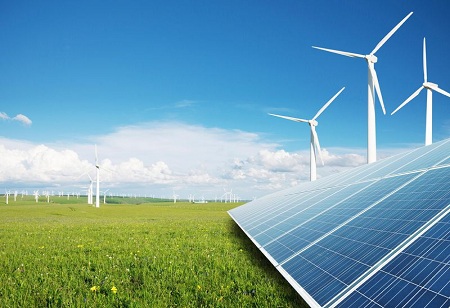
Sustainable practices in both the mining and infrastructure sectors are essential in India today at a time when there is a growing emphasis on sustainability within the country. Companies are making use of solutions to create more sustainable operations by adopting advanced technologies and processes to increase energy efficiency and decrease emissions while still meeting their performance requirements. Some examples of sustainable solutions for companies involved in mining and infrastructure include the use of electric vehicles (EVs) as mobile equipment, the development of hybrid power systems, and the optimization of equipment design for less fuel consumption and fewer injuries from unsafe working practices.
By adopting the principles of energy efficiency and sustainability at all levels of operation, we demonstrate these principles by providing its customers with crushing systems engineered to achieve the highest level of energy efficiency and operational durability. Our Modularized Advanced Crushing Systems are designed to achieve optimal levels of energy efficiency while also meeting rigid production standards in both throughput and reliability. In addition, TKIL Industries has expanded into green hydrogen and battery applications as part of its overall strategy to support the Indian Government’s commitment to achieving net-zero emissions by 2050 through its comprehensive and diversified portfolio of sustainable energy solutions.
What role do modular and smart design approaches play in improving scalability and cost-effectiveness for India’s mining and heavy infrastructure projects?
The modular and smart engineering design strategy supports India's ongoing development in mining and infrastructure, as modular systems and equipment can be set up quickly to meet project needs and can also scale for future growth while providing customers with minimized installation costs and time frames. The MACS line is built around smart engineering designs that are designed using modular concepts that offer skids/mobile units to provide crushing solutions for projects of varying sizes. Additionally, the Smart Engineering Design approach provides opportunities for increased efficiency, quicker operational start-up times, and greater compatibility with Digital Control Systems, which lead to better project economics without sacrificing performance.
Also Read: Crafting Enterprise Eco-Strategies For Long-Term Growth
How are talent development and skill-building in engineering teams helping Indian firms adopt next-gen technologies across the mining and infrastructure value chain?
The ability to adopt and utilize cutting-edge technology in mining is dependent on hiring qualified engineers/technicians who can operate all types of digital, automated, and analytical systems. The Indian mining industry is building a skilled workforce through targeted upskilling programs and collaboration between universities and industry.
In this area, as a company, TKIL Industries has put a strong emphasis on consistent efficiency improvement for our engineering teams through leadership development and exceptional learning initiatives, enabling them to be successful in promoting advanced automation, predictive analytics, and sustainable engineering practices for efficient operation.
Building a force of skilled members creates a great opportunity and the rest of India to be competitive with next-generation technology. This will help to take our Indian economy into a new era of innovation, technology, competitiveness, and sustainable engineering practices.
Looking forward, how do you envision engineering leadership evolving to support AI-driven, fully integrated, and sustainable mining and infrastructure operations in India?
AI-enabled decision-making tools, integrated digital operations, and sustainability are to define engineering leadership in India's mining and infrastructure industry in the future. Through the development of connected ecosystems where all aspects of operation and maintenance are informed by data generated from sensors, machine learning, and predictive analytics, leaders will be able to increase efficiency, enhance safety, and improve environmental performance.
TKIL Industries sees the evolution of the approach of embedding digital intelligence into heavy engineering systems as a shift towards the automation of the optimization process, creating real-time condition monitoring and adapting control strategies. This evolving mindset towards sustainability, combined with strategic investment in green technologies such as hydrogen, battery systems, and low-emission technologies, will position India's mining and infrastructure industries to lead the way in sustainability going forward.
What is the primary objective and purpose behind TKIL Industries India’s participation in Excon 2025?
The goal of TKIL Industries at EXCON 2025 is to showcase our Mineral and Aggregate Crushing Systems (MACS), including Jaw Crushers, Cone Crushers, VSI Units, and plants, all of which demonstrate our high standards of performance, energy efficiency, and reliability. Furthermore, we would like to demonstrate to our customers, partners, and industry partners that by partnering with us, they will have the opportunity to compete with their peers, find new opportunities, and develop sustainable engineering and manufacturing. TKIL Industries will use EXCON 2025 to introduce our new MACS, promote the collaborative development of the Indian mining and construction industries, and build India's infrastructure and mining industries.
.jpg "Saksham Enterprises: Optimizing Mission- Critical HVAC Infrastructure For The High Precision Sector")
.jpg "JDS Group of Companies: Innovating Smart Solutions For Modern Power Transmission & Distribution Infrastructure")



We use cookies to ensure you get the best experience on our website. Read more...