India's aerospace and defence manufacturing story is often told through headline numbers: record defence exports, expanding OEM partnerships, new facilities and ambitious policy targets. These achievements deserve recognition, but they tell only part of the story.
Behind every successful programme lies something far less visible, but far more important: the ability to deliver the right part, to the right specification, the very first time, and to do it consistently for years.
That quiet discipline, more than any headline number, will determine whether India secures a lasting place in the world's most demanding aerospace supply chains.
In this industry, precision isn't a competitive advantage. It's simply the price of admission.
Aircraft are designed for long operating lives. Commercial aircraft typically remain in service for 25 to 30 years, while fighter platforms often serve for 40 years or more. The components that go into these programmes, from electromechanical assemblies and actuation systems to structural parts and avionics sub-systems, cannot be treated as standard commercial replacements. They are qualified for specific configurations, suppliers and processes.
When a global OEM qualifies a supplier, it isn't placing a routine purchase order. It is entering into a relationship that could last decades.
That is why there is virtually no room for error. A single component that falls outside specification isn't just a manufacturing issue. It can trigger programme audits, delay aircraft deliveries and, in some cases, jeopardise years of trust between supplier and customer.
This is also why qualification takes time. Aerospace companies invest heavily in validating suppliers because choosing the wrong one is far costlier than a lengthy qualification process.
Behind every successful programme lies something far less visible, but far more important: the ability to deliver the right part, to the right specification, the very first time.
Ultimately, global OEMs look beyond technical capability. They want to know whether a supplier can deliver zero-defect quality at scale across multiple programmes, year after year. That confidence is not built through a single factory visit or quality audit. It is earned through consistent execution, dependable delivery and a proven record of getting it right every time.
For India, this is where the opportunity becomes more strategic. The country's aerospace ambition will not be judged only by capacity expansion or export growth, but by its ability to become a dependable source of precision-led manufacturing for global programmes where safety, repeatability and long-cycle trust matter most.
Global aerospace manufacturers are dealing with supply chain disruptions, skilled-workforce shortages and unprecedented production backlogs. Airbus and Boeing alone have thousands of aircraft waiting to be built. In this environment, OEMs are not simply looking for lower-cost suppliers. They need partners that can absorb complexity, maintain quality at scale and deliver safety-critical components without compromise.
As a result, the selection criteria have quietly been elevated. Indian manufacturers that have invested in AS9100 certification, NADCAP-approved special processes, APQP discipline and multi-year OEM qualification records are now finding that these investments carry weight in conversations that once centred almost entirely on price. Quality and process rigour are becoming the competitive axis.
The biggest difference between a good engineering company and a world-class aerospace supplier isn't the machinery on the shopfloor. It's the culture behind it.
In the best organisations, quality isn't the responsibility of one department. It belongs to everyone.
It shows up when an operator understands why a tiny tolerance matters, when a team has the confidence to stop production if something does not look right, and when even the smallest deviation is followed by rigorous root-cause analysis.
Cultures like these cannot be built overnight.
Competitors can purchase similar equipment and adopt similar systems. What they cannot replicate quickly are years of disciplined processes, experienced people and a proven production record that gives global customers complete confidence.
Many Indian aerospace manufacturers have spent decades building this culture quietly, without attracting headlines. That gives them an asset no policy announcement can create overnight.
India's defence exports reached a record ₹38,424 crore in FY2025–26, growing by more than 62% over the previous year. The government's vision of reaching ₹3 lakh crore in aerospace and defence production by 2029 reflects genuine ambition.
But ambitious targets alone will not define India's future in aerospace.
Reputation is built differently. It is earned on the shopfloor, one qualified component, one flawless delivery and one successful programme at a time.
The companies that will shape India's next phase of aerospace growth may not be the ones with the biggest factories or the newest machines. They will be the ones that understand a simple truth: in aerospace and defence, the most valuable competitive advantage is not cost, but trust — and trust is earned through precision, every time.
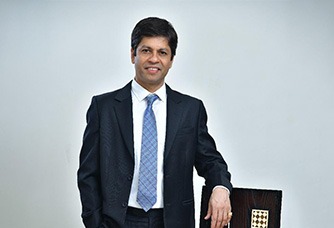
Yashas Jaiveer Shashikiran is a business leader with over 16 years of experience at Hical Technologies, spanning business development, strategic growth and aerospace manufacturing. He began his journey with Hical in 2010 as Director of Business Development and went on to serve as Joint Managing Director before taking on his current role as Managing Director in 2026. Under his leadership, Hical continues to strengthen its position as a trusted partner to global aerospace and defence organisations, building on over four decades of manufacturing expertise and nearly three decades of export experience.
.jpg "Saksham Enterprises: Optimizing Mission- Critical HVAC Infrastructure For The High Precision Sector")
.jpg "JDS Group of Companies: Innovating Smart Solutions For Modern Power Transmission & Distribution Infrastructure")


We use cookies to ensure you get the best experience on our website. Read more...