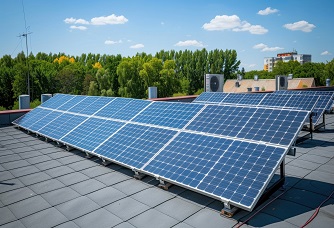
Gujarat has installed more than 9 lakh residential rooftop solar systems, reaching 90 percent of its March 2027 target. The state has recorded 3,408 MW of installed capacity under the PM Surya Ghar: Muft Bijli Yojana.
According to an official statement issued on Monday, November 2, 2026, Gujarat has installed around 9.08 lakh systems. It aims to reach 10 lakh residential installations by March 2027. The latest achievement places Gujarat among India's leading states in household solar adoption.
The state accounts for approximately 18.21 percent of India's total installed residential rooftop solar capacity under the central scheme. Its progress reflects growing household participation, supported by financial incentives and consumer-friendly regulations.
The Gujarat government has introduced additional financial assistance to make solar installations more affordable, particularly for smaller households.
Under the state's support framework, Scheduled Caste (SC) and Scheduled Tribe (ST) households installing systems of up to 2.18 kilowatt-peak (kWp) capacity contribute only 5 percent of the prescribed benchmark cost. Other residential consumers contribute 10 percent.
The state government covers the remaining benchmark cost after adjusting the Centre's financial assistance and the beneficiary's contribution.
Other measures supporting adoption include:
These measures have helped reduce financial and regulatory barriers for households considering solar power.
Also Read: How India's Tyre Industry Is Responding to a Changing Mobility Market
Beyond residential installations, Gujarat has also strengthened its position in India's renewable energy sector.
According to the official statement, the state's total installed renewable energy capacity reached 55,511.46 MW as of September 30, 2026. This represented 18.5 percent of India's total renewable energy capacity.
Solar and wind power account for a significant share of this capacity. The state's renewable energy figures include:
The expansion supports Gujarat's strategy to reduce dependence on conventional fuels while meeting rising electricity demand through cleaner energy sources.
It also contributes to India's broader climate commitments. The country aims to achieve net-zero emissions by 2070 and meet 50 percent of its electricity requirements through renewable energy sources by 2030. With more than 90 percent of its residential installation target achieved, Gujarat is moving closer to its March 2027 milestone.




We use cookies to ensure you get the best experience on our website. Read more...