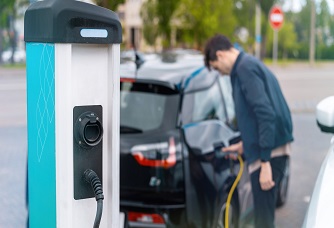
Delhi retains its top spot as India’s electric mobility map takes clearer shape under the latest national index.
NITI Aayog released the Electric Mobility Index 2025 on Wednesday and confirmed that the capital improved its score from 77 to 84.
Maharashtra and Karnataka follow closely and emerge as the only two large states that advanced their e-mobility ecosystems compared with the previous year.
The index tracks EV adoption rates, charging infrastructure availability, and the presence of EV startups. These three pillars now define how states position themselves on the evolving electric mobility landscape and signal where industry activity concentrates.
India’s electric mobility sector continues to expand as states compete on adoption, infrastructure, and innovation. Higher scores on the index reflect stronger performance across these themes and indicate regions that build more complete ecosystems for electric vehicles.
Delhi recorded the highest score in the country at 84. It improved from 77 last year and stays ahead of every other state and Union territory. Chandigarh follows with 71 and Goa with 65 among the top performers in the union territory category. Puducherry scores 41 and stands as the sole emerging performer in that group.
Also Read: World EV Day 2026: Driving India's Future of Mobility
Maharashtra raised its score from 68 to 78 and keeps second place. Karnataka climbs to third with a score of 73 and overtakes Chandigarh.
Eight large states qualify as frontrunners:
Tamil Nadu slips one place to sixth even though it improves its score from 59 to 61. Fast-rising Goa moves ahead of it. Among hilly and northeastern states, Manipur records the highest score at 46. Tripura follows at 36 and Assam at 35. NITI Aayog classifies these three as emerging performers. Half the states in the region report research and innovation as their principal constraint.
The IEMI score analyses each state and union territory across all indicators and applies weightage to the overarching themes. A higher score signals stronger results in EV adoption, charging infrastructure availability and the number of EV startups. NITI Aayog notes that several states and union territories register declines in rank and scores. Progress in e-mobility therefore remains uneven across the country.
Delhi’s continued lead, Maharashtra’s steady advance and Karnataka’s rise together outline the current contours of India’s electric mobility map. The index highlights both the frontrunners and the gaps that still exist in infrastructure, adoption and innovation.
As states respond to these rankings, the distribution of charging networks, startup activity and vehicle uptake will continue to determine where the next phase of electric mobility growth concentrates.
.jpg "Precise Fasteners: Committed To Fulfilling Client Expectations, Every Time!")



We use cookies to ensure you get the best experience on our website. Read more...