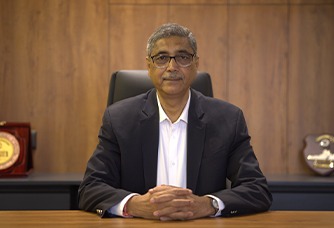
Kunal Arya, Managing Director, Zelio E-Mobility Limited, is an EV entrepreneur and mobility innovator with over four years of experience in building scalable electric mobility solutions. He specialized in product development, manufacturing strategy, and market expansion for affordable EVs. Skilled in business scaling and ecosystem building, he led Zelio E-Mobility’s successful public listing, driving adoption and strengthening India’s clean mobility landscape.
Below are his key excerpts capturing insights on India’s EV momentum, the need for stronger manufacturing and charging infrastructure, the emerging talent gap, and the critical role of policy stability in building a scalable, future-ready electric mobility ecosystem.
Over the past few years, India's electric vehicle market has picked up serious speed. What began as a trend mostly seen in cities is now slowly becoming part of the country’s larger economic direction. Consumer interest is rising. Investors are jumping in with cash. And smart policies are keeping the ball rolling. Experts see the whole EV opportunity swelling past 132 billion dollars by 2030. Since 2014, more than 119 startups have snagged funding in this arena.
In 2025 alone, registrations topped two million units, mostly pulled by electric two wheelers. That said, the real challenge is not only about moving more units off the lot. The harder lift is forging an ecosystem tough enough to back this boom long into the future.
The real EV challenge is not just scaling sales, but creating a strong, self-reliant ecosystem that can sustain growth amid supply chain and cost pressures.
India has set ambitious EV goals for 2030 across private vehicles, commercial fleets, buses, and two and three wheelers. Demand is growing, but manufacturing clearly needs more strength. Many startups still depend on imported battery cells, chips, and other electronic parts. Local assembly has improved, but large scale domestic production is still not fully in place.
That setup creates stress when supply chains slow down or raw material prices rise. Startups that move too fast often run into cost problems and delayed deliveries. Stronger local supplier networks and better sourcing plans are essential for the long term. Companies that grow steadily stand a better chance to build a stronger base.
Also Read: How Materials Science is Enhancing Battery Performance in EVs
Charging access still plays a big role in how people feel about EVs. India had more than 29,000 public charging stations by the end of 2025. Even so, estimates suggest the country may need more than 1.3 million stations before 2030. The gap remains wide, especially outside major cities. Big cities are adapting faster as charging access gradually improves.
Smaller towns and highways still need much better coverage. Buyers also understand EVs much better now. Their expectations have become more practical. Easy charging, dependable service, and proper maintenance matter almost as much as price and range.
Startups cannot treat infrastructure as someone else’s responsibility. Vehicle growth and charging support have to move together.
The shift to electric mobility is also changing the auto workforce. Older job roles are changing, while new technical roles are opening up in battery systems, software, diagnostics, and charging networks. Industry estimates suggest the EV sector may need nearly 200,000 skilled workers by 2030. Training capacity is still far below that number.
The gap is becoming clearer as companies expand their operations and service networks. Good products alone will not be enough. Reliable service and technical support will matter just as much. Startups that invest early in training and hands on learning may gain a stronger edge later on. Trust in EVs will depend a lot on service quality and everyday reliability.
Also Read: Intersection of Technology and Sustainability in Last-Mile Mobility
Government support has helped speed up EV adoption across India. Budget 2026 measures around battery manufacturing, lithium-ion cells, and energy storage have added confidence in the sector. But long term growth also depends on stable policy.
Startups and big manufacturers need clear and predictable rules on subsidies, local manufacturing, taxes, and imports. It helps them plan without constant uncertainty. When policies keep changing, progress slows and doubt builds up.
Equally, export incentives and funding for research could let Indian EV outfits hold their own on the world stage. Just as crucially, getting manufacturers, charging operators, financiers, policy makers, and training institutions to work hand in glove will make all the difference.
Right now, the priority ought to be crafting an ecosystem that's rock-solid, easy to reach, and geared up for whatever demand comes long-term. Startups playing the patient game, keeping their ear to the ground on what customers truly want, are the ones poised to steer India's electric mobility future.






We use cookies to ensure you get the best experience on our website. Read more...