
When a tonne of steel is melted, the environmental story does not begin and end with where the electricity comes from. It also depends on how efficiently that electricity is converted into heat, how much of it is lost along the way, and how much productive output can be extracted from every unit consumed. For India's energy-intensive industries, this distinction is becoming increasingly important.
Steelmakers, foundries and forging companies are under pressure to improve productivity while managing energy costs and their environmental footprint, making industrial heating technology an increasingly important part of the green manufacturing conversation. It is within this less visible but critical layer of the energy transition that Megatherm Induction has built its proposition.
Making Efficiency the Core of the Furnace
Megatherm Induction Limited has spent years developing induction-based technologies for melting and heating applications, with energy efficiency becoming a defining element of its product development. Its Green furnace range has crossed a baseline of 455 kWh/t and 83.5 percent efficiency, according to the company, and that performance has translated into significant commercial traction.
Major steel groups including Shyam Metalics, Rungta Mines, Goel TMT, Rashmi Group and Prakash Industries have placed substantial orders, with several customers ordering 20 or more furnaces. The company has simultaneously strengthened its foundry portfolio through IGBT-based Dual-Track and Tri-Track furnaces, while expanding beyond its traditional furnace business with a new transformer manufacturing facility.
Designed to produce complex multi-winding transformers including Solar IDTs, BESS transformers and other renewable and industrial transformers, the facility is already operating with full order books. Together, these developments reflect an important shift in Megatherm's positioning: from being primarily an industrial furnace manufacturer to becoming a technology company addressing different points across the industrial energy chain.
This direction is rooted in a simple philosophy that the company uses internally: ‘Energy earns, or it simply burns.’ For Megatherm, energy efficiency is therefore not a marketing layer added to an established product. It is an engineering problem that begins with the design of the equipment.
The company's R&D has focused on fundamentals such as shortening copper lengths, optimizing layouts and reducing I²R losses, while incorporating PLC-controlled power delivery, low-loss capacitors, thyristors, IGBTs and higher-voltage systems to improve power management and reduce melting and heating time.
The Green series, launched in 2018, represents the cumulative outcome of this approach. Megatherm states that its Green technologies have helped customers save more than one billion units of electricity since their introduction, while its forging solutions have achieved productivity levels of 3 kg/kWh. These numbers matter because industrial customers ultimately evaluate technology through the combined lens of energy consumption, output, quality, reliability and operating cost.
Where Green Power Meets Industrial Heat
The more interesting dimension of Megatherm's strategy lies in what happens after the furnace has become more efficient. An industrial unit can reduce its electricity consumption, but the source of that electricity also determines the wider environmental impact of the operation.
Unlike oil- and gas-fired heating equipment, electric induction furnaces and heaters can operate on renewable electricity, creating a direct opportunity for industries with captive solar generation to use cleaner power for energy-intensive manufacturing.
“Megatherm is attempting to strengthen that connection through its entry into renewable-energy transformer manufacturing. Its new facility is designed to cater to solar, battery energy storage systems, wind, hydro and other industrial applications, allowing the company to participate in the infrastructure required to bring renewable electricity into industrial operations.
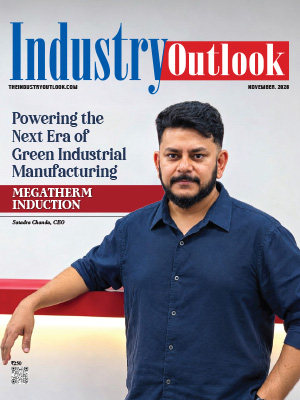
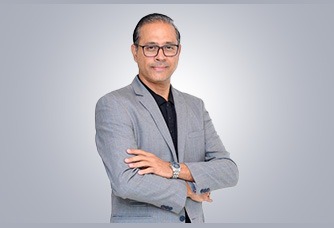
For customers, the combination of efficient induction technology and captive renewable power can potentially reduce operating costs over the equipment's lifetime, provide greater insulation from grid tariff volatility and reduce the carbon footprint of energy-intensive production”, speaks Satadra Chanda, CEO.
This is also why Megatherm's transformer expansion is strategically relevant to its broader green positioning. India's renewable-energy build-out is creating demand not only for generation capacity but also for the electrical infrastructure needed to transmit, convert and store that power. Solar IDTs and BESS transformers therefore represent an adjacent opportunity that complements Megatherm's existing expertise rather than taking the company into an unrelated market.
Its furnace business addresses the efficiency of energy consumption at the point of manufacturing, while the transformer business supports the infrastructure through which renewable energy can reach industrial and energy-storage applications. The two areas are increasingly connected by the same market movement: industrial electrification and the transition toward cleaner power.
Growth Driven by Performance, Not Just Capacity
The market response to Megatherm's technology has been visible in both its domestic customer base and its international footprint. Large orders from established steel groups have strengthened the Green furnace business, while the company's Dual-Track and Tri-Track solutions are gaining traction in foundries. Its equipment has reached more than 50 countries, with reliability and consistent performance remaining important drivers of its export business. Geopolitical instability has affected export volumes, but the company has continued to see steady overall turnover growth.
“Looking ahead, Megatherm sees opportunities to deepen its international presence through joint ventures, partnerships and dealerships, particularly across markets in Africa, Southeast Asia and Europe. At home, the expansion of solar power and battery energy storage is creating another growth avenue for its transformer business," adds Satadra Chanda.
What makes this expansion significant is that it is being supported by a common technological theme rather than a collection of unrelated products. The customer requirement is changing from simply acquiring a furnace with a specified melting capacity to looking more closely at the total economics of industrial energy. Energy consumption per tonne, productivity, power management, renewable integration, equipment reliability and maintenance are increasingly part of the same conversation. Megatherm's product development is evolving accordingly. Its engineering teams are working not only on making furnaces more efficient but also on improving the way equipment controls and manages power, with the objective of helping customers extract greater productive value from the electricity they consume. The next stage of this evolution is likely to be shaped by artificial intelligence. Megatherm is exploring AI-driven applications within its equipment, including smart power regulation, preventive maintenance and automatic diagnostics
From Efficient Equipment to Intelligent Energy Management
The next stage of this evolution is likely to be shaped by artificial intelligence. Megatherm is exploring AI-driven applications within its equipment, including smart power regulation, preventive maintenance and automatic diagnostics. While conventional efficiency improvements have largely come through better electrical design and hardware optimization, intelligent systems could enable furnaces and heaters to respond more dynamically to operating conditions. The ability to monitor equipment behaviour, regulate power intelligently and identify potential problems before they lead to failures could bring a new dimension to both energy management and operational reliability.
This becomes particularly relevant as industrial customers integrate more renewable energy into their operations. Solar generation and battery storage can introduce different power-management requirements compared with conventional grid-dependent operations, making intelligent control increasingly important. Megatherm's simultaneous presence in induction technology and renewable transformers gives it an opportunity to develop solutions around this convergence.
“Our roadmap therefore centres on continued R&D in efficient furnace and heating technologies, expansion of its transformer portfolio for solar and BESS applications, development of AI-enabled equipment and broader international market participation. As India's renewable-energy capacity expands and manufacturers pursue more energy-efficient production, the company's focus is increasingly moving beyond the question of how much a furnace can produce to a more consequential one: how intelligently it can use the energy required to produce it," shares Satadra Chanda.
Being recognized as ‘Top Company in Green Future’ provides a timely acknowledgement of this direction. Megatherm's green journey is not built around a single product or a short-term sustainability initiative. It is reflected in the evolution of its furnace technology, the electricity savings it says its Green range has enabled, its expansion into renewable-energy transformers and its ongoing investment in intelligent industrial equipment. In an industrial landscape where cleaner energy must ultimately translate into productive manufacturing, Megatherm is building its business around making that connection increasingly efficient.
Engineering a Greener Industrial Future
455 kWh/t — Energy-efficiency benchmark achieved by its Green furnace range
1Billion+ Units Saved — Electricity savings enabled since the Green series launch in 2018
50+ Countries — Global footprint of Megatherm equipment
20+ Furnace Orders — Multiple large orders from leading steel groups
Solar & BESS Transformers — Expanding capabilities for renewable-energy infrastructure
3 kg/kWh — Productivity achieved in its forging technology
AI-Enabled Equipment — R&D focused on smart power regulation, diagnostics and predictive maintenance
We use cookies to ensure you get the best experience on our website. Read more...