Case Study 1: Tata Motors — Building Human-Robot Collaboration on the Shop Floor
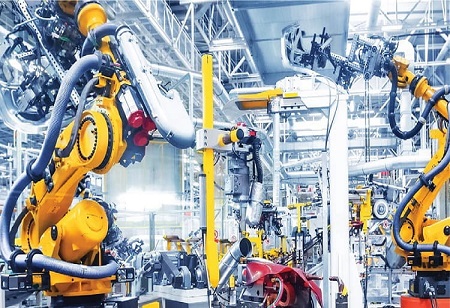
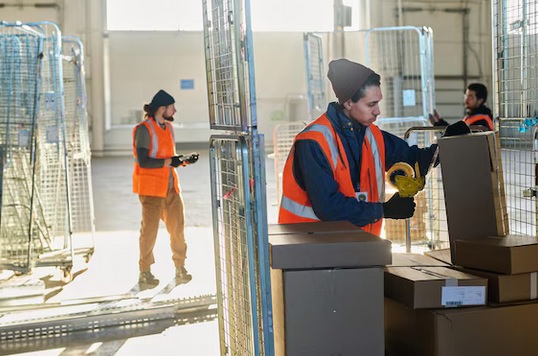 At Tata Motors, collaborative automation is already part of everyday operations. The company has introduced robotic systems across welding, assembly, and paint shops, but the focus has not been on replacing workers, but rather, it has been on redesigning workflows.
In body shop operations, robotic arms handle precision welding. These tasks require consistency and expose workers to heat and fumes. By assigning them to machines, the company reduces both risk and variability in output.
Workers, however, remain central to the process.
Instead of performing repetitive welding, they now:
This is a strong example of human-robot collaboration in Industry 5.0, where machines take over physical load while humans manage decision-making.
Training plays a key role in making this work. Employees are trained to operate robotic interfaces and understand production data. This supports empowering shop floor workers for AI in India, ensuring that workers are not just present but actively involved in managing technology.
The result is a balanced system:
This approach shows how collaborative automation can improve efficiency without removing the human element from manufacturing.
Case Study 2: Mahindra & Mahindra — Upskilling Workers for an AI-Driven Factory
Mahindra & Mahindra provides a clear example of how collaborative automation and workforce developmentcan move together.
Across its plants, the company has introduced cobots in areas such as assembly support and machine tending. These are classic “3D tasks” automation India (dirty, dangerous, dull)—jobs that involve repetitive motion and physical strain.
By shifting these responsibilities to machines, workers are able to focus on higher-value tasks.
What stands out is how roles have evolved.
Workers are now:
This reflects a shift from manual labor to technical involvement, which is at the core of upskilling factory workers for AI.
The company has also invested in structured training programs to support this transition. Employees are encouraged to learn new skills related to robotics, system monitoring, and digital tools. This ensures that automation does not create a skill gap but instead builds new capabilities within the workforce.
Another key change is the use of real-time data. Workers are not just executing tasks—they are interpreting information and making decisions that improve efficiency.
This model shows how collaborative automation can:
It also demonstrates how empowering shop floor workers for AI in India leads to better outcomes for both companies and employees.
Case Study 3: When Factories Don’t Evolve — A Wake-Up Call for Indian Manufacturing
Not every factory in India is moving at the same pace. A recent case where over 2,000 workers were laid off after three years of losses highlights what happens when industries fail to adapt to changing market conditions.
The company blamed low-cost Chinese imports for its declining performance. But the deeper issue was operational. Competing globally today requires speed, flexibility, and cost efficiency—areas where traditional, labor-heavy production models often fall short.
This is where the absence of collaborative automation becomes visible.
Factories that rely only on manual processes struggle to match automated systems in consistency and output. Over time, this gap affects pricing power, margins, and ultimately survival. When businesses cannot compete, workers bear the impact.
This case is not about automation replacing jobs. It is about what happens when modernization does not happen at all.
In the context of Indian factory workers 2026, the lesson is clear. The real risk is not technology adoption—it is being left out of it. Without investments in cobots in MSMEs and process upgrades, both businesses and workers become vulnerable.
This example strengthens the argument for upskilling factory workers for AI and adopting human-robot collaboration in India 5.0 as a long-term strategy for resilience.
Also Read: Advancements in 5G Chipset Development in India's Semiconductor Sector
Why These Case Studies Matter
Taken together, these examples show two very different paths.
The first highlights the risks of staying with outdated systems in a competitive global market. The other two show how companies that invest in collaborative automation are creating safer, more efficient, and more future-ready workplaces.
For Indian factory workers , the message is practical. The future is not about choosing between jobs and machines. It is about learning how to work with machines.
Factories that adopt cobots in MSMEs India 2026, invest in training, and focus on human-robot collaboration in India 5.0 are not just improving productivity—they are building a workforce that can adapt and grow.
That difference will define which industries move forward and which fall behind.
“Trust is engineered by involving operators from the decision stage, clearing every robotic cell through rigorous safety checks, and stabilizing performance through daily reviews after commissioning. As machines take over repetitive inspection, people move into programming, analysis and higher-value roles; acceptance then comes naturally, and productivity sustains itself,” says Harshavardhan S, Business Head – EMS, Titan Engineering and Automation Limited (TEAL).
Outlook
Collaborative automation is steadily becoming a defining feature of India’s manufacturing landscape. Companies such as Mahindra & Mahindra and Tata Motors are integrating AI-driven systems into their operations, demonstrating how human and machine collaboration can improve efficiency and quality.
Looking ahead, the factory environment is likely to become more interconnected, with systems that combine robotics, data analytics, and human oversight. The goal is not to create fully automated facilities but to build environments where humans and machines complement each other.
Collaborative automation, in this sense, becomes a long-term strategy rather than a short-term solution. It offers a way to improve productivity while also addressing issues related to safety, skill development, and worker satisfaction.
The future of manufacturing in India will depend on how effectively this balance is maintained. Technology alone will not determine success; it will depend on how well people are integrated into the system.
Editor’s Note
The conversation around automation often focuses on machines, but the more important story is about workers adapting to change. As collaborative automation continues to expand across Indian factories, the emphasis must remain on inclusion, training, and accessibility. Technology can improve working conditions and create new opportunities, but only if it is implemented with a clear understanding of its impact on people. The real success of this transition will be measured not just by productivity gains, but by how well it supports the workers at the center of it.
.jpg "Fostering High-precision, High-performance with Optimal Metal Finishing Excellence")
.jpg "Devising Future-Proof Sustainable Industrial Packaging Solutions")



We use cookies to ensure you get the best experience on our website. Read more...