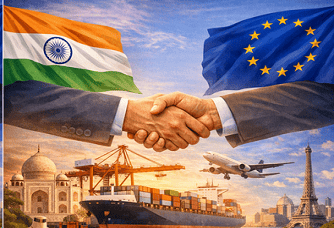
India’s trade relationship with Europe is about to change in a big way. The long awaited India-EU Free Trade Agreement is now a reality after years of negotiation. The agreement will provide Indian exporters an opportunity to enter into one of the richest and most regulated markets worldwide.
The European Union is not an easy place to sell. Standards are strict. Buyers are demanding. Margins are tight. But the rewards are high. With tariffs set to fall across several categories, Indian companies finally get a fair shot at competing in the EU.
For some sectors, the opportunity could be transformational.
At its core, the India-EU Free Trade Agreement lowers or removes import duties on most goods traded between India and the EU’s 27 member nations. Once implemented, a large share of Indian exports will enter Europe at zero or reduced duty.
The agreement also looks beyond tariffs. It includes steps to ease customs processes, reduce non-tariff barriers, and create clearer rules for services trade. Sensitive sectors such as dairy and select farm products remain protected on both sides.
For India, the focus is clear. Grow exports. Create jobs. Pull global supply chains closer.
Also Read: What's Driving LNG Adoption in India’s Commercial Transport
The government has been vocal about the employment impact of the deal, especially in labor-heavy industries.
Piyush Goyal, Minister of Commerce and Industry, has highlighted textiles as a key winner.
“The textile industry is the second-largest job creator in India after agriculture. With the FTA, we can potentially grow exports to USD 30–40 billion, creating 6–7 million new jobs in the sector,” he said.
That message sets the tone. The deal is meant to support factories, workers, and export clusters across states.
Textiles are expected to see gains early. Indian garments earlier faced duties that made them costlier than products from countries with EU trade preferences. That gap now narrows.
Lower duties give Indian exporters room to price better and plan long-term orders. Large buyers in Europe are also looking to reduce dependence on a single sourcing country.
For Indian manufacturers, this means more stable demand and higher capacity use. Spinning mills, garment units, and fabric exporters could all see a pickup.
India already supplies medicines across the world. Europe remains one of the most important, but also the most regulated markets.
The trade deal improves predictability for Indian pharma firms. While quality rules stay strict, trade friction reduces.
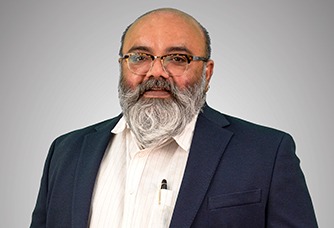
Sudarshan Jain, General Secretary of the Indian Pharmaceutical Alliance, said the scale of the agreement matters.
“The conclusion of India-EU FTA is a landmark moment as it covers 25 per cent of the global GDP and 23 per cent of the world population. India-EU can be a supplier of affordable medicines worldwide,” he said.
Generic drugs, APIs, and medical devices could all benefit over time.
Engineering goods, auto components, and industrial machinery are also expected to benefit. European companies are actively diversifying suppliers, and Indian firms are becoming part of that shift.
Lower tariffs improve cost competitiveness. Clearer trade rules help with long-term contracts.
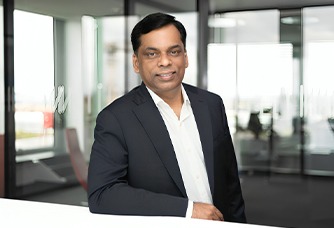
Anil Ethanur, Co-founder of talent and workforce analytics firm Xpheno, pointed to the wider impact.
“The trade deal comes with high job creation potential. Increased production, trade, and consumption of goods will drive blue and grey-collar opportunities,” he said.
This could support jobs beyond exports, including logistics, warehousing, and support services.
Also Read: Intersection of Technology and Sustainability in Last-Mile Mobility
The automotive sector will see mixed effects. While imports may rise, Indian operations also gain access to global technology and supply chains.
Santosh Iyer, Managing Director and CEO of Mercedes-Benz India, said the agreement supports the industry’s long-term growth.
“A gradual tariff reduction on vehicles and fully liberalised automotive parts are strategically important decisions in the FTA for the automotive industry. This will improve vehicle allocations, faster access to the latest technology, and a stronger luxury car ecosystem,” he said.
Hardeep Singh Brar, President and CEO of BMW Group India, has also said phased tariff cuts could support innovation and sustainable growth.
The full impact of the India-EU Free Trade Agreement will take time. Many tariff cuts will be phased in. Companies will need to invest in compliance, quality, and scale.
Those who prepare early are likely to gain the most. MSMEs could see new export orders. Larger firms may expand production and hire more workers.
Competition will also increase. European products will enter India more easily. That pressure could push Indian firms to improve faster.
The deal sets the stage. Execution will decide the outcome. For Indian exporters, Europe is no longer just an option. It is a real opportunity.
1. What is the India-EU Free Trade Agreement?
The India-EU Free Trade Agreement is a trade pact between India and the European Union that aims to reduce or remove import duties on goods and services traded between both sides. It also seeks to make customs rules easier, improve market access, and support long-term trade and investment.
2. Which Indian sectors will benefit the most from the deal?
Sectors such as textiles and apparel, gems and jewellery, pharmaceuticals, engineering goods, auto components, IT services, and tourism are expected to gain the most. These industries will see lower tariffs and better access to European markets.
3. When will businesses start seeing the impact of the deal?
The impact will be gradual. Many tariff cuts will be introduced in phases over the next few years. Companies that prepare early by meeting EU quality standards and scaling production are likely to benefit sooner.

.jpg "AR Enterprises: Building The Supply Networks Behind India's Construction Growth")
.jpg "Industrial Packers: Engineering Industrial Packaging for India's Manufacturing Future")

We use cookies to ensure you get the best experience on our website. Read more...