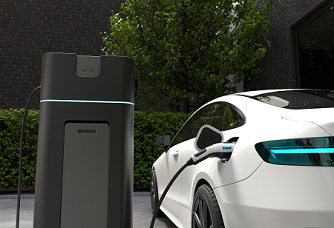
Maruti Suzuki India is moving to localize battery production and key components over the next few years to strengthen the country’s EV ecosystem, as it prepares to launch its first electric SUV, the e VITARA, in the domestic market next year.
The automaker currently imports batteries but has a clear roadmap to localize them in phases. “Right now we are importing the batteries but yes we have a plan for localisation. It is very much on the cards in a phased manner over the next few years,” said Partho Banerjee, Senior Executive Officer, Maruti Suzuki India.
Banerjee said wider EV adoption in India depends on buyer confidence, especially for using electric vehicles as the primary family car. “We believe that the customer is not confident (about EVs). The initial products that were launched, and the experiences from those, has created a huge amount of negativity in the minds of people regarding the driving range,” he said. Most EV buyers still treat them as a second car due to limited public charging.
Also Read: Role of Smart Tyres in Powering EVs and Autonomous Mobility
“It's not the primary car. Since public infrastructure is not there, the buyer doesn't want to take a chance. So if he wants to buy his first vehicle, it happens to be not in EV, but in ICE or some other vehicle,” Banerjee added.
By FY30, Maruti Suzuki India plans five EV models, with industry volumes projected at 5.5–6 million units and EV penetration of 13–15%. However, Banerjee noted that projections may change after GST 2.0.
The company plans 1,500 EV-ready workshops across 1,100 cities, has already installed 2,000 charging points, and targets 1 lakh chargers by 2030. To address resale concerns, it will offer assured buyback and subscription schemes. Maruti has also begun exports of the e VITARA, shipping 10,000 units to 26 markets.

.jpg "AR Enterprises: Building The Supply Networks Behind India's Construction Growth")
.jpg "Industrial Packers: Engineering Industrial Packaging for India's Manufacturing Future")



We use cookies to ensure you get the best experience on our website. Read more...