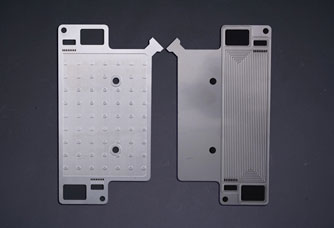
Chemical etching has become a core process in modern metal manufacturing where precision and consistency drive product quality. Chemical etching uses controlled chemical reactions to remove material from metal surfaces, creating highly detailed and accurate components without mechanical force. This method solves many limitations found in traditional machining, such as tool wear, burr formation, and material stress.
Manufacturers across industries rely on chemical etching to produce intricate parts with tight tolerances. Whether you work with thin metals, complex geometries, or high-volume production, this process helps you achieve better accuracy while reducing production risks.
What Is Chemical Etching
Chemical etching, also known as photochemical machining, is a subtractive manufacturing process. It removes selected areas of metal using chemical solutions guided by photoresist masks.
How the Process Works
1. Cleaning
The metal surface is cleaned to remove contaminants.
2. Photoresist application
A light-sensitive coating is applied to the metal.
3. Exposure and development
UV light transfers the design onto the surface.
4. Etching
Chemicals dissolve the exposed metal areas.
5. Stripping and finishing
The remaining resist is removed, leaving the final part.
This process ensures high repeatability and fine detail without direct physical contact.
Why Precision Matters in Metal Manufacturing
Precision defines product performance, especially in industries such as aerospace, medical, and electronics.
Key Precision Challenges
Chemical etching addresses these issues through a non-contact, highly controlled process.
How Chemical Etching Improves Precision
No Mechanical Stress
Traditional methods such as stamping or CNC machining apply force or heat. These introduce stress, which leads to warping or microcracks.
Chemical etching removes material without force. This preserves the original properties of the metal and ensures dimensional stability.
High Dimensional Accuracy
Etching achieves tight tolerances, often within ±0.01 mm. The process relies on controlled chemical reactions rather than tool movement, which reduces variability.
Burr-Free Edges
Mechanical cutting creates burrs that require secondary finishing. Chemical etching produces smooth, clean edges, which improves assembly quality and reduces post-processing time.
Consistent Repeatability
Once the mask design is finalized, every part follows the same pattern. This ensures consistent output across large production runs.
Advantages Over Traditional Manufacturing Methods
Compared to CNC Machining
Compared to Stamping
Compared to Laser Cutting
These advantages make chemical etching a preferred method for precision components.
Applications Across Industries
Electronics Industry
Miniaturized Components
Chemical etching supports high-density designs and ultra-thin materials.
Medical Industry
High Accuracy Requirements
The process ensures smooth edges and contamination-free parts.
Aerospace Industry
Performance Under Extreme Conditions
Chemical etching maintains material strength while delivering precise geometries.
Automotive Industry
Mass Production with Precision
Manufacturers benefit from scalability and consistent quality.
Design Flexibility and Prototyping Benefits
Rapid Iteration
You update the design by modifying the photo mask. No need for new tooling. This reduces development time.
Complex Patterns
Chemical etching produces:
Material Versatility
Compatible materials include:
This flexibility supports a wide range of applications.
TMNetch Chemical Etching Services
Why Work with TMNetch
TMNetch delivers precision-focused chemical etching services designed for industrial applications. The team focuses on accuracy, consistency, and production efficiency.
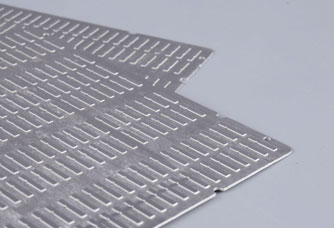
Core Capabilities
Industry Coverage
TMNetch supports a wide range of sectors:
Quality Control Process
This structured workflow ensures consistent product quality and reduces defects.
Conclusion
Chemical etching improves precision in metal manufacturing by eliminating mechanical stress, enabling tight tolerances, and producing clean, burr-free edges. It supports complex designs and consistent output, making it a strong solution for industries that demand accuracy and reliability.
If you need high-precision metal components with flexible design options and scalable production, chemical etching offers a clear advantage. Partnering with an experienced provider such as TMNetch helps you maintain quality while improving efficiency across your manufacturing process.







We use cookies to ensure you get the best experience on our website. Read more...