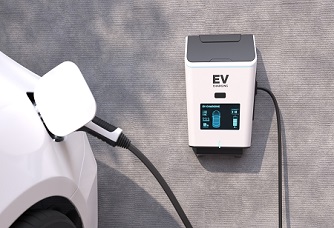
India now operates 29,151 public EV charging stations, a figure that has risen nearly six-fold since 2022.
This expansion marks solid progress in building the country’s charging network. Yet the same numbers raise a clear question: how close does the current base bring India to its 2030 goals?
The government aims for 30 per cent EV penetration in new vehicle sales by that year. Industry projections show the country will need far more chargers to support the expected fleet.
This analysis reviews the present scale, the size of the 2030 requirement, and the uneven geographic spread that could shape the next phase of growth.
India counted 29,151 public EV charging stations as of December 2025. According to a report by Rubix Data Sciences citing data from the Ministry of Heavy Industries, India’s electric vehicle charging station count stood at 29,151. This figure marks a nearly six-fold rise from around 5,000 stations in 2022, with over 200 charge-point operators now active across the country.
Key features of the present network include:
EV penetration itself differs sharply by segment. Three-wheelers stand at 60.77 per cent, two-wheelers at 8.88 per cent, and four-wheelers at 5.70 per cent. Utilization rates remain low, ranging between 1 and 5 per cent, while electricity tariffs often run between Rs 6 and Rs 15 per kWh.
The government targets 30 per cent EV share in new vehicle sales by 2030. Industry estimates project as many as 50 million electric vehicles on Indian roads by that year. A CII calculation indicates India will require at least 1.32 million charging points by 2030. This figure rests on a planning ratio of one charger for every 40 EVs and represents nearly 20 times the current base.
The PM E-DRIVE scheme continues to support the build-out. Authorities have extended it to March 2028 and raised its overall outlay to Rs 11,900 crore, with Rs 2,000 crore set aside for public charging infrastructure. As of March 24, 2026, however, no stations had been installed under the scheme. This gap leaves open space for operators during the extended window.
The current network shows clear geographic concentration. The top 10 states account for nearly 78 per cent of all stations. Karnataka leads with 21 per cent, followed by Maharashtra at 14 per cent. Uttar Pradesh holds 8 per cent, Delhi 7 per cent, and Tamil Nadu 6 per cent.
This uneven spread creates a practical challenge for 2030. High-traffic corridors and fleet-heavy regions will need faster addition of reliable, higher-power chargers.
Operators that prioritize sites with steady demand, efficient power management and strong uptime stand better placed to close the remaining gap. The 29,151-station milestone shows real momentum, yet the path to 1.32 million points will require both scale and smarter geographic balance.
.jpg "AR Enterprises: Building The Supply Networks Behind India's Construction Growth")
.jpg "Industrial Packers: Engineering Industrial Packaging for India's Manufacturing Future")





We use cookies to ensure you get the best experience on our website. Read more...