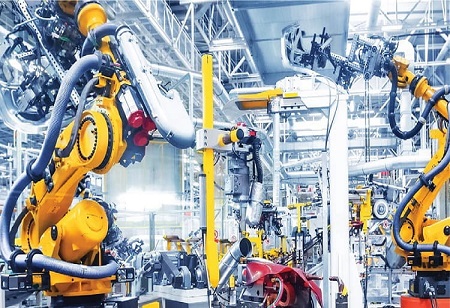

Engineering is undergoing a structural transformation. Machines that once operated independently are becoming intelligent, automated and interconnected, while manufacturing floors increasingly bring together robotics, CNC systems, sensors, controls, software and data. Consequently, the engineer entering tomorrow’s factory will need more than disciplinary knowledge. The ability to understand how technologies interact, diagnose problems and translate concepts into industrial applications will be equally critical. This changing reality places engineering education at an important inflection point, where conventional laboratories must evolve into environments that enable students to learn by seeing, simulating, operating and troubleshooting technology.
CADMECH Engineering Pvt. Ltd. is positioning itself at the heart of this transition. The Pune-based company is moving beyond the traditional role of an engineering laboratory equipment manufacturer to build integrated learning environments that combine physical laboratories with simulation, automation, robotics, AR/VR and digital technologies. Its objective is straightforward yet ambitious: help institutions prepare engineers for the factories they will enter, rather than merely equip laboratories for the curricula they follow today.
From Engineering Laboratories to Learning Ecosystems
CADMECH began with a clear purpose - to make engineering education more practical and closer to industrial reality. Its early journey centred on engineering laboratory equipment and training systems for educational institutions. However, sustained engagement with faculty, students, institutional leaders and industry professionals exposed a persistent challenge: academic understanding did not always translate into practical industrial competence.
That observation gradually changed how CADMECH viewed the laboratory itself. Rather than seeing it as a room containing individual pieces of equipment, the company began approaching it as an interconnected learning environment.
This thinking led CADMECH to expand across CNC technology, hydraulics, pneumatics, mechatronics, PLC and industrial automation, robotics and smart manufacturing. Today, its portfolio includes CNC training machines and simulation solutions, PLC and automation trainers, industrial robotics training systems, mechatronics platforms, hydraulics and pneumatics workstations, factory automation trainers, conveyors, industrial application modules and customized training systems.
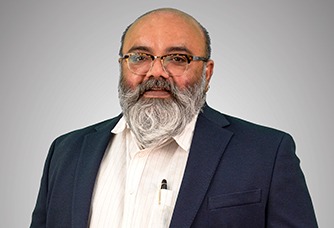
Driving this evolution is Dr. Prakash A. Sulakhe, Director, CADMECH Engineering, an entrepreneur, author and advocate of practical, industry-oriented engineering education. With an MBA and Ph.D. in Management, Dr. Sulakhe has worked at the intersection of engineering education, laboratory infrastructure, manufacturing technology and skill development. His larger focus is on narrowing the distance between what students are taught and what industry ultimately expects them to perform.
Through books on engineering education and Smart Labs, alongside articles, podcasts and industry interactions, he has consistently advocated a shift from conventional laboratory instruction towards experiential and connected learning. That philosophy now forms the foundation of CADMECH’s evolving proposition.
Learning Beyond the Predefined Experiment
For CADMECH, making engineering education industry-ready begins with changing what students are expected to do inside a laboratory. Completing a predefined experiment and arriving at the expected output may establish familiarity with a concept, but industrial environments demand something more: the ability to understand why a system behaves as it does and what to do when it does not.
The company articulates this through a learning progression: Understand → Visualize → Simulate → Experiment → Troubleshoot → Apply.
A student may first understand an engineering principle theoretically and then visualize its behaviour digitally. Simulation enables repeated exploration before the learner moves to physical equipment, where real components, wiring, motion, forces and operating conditions become tangible. Troubleshooting then introduces an important layer of problem-solving before the student connects the learning to an actual industrial application.
This approach also shapes CADMECH’s equipment development. Engineering accuracy, safety, educational usability and industrial relevance are treated as interconnected requirements. Industrial-grade components and realistic operating principles are incorporated wherever appropriate, while systems are specifically engineered for teaching environments through component visibility, accessibility, protection and structured experimentation.
The intended outcome is not simply a student who knows how to operate a trainer, but one who can ask the questions that matter in industry: Why has the system failed? How can the fault be diagnosed? What other systems does it interact with?
Connecting the Technologies of the Modern Factory
The need for such thinking becomes particularly apparent with Industry 4.0. Automation, robotics, CNC or IoT cannot be fully understood as independent technologies because that is rarely how they operate on a modern production floor. A PLC, for example, may communicate with sensors, actuators, drives, HMIs, conveyors and robotic systems. CNC machines are increasingly part of wider automation, monitoring and digital manufacturing environments. Preparing students for such workplaces therefore requires education to move from isolated technology exposure towards systems-level understanding.
CADMECH is developing its learning platforms around precisely these relationships. Its capabilities across PLC automation, robotics, CNC, mechatronics and smart manufacturing provide the physical foundation, while simulation, immersive technologies and interactive learning are being developed as complementary digital layers.
One of the important initiatives emerging from this R&D direction is CAMLEARN, conceived as a Smart Lab learning ecosystem combining guided learning, simulation, industrial skills development and practical laboratory experience. CADMECH is also developing specialized simulation concepts for areas such as PLC and CNC learning.
“The larger R&D philosophy is centred on the convergence of engineering hardware, software, simulation, immersive learning and industrial applications. Instead of digitization replacing physical laboratories, CADMECH sees the two reinforcing each other. Students can practise and explore digitally, but still experience the realities of physical machines and industrial components”, speaks Dr. Prakash A. Sulakhe, Director.
CADMECH began with a clear purpose - to make engineering education more practical and closer to industrial reality
Building Laboratories that Can Evolve
The challenge for educational institutions is not simply adopting newer technology. Industry often changes faster than curricula and infrastructure, while institutions cannot realistically replace entire laboratories every few years. “CADMECH addresses this through modularity, customization and scalability. A university, engineering college, polytechnic, Centre of Excellence or industrial training centre can have very different learning objectives and infrastructure requirements. The company therefore studies factors such as syllabus, experiments, laboratory space, student capacity, budgets and expansion plans before developing a solution”, shares Dr. Prakash A. Sulakhe.
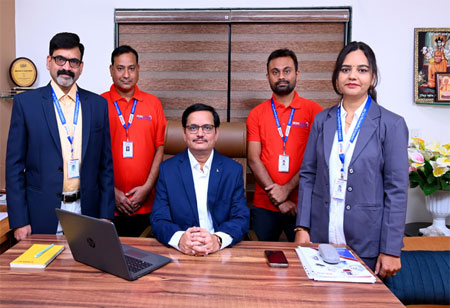
Its in-house engineering capabilities allow mechanical structures, instrumentation, control architecture, applications and experiment configurations to be adapted to specific requirements. Increasingly, however, CADMECH encourages institutions to look beyond one-time procurement and build laboratory architectures that can evolve as technologies and curricula change.
This philosophy extends beyond installation. Commissioning, demonstrations, faculty orientation, operational guidance, technical assistance and maintenance form part of its support model. As advanced technologies enter laboratories, CADMECH believes faculty capability will become as important as the equipment itself. It therefore intends to deepen engagement through structured experiments, digital resources, simulation, training content and faculty-development initiatives.
The goal is to ensure that a laboratory does not remain an institutional asset that is occasionally used, but becomes an active platform for continuous skill development.
Towards the Smart, Connected Engineering Lab
Over the coming decade, CADMECH expects engineering laboratories to become increasingly hybrid, intelligent and connected. Physical equipment will remain indispensable, but simulation, AR/VR, AI-assisted learning, digital twins, learning analytics and remotely accessible resources are likely to add new dimensions to how students practise and understand engineering.
At the same time, traditional disciplinary boundaries are becoming less rigid. Mechanical systems increasingly intersect with electronics, automation, software and data. The future-ready engineer will therefore need to integrate technologies rather than understand each solely in isolation.
“CADMECH’s next phase is being shaped around this convergence. While CNC, robotics, automation, mechatronics, hydraulics and pneumatics will remain core physical strengths, the company plans to build stronger digital layers around simulation, guided learning, immersive technologies and Smart Labs. It also sees significant potential in Centres of Excellence, Smart Manufacturing laboratories, multidisciplinary automation facilities, industry-oriented skill centres and faculty-development programmes”, highlights Dr. Prakash A. Sulakhe.
Rather than pursuing the largest catalogue of laboratory products, CADMECH is working towards a more consequential ambition - building a comprehensive ecosystem for practical and industrial engineering learning.
For Dr. Sulakhe, that ambition ultimately comes back to the engineer being created inside these environments. Tomorrow’s graduate will be judged not only by what he or she knows, but by the ability to understand, integrate, operate, troubleshoot and innovate with technology. By bringing physical engineering, digital learning and industrial skills onto the same learning continuum, CADMECH is working to ensure that the laboratory becomes where that future engineer begins to take shape.
Inside CADMECH’s Future-Ready Learning Ecosystem
Smart Labs: Connecting physical equipment with digital learning
Industry 4.0 Skills: Training across automation, robotics & CNC
Experiential Learning: Moving from concepts to hands-on application
Simulation-Based Learning: Practising engineering before physical execution
Industrial Problem-Solving: Building troubleshooting and diagnostic capabilities
Future-Ready Infrastructure: Creating modular, scalable & connected laboratories




We use cookies to ensure you get the best experience on our website. Read more...