Contract research organisations have become increasingly important to the life sciences industry as product development grows more specialised, regulated and data-intensive. Pharmaceutical, biotechnology, medical device, agrochemical and industrial companies today require research partners capable of supporting complex programmes across discovery, safety assessment, analytical testing and regulatory submissions.
The challenge is no longer simply to conduct individual studies; it is to generate scientifically connected, traceable and regulator-ready evidence while managing timelines and specialised infrastructure.
Within this landscape, Bioscience Research Foundation (BRF) has evolved into a multidisciplinary preclinical contract research organisation with capabilities spanning early discovery through regulatory safety assessment. Founded in 2010, BRF brings chemistry, bioanalysis, DMPK, toxicology, pathology, medical device research, environmental studies and other scientific disciplines within an integrated research environment.
Since its previous Industry Outlook feature in 2022, the organisation has substantially expanded its infrastructure and specialised capabilities, while continuing to build around scientific responsibility and regulatory compliance. Today, BRF operates through four principal service verticals Advanced Therapeutics, Interventional MedTech, Global Agroscience and Environmental.
Building Scale Around Connected Research
BRF's expansion over the past several years reflects a deliberate progression from individual testing capabilities towards connected preclinical programmes. Pharmaceutical and biopharmaceutical services were established in 2020, followed by drug discovery and DMPK capabilities in 2021 and medical device testing in 2022. Industrial chemical services and Unit II were added in 2023, while a third 50,000-square-foot laboratory block completed in 2024 increased its operating laboratory space to 150,000 square feet.
The organisation is now bringing Unit III online across a 4.5- acre campus. The new facility expands large-animal capacity and incorporates dedicated bioanalytical facilities, a radioisotope laboratory, modular operating theatres and a preclinical cath lab.
These additions are designed to support increasingly specialised toxicology, translational, implantation and interventional research.
The scale of BRF's operations has grown alongside this infrastructure. The organisation currently has approximately 320 scientific staff and more than 600 analytical instruments. It has completed around 25,000 GLP studies, worked with approximately 300 clients and generated reports used across 85 countries.
Importantly, BRF's growth is not centred on infrastructure alone. Its model is designed to allow scientific disciplines to work within a coordinated programme. For clients, this can reduce the fragmentation that often arises when samples, methods and data move between unrelated service providers.
Connecting Discovery with Regulatory Safety
One of BRF's most significant developments since 2022 has been the closer integration of early-stage research with regulatory safety programmes. Its drug discovery capabilities include focused and high-throughput screening, receptor and enzyme assays, cell-based functional assays, mechanism studies, biomarker research, target engagement and customised efficacy models.
These capabilities connect with DMPK and bioanalysis services covering metabolic stability, plasma protein binding, CYP studies, permeability, solubility, tissue distribution, metabolite profiling and exposure-response interpretation. Methods developed during discovery or dose-range studies can, where appropriate, continue into subsequent stages, helping preserve methodological and data continuity.
“On the toxicology side, BRF supports acute through chronic studies, dose-range finding, recovery assessment, reproductive and developmental toxicology, immunotoxicity, neurotoxicity, inhalation studies, local tolerance, safety pharmacology, genetic toxicology, clinical pathology, toxicokinetics and histopathology.
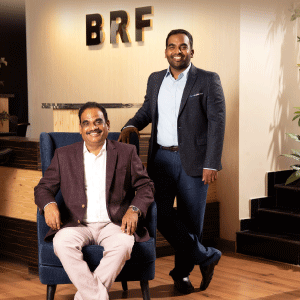
Depending on feasibility and applicable approvals, programmes can address small molecules, biologics, biosimilars, advanced therapies, industrial chemicals, food ingredients, agrochemicals and medical devices”, speaks Dr. C. Tamilselvan, Founder and Managing Director. BRF operates through four principal service verticals, Advanced Therapeutics, Interventional MedTech, Global Agroscience and Environmental Risk Assessment, and Advanced Analytical Services, supported by 14 scientific platforms and 11 scientific departments
Large-animal and translational research is another growing area. Dedicated housing and procedure areas are supported by imaging, surgery, bioanalysis, clinical pathology, necropsy, histology and pathology. This allows observations made during a study to be evaluated alongside exposure data, imaging findings, physiological measurements and tissue-level interpretation rather than as isolated outputs.
Extending Research Across MedTech and Environmental Sciences
BRF has simultaneously broadened its capabilities beyond conventional pharmaceutical preclinical research. Its medical device offering has developed from biocompatibility testing into a wider programme encompassing biological evaluation planning, chemical characterisation, toxicological risk assessment, hemocompatibility, implantation, tissue response, reprocessing validation, sterilisation support and combination products.
The upcoming interventional infrastructure further strengthens this area. A Philips Azurion image-guided system, intravascular ultrasound, echocardiography, physiological monitoring and modular operating theatres are being commissioned to support device deployment, retrieval, image-guided procedures, surgical models and long-term implant assessment.





We use cookies to ensure you get the best experience on our website. Read more...