India has spent the past decade proving that solar can be deployed at scale. The next challenge is more exacting: making renewable energy perform where and when it is needed. Generation without reliability has limited value to a healthcare facility; installed capacity that consistently underperforms weakens project economics; and clean electricity in underserved regions creates its greatest impact when it can power productive activity.
As solar matures, the industry is consequently moving towards a more sophisticated energy question - how generation, storage, performance, and end use can be engineered together.
A&D Renewables Energy is positioning itself within that transition. Founded as A&D Solar in 2018, the company has grown from Nagaland into Assam, Mizoram, Arunachal Pradesh and Karnataka while expanding into battery energy storage, decentralised renewable energy (DRE), operations and maintenance, and asset optimisation.
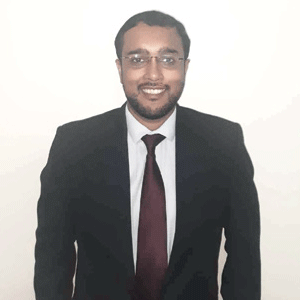
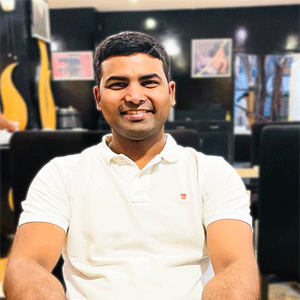
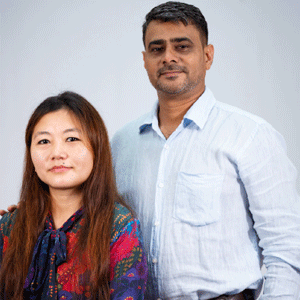
Managing Director Sashimongla Sangtam brings to that growth a conviction that clean energy should enable healthcare, education, livelihoods and enterprise, while CTO Derrick Soans translates diverse energy requirements into technically sound systems. Their combined outlook is pushing A&D beyond the conventional solar EPC brief towards a larger objective: making renewable energy more dependable, productive and commercially useful.
Designing for Energy Reality
The energy transition is often discussed nationally; its constraints are decidedly local. A&D's footprint makes that distinction particularly visible. Across parts of Northeast India, power reliability and grid connectivity can influence the fundamental case for renewable energy. In Karnataka, commercial and industrial users may approach the same technology through energy costs, operational continuity, and reduced dependence on conventional power.
A&D uses those differences as engineering inputs. Consumption and load profiles are studied alongside operating hours, site conditions, existing infrastructure, critical equipment and anticipated demand. Grid reliability and available rooftop or ground area further determine what configuration can realistically deliver the required outcome.
The answer may therefore be on-grid solar in one case and an off-grid or hybrid architecture in another. Battery energy storage becomes relevant where electricity must remain available beyond solar-generation hours or through grid interruptions. For organisations using diesel generators as backup, integrating solar and storage can additionally reduce DG runtime and fuel expenditure.
“We believe that a solar system should be designed around the customer's actual energy needs. Our experience across different geographies has taught us that a standardised approach does not work everywhere. We therefore adapt our technical solutions to local conditions, customer priorities and available infrastructure”, shares Sashimongla Sangtam, Managing Director,, A&D Renewables Energy.
Finding the Missing Megawatts
Not all of India's renewable-energy opportunity lies in building new assets. Some of it already sits on rooftops and sites, installed but producing below potential.
A&D's work in monitoring, maintenance, performance optimisation and the revival of underperforming solar systems addresses this less visible side of the market. An existing plant operating below its intended output represents energy and economic value that has already been invested in but remains unrealised.
Recovering that yield can be as consequential to the asset owner as installing additional capacity.
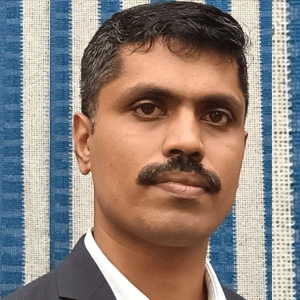
That lifecycle discipline is central to Derrick Soans' role. With 15 years of technical and managerial experience, he leads planning, design, execution, quality assurance and operational performance, connecting the engineering assumptions made before installation with the results delivered afterwards.
“We don't just sell solar; we make sure it performs. Through operations and maintenance, system monitoring, performance optimisation and the revival of underperforming systems, we focus on ensuring that our installations continue to deliver value over their operating life”, states Derrick Soans, Chief Technical Officer, A&D Renewables Energy.
As India's installed solar base expands, this capability creates a market alongside new EPC. The next gains in clean energy will come partly from capacity yet to be built, and partly from extracting more useful generation from capacity already deployed.
Converting Watts into Outcomes
Decentralised renewable energy introduces a different measure of performance altogether. In A&D's DRE work, the meaningful output is not merely electricity generated, but the activity that electricity makes viable.
Solar-powered applications for agriculture and agricultural value addition can strengthen productive livelihoods. Reliable decentralised power can support healthcare and educational facilities where conventional supply is constrained. Rural enterprises can use energy as an input into economic activity rather than remain limited by its availability.
This is where A&D's origins in the Northeast give its renewable-energy proposition greater context. Sashimongla's vision has been shaped by communities where electricity cannot always be taken for granted. As the company expands commercially, she is carrying that understanding into a model in which clean energy is expected to create utility beyond the meter.
“Our DRE initiatives extend renewable energy into applications that can support livelihoods, agriculture, healthcare, education and rural enterprises. This allows clean energy to contribute not only to emission reduction but also to local economic development”, adds Sashimongla.
There is a second infrastructure requirement embedded in that ambition: skills. A&D is training local youth in solar installation, operations and maintenance, linking sector growth with employment while creating technical capability nearer to the assets themselves.
For decentralised energy to scale sustainably, decentralising expertise matters too. A solar installation located far from established service ecosystems cannot depend indefinitely on technical capability arriving from elsewhere. Local energy infrastructure becomes more durable when local human infrastructure develops with it.
Building the Energy Layer
A&D believes solar's next evolution will be defined less by generation technology in isolation and more by the intelligence surrounding energy. Storage changes when renewable electricity can be used. Hybridisation changes how different sources can support continuity. Remote diagnostics improve visibility into asset behaviour, while smarter energy management can determine how available power is deployed.
That shift is also reshaping A&D's business model. The company plans to build beyond project-led EPC through BESS, hybrid systems, technology distribution, technical services and after-sales support, creating a broader B2B and commercial-and-industrial platform.
A&D believes solar's next evolution will be defined less by generation technology in isolation and more by the intelligence surrounding energy
Strategic manufacturer partnerships are intended to accelerate this progression. A&D sees opportunities to provide regional distribution, deployment and technical support for established solar and power-technology companies across modules, inverters, storage and adjacent technologies. Its regional knowledge and execution capability can consequently become infrastructure for technology providers as well as end customers.
“We believe the industry is moving from simply generating solar power to intelligently managing energy. The next phase will be driven by the integration of solar generation with energy storage, smarter energy management and decentralised systems, and this shift will play a major role in India's clean-energy transition”, he concludes.
Building this platform will require greater technical capacity, infrastructure and working capital as A&D moves into new markets. But the strategic direction is already broader than geographic expansion. The company is moving towards a role that connects technology providers, energy assets, technical expertise and end users across more of the renewable-energy lifecycle.
From Energy Access to Capability
Since beginning in 2018, A&D has delivered hundreds of renewable-energy projects across residential, commercial, institutional and community applications.
A&D is developing a broader role for battery energy storage and hybrid systems, particularly where customers require continuity, reduced diesel dependence or greater control over their energy use.
Its emerging B2B strategy creates another avenue for growth: combining technology distribution with deployment and local technical service, giving manufacturers a regional execution interface rather than a conventional sales channel.

We use cookies to ensure you get the best experience on our website. Read more...