
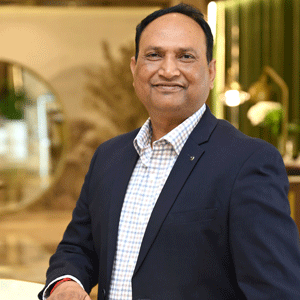
India's power distribution landscape is being reshaped as networks expand, infrastructure moves underground, and utilities demand higher levels of reliability, safety and availability.
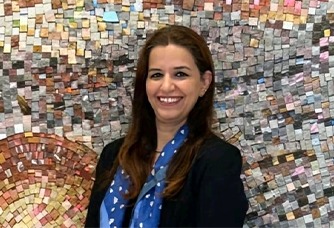
For switchgear and power-distribution manufacturers, this transition requires more than standard equipment: it calls for engineering that responds to voltage, application, maintenance and customer-specific requirements. Chairman and Managing Director Jignesh Patel has built Parth Electricals & Engineering Limited around precisely that field-led perspective.
Engineering a Manufacturing Business from the Customer's Side
Jignesh Patel's experience in customer service at Jyoti Limited and Siemens, followed by sales and major-project responsibilities including the Reliance Jamnagar refinery project, gave him first-hand exposure to how electrical systems perform beyond the drawing board. He brought that perspective to Parth, founded in 2005 as a service enterprise. Repeated encounters with maintenance constraints and requirements that were not well served by standardised products ultimately led the company into design and manufacturing.
From Service Expertise to Manufacturing Capability
As a first-generation entrepreneur, Jignesh built PEEL around the capability he knew best: service. He recruited and trained technicians and engineers and worked alongside them at customer sites. Early assignments with Reliance, Indian Oil, Tata and Essar established credibility while creating the financial base to invest in people, testing equipment and 24/7 field support. More importantly, service gave PEEL a view of equipment after installation. Its engineers saw the maintenance challenges and application constraints that emerge over years of operation. By 2007, the business had become a private limited company; soon afterwards, these field insights prompted its move into manufacturing.
The commitment was substantial. An initial plan for a 5,000-square-foot unit became the acquisition of a 1.8 lakh-square-foot site in Manjusar near Vadodara, undertaken at a time when institutional finance was difficult to secure. The company initially relied on expensive capital, repaid through service revenues, before its first shop floor and engineering office enabled banking support in 2009–10. That once-outsized site is now fully utilised.
"We were going to customers to provide services for products manufactured by other companies, and we could see their pain areas. A lot had been standardised by large manufacturers, but customers had different requirements and maintenance issues. We started understanding those requirements and thought, why not enter manufacturing ourselves?”, says Jignesh Patel, Chairman and Managing Director, Parth Electricals & Engineering Limited.
Manufacturing, therefore, did not create PEEL's customer knowledge; customer knowledge created its manufacturing business. PEEL is a customer need driven company.
Turning Field Insight into Products
PEEL accelerated its manufacturing capabilities through an association with Areva France, supporting engineering design and outsourced production of medium-voltage switchgear. As Areva's medium-voltage business became part of Schneider Electric, the relationship continued.
Parth today supports Schneider with outsourced manufacturing and design for new products while simultaneously expanding its own portfolio.
Technology transferred from Schneider (erstwhile AREVA) enabled PEEL to manufacture Ring Main Units (RMUs) and compact substations under its own name, a segment gaining relevance as India's distribution networks increasingly move underground. Its equipment reaches utilities and projects across Gujarat, Odisha, Madhya Pradesh, West Bengal, Puducherry and Bihar, alongside organisations including NTPC, Adani and Military Engineering Services.
In-house engineering has widened the portfolio further. PEEL produces control and protection relay panels from 33 kV to 220 kV, medium-voltage metering panels and link boxes, while its switchgear capability begins at 415 V. Within compact substations, the company manufactures the RMU and low-voltage panel internally, while sourcing the transformer externally.
The engineering process reflects the complexity of utility and industrial requirements. IEC standards provide the baseline; consultant specifications and customer network requirements are then layered onto them. Parth applies its field-service experience to ensure that usability and maintainability are considered in the final design.
"We study all three - the IEC standard, the consultant's specification and the customer's requirement - and design the product to meet them. In addition, we know the customer's pain areas, so we make sure the design considers user-friendliness and maintenance-friendliness. The basic design follows international standards, but the final product has to address the application”, adds Jignesh Patel.
Engineering Responsibility Beyond Dispatch
Switchgear expected to operate for 20 to 25 years cannot be judged solely at dispatch. PEEL therefore carries its engineering responsibility through testing, commissioning and aftermarket support. Products undergo type testing against applicable IEC requirements at accredited laboratories, followed by controls covering incoming-material inspection, production and final testing. Customers witness routine tests before dispatch clearance, adding another layer of scrutiny before equipment reaches site.
PEEL then supports installation and commissioning, with its service organisation remaining available for spares, modifications, health checks and maintenance contracts. This lifecycle capability also creates a feedback loop: experience from installed equipment informs subsequent engineering and product development.
The model also shapes customer relationships. Service frequently gives PEEL its first view into an organisation's installed electrical systems and technical requirements; product opportunities follow once that capability has been demonstrated. After-sales support then sustains the relationship and contributes to repeat orders. Jignesh intends to develop external technical training into a revenue stream, extending the company's role from employing skilled resources to creating them
That cycle is increasingly extending overseas. PEEL has exported intelligent motor control centres to the United States, as well as compact substations and RMUs to international markets. Low-voltage switchgear is now being developed with a particular emphasis on exports, adding another avenue for manufacturing growth.
Preparing for the Next Leap
PEEL is treating 2026 and 2027 as capacity-building years ahead of a larger growth cycle from 2027. With the Vadodara plant fully utilised, two additional factories, including one in Odisha, are being developed to expand production and support a wider international footprint. At the same time, the company is investing in a constraint that factory space alone cannot solve: technical talent.
Its skill-development centre was established initially to strengthen Parth's own workforce, but customer engineers are already being trained at its facilities. Jignesh intends to develop external technical training into a revenue stream, extending the company's role from employing skilled resources to creating them.
"2026 and 2027 are the years we are building ourselves and making ourselves ready for the next leap. We will have both factories ready, expand exports to other countries and develop the skills required for our own operations. Going forward, those skilled resources will also contribute to companies pursuing their own expansion and growth plans”, concludes Jignesh.
There is an apt symmetry to that ambition. Jignesh began PEEL by training technicians himself because ready-made talent was beyond the young company's reach. Two decades later, that necessity is evolving into institutional capability.
PEEL's next phase is therefore not capacity expansion in isolation. New factories, exports, proprietary products and skill development are widening the role it can play across India's electrical ecosystem. Having built its manufacturing intelligence from years inside customer facilities, the company is now positioning that intelligence for scale - moving from solving problems in the field to engineering more of the infrastructure behind them.


We use cookies to ensure you get the best experience on our website. Read more...


