
The knitted fabric industry is moving beyond scale. As apparel brands demand greater speed, consistency, customization and sustainability from their manufacturing partners, knitted fabric manufacturers are increasingly being challenged to rethink how they produce, process and deliver.
The shift is particularly visible across complete gamut of knitted fabric garments, where fabric is expected to combine comfort, durability, aesthetics and functionality while meeting increasingly stringent environmental expectations.
For manufacturers, this changing landscape is making integration a strategic advantage. Greater control over the value chain can translate into better quality, shorter lead times and stronger supply-chain resilience. It is within this evolving industry environment that KDFP Pvt. Ltd. has built its position as the processing and technology backbone of the KD Group, bringing knitting, fabric processing and garment manufacturing into an increasingly integrated textile ecosystem.
From Textile Legacy to Integrated Manufacturing
KDFP’s story is rooted in a textile legacy that dates back to 1957, when RDRP Ludhiana began with knitted fabrics and garments. The Group’s transformation accelerated in 2012, when it embarked on a structured modernization and expansion programme, growing from a traditional textile operation with a turnover of around INR 20 crore.
The subsequent years saw investments in capacity, technology and manufacturing infrastructure. KD Fabrics & Apparels was established in 2015 with a 2 lakh sq. ft. facility, contributing to a significant increase in production capability and helping turnover reach INR 65 crore by 2016. By 2020, knitting capacity had grown to 25,000 kg of fabric per day, while garment manufacturing reached 50,000 garments per day.
The next strategic step was backward integration. Established during 2021–23, KDFP was developed as the Group’s dedicated dyeing and fabric processing facility. Its 50-acre integrated campus, with approximately 3.5 lakh sq. ft. of built-up area, houses advanced European dyeing and finishing systems with processing capacity of 25,000 kg per day.
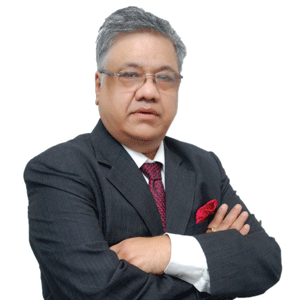
“This integration has given KD Group greater control over quality, production planning and delivery timelines while reducing dependence on external processing partners. By FY2025, the Group had grown to approximately INR 344 crore in turnover, reflecting the scale of a transformation driven by technology, disciplined execution and long-term thinking”, shares Rahul Gupta, Director.
Technology, Quality and Customer Respon- siveness
KDFP’s competitive proposition lies in the combination of scale and control.
Rather than operating simply as a fabric processor, it functions within a connected manufacturing ecosystem where knitting, processing and garment production can work in coordination.
Its advanced dyeing and finishing infrastructure enables precise control over critical fabric parameters including colour consistency, shade matching, shrinkage, dimensional stability, surface finish and overall fabric performance. Comprehensive quality processes extend across raw material inspection, processing, finishing, testing and final dispatch.
“The company’s quality and sustainability framework includes ISO 9001:2015, ISO 14001:2015, Oeko-Tex certification and the Higg Index sustainability framework, alongside initiatives towards GOTS and GRS certifications. These systems strengthen its ability to serve customers seeking consistent, compliant and responsibly manufactured textiles”, mentions Rahul Gupta.
KDFP's growth is not simply about adding capacity. It is about building a manufacturing model capable of balancing productivity with responsibility
KDFP also focuses on customized knitted fabric solutions for apparel, sportswear, warmers, children's wear, fashion and institutional applications. Customers can work with the company on fabric structures, GSM, fibre blends, finishes, colours and performance characteristics, allowing KDFP to respond to increasingly differentiated market requirements.
The integrated model has also contributed to an approximately 21 percent reduction in lead times, reinforcing one of the most important requirements in today's textile supply chain: responsiveness.
Sustainability as a Manufacturing Imperative
For the textile industry, sustainability is rapidly moving from a differentiator to an operational necessity. KDFP has approached this transition by embedding environmental considerations into its manufacturing infrastructure rather than treating them as a standalone initiative. Its operations incorporate parali-fired boilers aimed at reducing agricultural residue burning, solar energy systems, natural-light architecture, smart ventilation and zero-waste practices. The company has also developed an in-house Miyawaki forest as part of its biodiversity efforts.
These initiatives reflect a broader understanding of responsible manufacturing—one that connects energy efficiency, resource utilization, workplace conditions and environmental stewardship. The company's social contribution is equally significant. With more than 2,500 livelihoods supported, KDFP and the wider Group have created employment opportunities across rural and semi-urban communities while encouraging women's participation in manufacturing and investing in safe, hygienic workplace facilities.
Building the Fibre-to-Fashion Ecosystem
The next phase of KDFP's journey is focused on completing the integration that has defined the Group's transformation. One of the most significant planned investments is a modern spinning mill, which will extend backward integration further upstream and give the Group greater control over yarn quality, raw material consistency, supply reliability and product development.
The proposed facility represents an important step towards a complete fibre-to-fashion ecosystem encompassing spinning, knitting, processing and garment manufacturing. Such integration could give KDFP greater flexibility in responding to customer requirements while strengthening resilience against supply-chain disruptions.
At the same time, the company intends to deepen its focus on technology, sustainable manufacturing, product innovation and international markets. Its growing export activity, including fabric supplies to Sri Lanka and exploration of markets such as South Africa, points towards a broader global ambition.
From its beginnings in Ludhiana nearly seven decades ago to a modern integrated textile enterprise, KDFP's journey reflects how traditional manufacturing businesses can evolve without losing sight of the fundamentals that built them: quality, reliability and customer trust. As the knitted fabric industry enters a more demanding and technology-led era, KDFP is positioning itself not merely to participate in that transition, but to help shape it.

We use cookies to ensure you get the best experience on our website. Read more...