The textile industry is under increasing pressure to rethink how fibres are sourced, processed and converted into finished products. As brands and manufacturers respond to growing expectations around responsible materials, resource efficiency and product safety, sustainable textiles are moving beyond being a niche category.

The focus is increasingly on materials that can combine environmental considerations with the softness, strength, durability and commercial viability expected from modern fabrics. This shift is creating opportunities for manufacturers that can translate alternative fibres into dependable textile solutions.
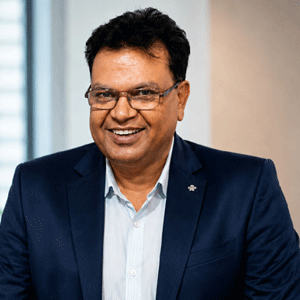
It is in this evolving landscape that Bambzi has built its proposition around bamboo-based yarns and fabrics. Founded by Murli Lakhani, who brings more than three decades of experience in the textile industry, the company has developed its expertise around bamboo textiles since 2014. Working alongside him, his son CA Ashish Lakhani brings his professional experience into the business and is involved in day-to-day operations, product development and market expansion. Together, they are combining established textile knowledge with a focused approach to bamboo-based materials.
Building Quality into Bamboo Textiles
For Bambzi, sustainability begins with the material but cannot end there. Bamboo-based fibres can be sensitive to mechanical handling, moisture, tension, heat and processing conditions, making process discipline particularly important. The company therefore follows a stage-wise quality control approach covering the journey from fibre to finished fabric.
“This focus allows Bambzi to address one of the key challenges associated with sustainable textiles: ensuring that an environmentally conscious material does not require customers to compromise on performance. Softness, comfort, strength and durability are treated as interconnected requirements rather than separate product attributes.
By maintaining control over quality parameters at different stages, Bambzi seeks to deliver fabrics that can meet the practical expectations of brands, manufacturers and garment businesses”, shares Ashish Lakhani, Director.
The approach reflects the company's wider understanding of the textile market. Sustainable materials have limited commercial value if their quality, consistency or application does not align with the requirements of manufacturers. Bambzi's emphasis, therefore, is on making bamboo workable for real-world textile applications.
From Fibre to Fabric, with Process Control
Bambzi's manufacturing approach combines controlled textile processes with certification and continuous testing. The company works with OEKO-TEX®-certified materials and processes wherever applicable, supporting its focus on product safety and responsible management of processing inputs.
This becomes particularly relevant when working with bamboo-based materials, where processing conditions can influence the final characteristics of the fabric. By applying defined controls across manufacturing stages, Bambzi aims to maintain consistency while managing the mechanical, thermal and chemical factors that can affect the material.
“The company's approach consequently goes beyond positioning bamboo simply as an eco-friendly fibre. It treats bamboo as a textile material that needs to be engineered, processed and tested with the same attention given to performance-oriented conventional textiles. This combination of controlled manufacturing, certification and quality testing forms an important part of Bambzi's positioning in the sustainable textile segment”, says Ashish Lakhani.
Making Bamboo More Accessible to the Market
A significant part of Bambzi's proposition lies in the breadth of its product portfolio. Rather than offering a limited selection of bamboo fabrics, the company has developed more than 100 varieties of bamboo and bamboo-blend textiles across different constructions, weights, compositions and applications. These include both woven and knitted fabrics.
This variety enables customers to explore bamboo according to their specific requirements instead of adapting a product to fit a fixed material offering. Bambzi also supports bulk as well as smaller sampling requirements, allowing brands to test sustainable materials before moving into larger production programmes. The company says it is already working with more than 100 brands in India and international markets involved in bamboo garmenting.
This market-facing approach is important as sustainable textile adoption becomes more practical and application-driven. Brands are increasingly looking for materials that can work across product categories while meeting expectations around feel, performance and design. Bambzi's focus on multiple GSMs, structures, blends and applications allows it to respond to that requirement while helping customers explore bamboo without treating sustainability as a standalone marketing proposition. The recognition as a Sustainable Textile Manufacturer marks an important milestone for Bambzi, but the company views it as part of a longer journey rather than an endpoint
Scaling a Sustainable Textile Portfolio
The recognition as a Sustainable Textile Manufacturer marks an important milestone for Bambzi, but the company views it as part of a longer journey rather than an endpoint. Its immediate roadmap is centred on expanding its range of bamboo-based yarns and fabrics while developing new blends, structures and performance-oriented products.
“The company also intends to strengthen its B2B presence by working more closely with brands, garment manufacturers, designers and sourcing partners. A key part of this effort will be addressing the technical and commercial challenges that continue to influence wider adoption of bamboo textiles”, adds Ashish Lakhani.
Bambzi has set an ambitious target of achieving INR 150 crore in turnover from its bamboo business by FY2028. Reaching that goal will require the company to scale its portfolio while preserving the quality and process discipline on which its proposition has been built.
Ultimately, Bambzi's larger ambition is to establish bamboo as a significant sustainable textile category by demonstrating that responsible material choices can coexist with commercial performance. In doing so, the company is positioning itself not merely as a supplier of alternative fibres, but as a textile partner helping businesses make sustainability more practical, scalable and relevant to the products they create.




We use cookies to ensure you get the best experience on our website. Read more...