
India's aluminium market is entering a period in which demand growth will test more than production capacity. Consumption is expected to rise as railways, electric mobility, renewable energy, electrical networks, construction and advanced manufacturing absorb more of the metal, yet procurement remains exposed to volatile prices, varied specifications and working-capital pressures.
For manufacturers, securing aluminium competitively is increasingly a question of what to source, from whom, in what quantity, at what point and with what price exposure. That complexity is expanding the role of distributors capable of managing more than physical supply.
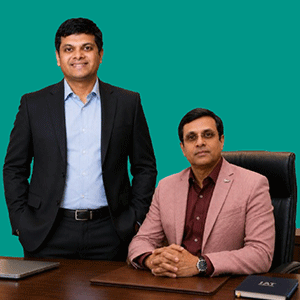
India Aluminium Trading Company (IAT Aluminium) has spent 55 years building that capability. Established by Shri Gopalji Agarwal in 1971, the business entered a broader phase after Neeraj Agarwal moved to Chennai in 1998 and expanded it beyond aluminium extrusions into primary aluminium, flat rolled products, roofing products and specialised extrusions.
Today, Neeraj works alongside the third generation as IAT combines longstanding producer relationships with professional management, technology and price-risk tools. The proposition has evolved accordingly: from supplying aluminium to helping customers procure it with greater choice, responsiveness and commercial control.
Sourcing Around the Requirement
IAT's diversification was deliberate. As Neeraj gained a closer understanding of customers' applications, the company widened its portfolio so that procurement need not begin with the limitations of a single product category or source. Primary aluminium now encompasses ingots, billets and wire rods; flat rolled products include sheets, coils, plates and chequered sheets; roofing and specialised extrusions extend the offering further. The website also confirms IAT's stockist relationships across major producers and its ability to supply customised rolled products by size, grade and temper.
More significant than range is the sourcing flexibility behind it. Relationships with NALCO, Hindalco and BALCO as primary aluminium producers, alongside downstream producers, to assess the application, grade, specification, quantity and delivery requirement before identifying the appropriate source. Its primary aluminium business serves a diverse manufacturing base that includes extrusion manufacturers, alloy manufacturers and metal powder manufacturers, alongside other industrial users.
These segments are increasingly important to IAT's growth as demand for aluminium expands into more specialised manufacturing applications. A trial requiring a single piece and an industrial project requiring hundreds of tonnes are different procurement problems; IAT's role is to structure each accordingly.
“We don't simply sell a particular make; we provide the right sourcing solution for the customer's requirement. Sometimes one producer may be better suited and sometimes another. Our role is to understand the application and connect the customer with the most suitable sourcing option”, shares Neeraj Agarwal, Partner, India Aluminium Trading.
Making Procurement Work Harder
Availability has value only when it aligns with how a manufacturer consumes material. Excess inventory ties up capital; insufficient stock can interrupt production; long lead times force businesses to commit cash earlier than necessary. IAT increasingly approaches distribution through this wider commercial lens.
Its network is being developed around manufacturing clusters to shorten the distance between stock and consumption. Alongside its Chennai base, the company has expanded across Raipur, Visakhapatnam and the Ahmedabad region, with further locations under evaluation.
Its website identifies Chennai as the central warehousing hub and Raipur as a stocking point supporting wider national supply.
The objective is not geographical presence for its own sake. Greater proximity can reduce replenishment times and allow customers particularly MSMEs to procure more closely against actual production requirements instead of carrying inventory simply to compensate for supply-chain uncertainty.
The same philosophy applies to specialised extrusions. IAT is increasing its focus on exclusive dies and sections for OEMs and application-specific requirements, allowing engagement to begin at development rather than after a standard profile has been selected.
“Our philosophy is to ask, ‘How can we solve this requirement?’ rather than simply, ‘What can we sell?’ A customer may need a single piece for a trial, while another may require hundreds of tonnes for an industrial project. Both requirements receive the same seriousness from us”, states Neeraj.
Managing the Price Variable
That alignment becomes harder when the underlying commodity itself is volatile. Aluminium prices respond to global supply and demand, LME movements, currency fluctuations, energy costs, inventories and geopolitical developments. For a manufacturer quoting a fixed-price project today and purchasing metal weeks later, the movement between those dates can materially alter the margin.
IAT is addressing that exposure by adding LME- and MCX-linked pricing models and hedging structures to its procurement capabilities. Appropriate MCX hedging can help customers manage metal-price exposure and, where the commercial structure permits, create greater certainty over aluminium cost during an order cycle.
The distinction is important. IAT is not presenting itself as a forecaster of commodity markets; it is helping customers separate the commercial decision to accept an order from an uncontrolled bet on where aluminium prices may subsequently move.
Technology is making that capability more systematic. Data is being used to analyse buying patterns, sharpen inventory decisions, manage enquiries and automate follow-ups, allowing knowledge accumulated over five decades to become less dependent on individual memory and more readily scalable across the organisation.
IAT is not presenting itself as a forecaster of commodity markets; it is helping customers separate the commercial decision to accept an order from an uncontrolled bet on where aluminium prices may subsequently move
“Our job is not to predict every movement in aluminium prices; it is to help customers manage the consequences of those movements. We combine market intelligence, price modelling, MCX/LME-linked pricing and hedging, sourcing relationships and inventory planning so customers can focus on their manufacturing and business”, adds Neeraj.
Building the Third Generation
IAT's next chapter is being shaped by a generational transition as much as geographic expansion. Neeraj remains focused on carrying forward relationships and experience built over decades, while the third generation is introducing a different set of capabilities.
Utkarsh Agarwal, with an MSc in Strategic Management & Planning from UCD Michael Smurfit Graduate Business School and previous experience at EY in Dublin, is bringing greater structure, technology and strategic management into the organisation. Ekansh Agarwal, whose background is in Supply Chain Management from TU Darmstadt, is based in Germany and contributes to the group's emerging international direction. IAT's website similarly identifies the third generation as central to its adoption of new technologies and systems.
That international ambition is taking shape through group company HandelsBridge, conceived to connect Indian manufacturers with European markets while helping European businesses source from India. The logic extends beyond creating another trading channel: helping an Indian manufacturer win overseas business can increase its production, and consequently deepen the aluminium ecosystem IAT already serves.
“We want to retain the trust and relationships built over 55 years while creating a more technology-driven, professionally managed and globally connected organisation. We don't want to simply sell more aluminium. We want to participate in the growth journeys of the businesses we serve”, concludes Neeraj.
For IAT, completing 55 years is not simply a marker of longevity; it provides the foundation from which the company is recasting aluminium distribution as a more connected, intelligent and commercially useful part of manufacturing.
Aluminium Across Industry
IAT supplies sectors spanning automotive and transportation, railways, electrical and power, engineering, construction, insulation, medical applications, aerospace and defence, as well as extrusion manufacturers, alloy manufacturers and metal powder manufacturers, particularly through its Primary Aluminium business.
Extrusion capabilities extend from architectural profiles to flat bars and tubes used in transmission and distribution, with exclusive dies available for non-standard requirements.
Its rolled-product portfolio accommodates standard and special alloys, while customised dimensions, grades and tempers allow procurement to follow application requirements rather than fixed stock formats.
Across these businesses, IAT continues to operate around four principles articulated by Neeraj: Honesty, Commitment, Transparency and Speed.


We use cookies to ensure you get the best experience on our website. Read more...


