India’s semiconductor push is beginning to create opportunities beyond chip fabrication and packaging.
As fabs, OSAT and ATMP facilities move from investment announcements toward commercial production, the country is also developing a parallel requirement for specialized engineering, utilities and mission-critical infrastructure.
Electromech Infraprojects entry into the semiconductor infrastructure sector is an early example of this shift.
The company plans to bring its capabilities in integrated MEP engineering, critical power, precision HVAC, utilities, project management, testing and commissioning to semiconductor and allied electronics facilities.
The development points to a broader opportunity for Indian engineering companies as semiconductor manufacturing expands domestically.
MEP and mission-critical infrastructure specialist Electromech Infraprojects has announced its entry into India's semiconductor infrastructure sector.
Extending its engineering and project-delivery capabilities into semiconductor fabs, OSAT, ATMP and allied electronics manufacturing facilities.
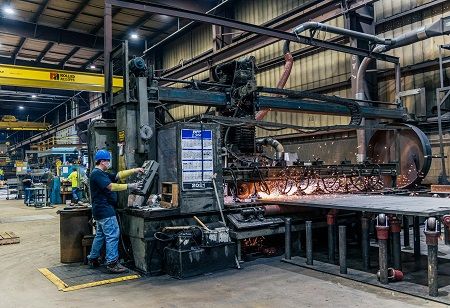
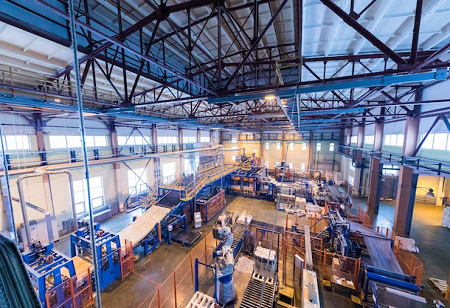
The company is leaning on its existing base in data centers, industrial projects and mission-critical infrastructure, and an infrastructure supporting over 350 MW of IT load, with a manufacturing footprint exceeding two lakh square feet across Mumbai and Hyderabad.
Its offering spans integrated MEP engineering, critical power systems, precision HVAC, utilities, project management, and testing and commissioning.
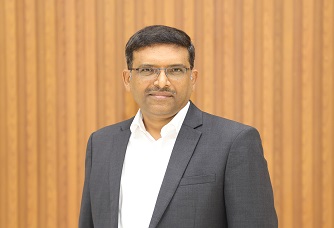
Managing Director Varun Maniar framed the move as an expansion rather than a pivot.
Also Read: How LiDAR, Thermal & UV Payloads Revolutionize Power Transmission
A semiconductor plant requires far more than the integration of chip-making equipment.
Its supporting infrastructure must deliver tightly controlled operating conditions, high-precision environmental management, and reliable utilities to ensure consistent manufacturing performance.
Precision HVAC and environmental systems are also required to maintain temperature and other operating conditions, while utilities and integrated MEP systems have to work together with the production environment.
This is precisely the gap Electromech is positioning to fill. Data centers already demand redundant power, tight environmental control and high-reliability commissioning; semiconductor facilities push those same disciplines further.
Electromech has identified power quality, thermal management, environmental control and integrated engineering as areas requiring greater precision in semiconductor facilities than in conventional industrial projects.
The opportunity therefore extends beyond constructing the physical building. It includes the engineering, installation, integration, testing and commissioning required before a semiconductor facility can operate at commercial scale.
The timing of Electromech’s move is linked to a semiconductor industry that is entering a more execution-focused phase.
Under Semicon India Program, with an outlay of Rs 76,000 crore, the government had approved 10 projects- two fabs and eight packaging units. Envisaging investment of around Rs 1.6 lakh crore, with pilot production underway at four units.
By mid-2026, approvals had grown to 12 projects worth over Rs 1.64 lakh crore, spanning silicon and silicon carbide fabs, a gallium nitride micro-LED display fab, and nine packaging units.
In July 2026, the Cabinet approved Semicon 2.0 with an outlay of Rs 1,27,500 crore, structured around six pillars covering design, equipment and materials, fabrication, ATMP/OSAT, R&D and talent.
That expansion matters for infrastructure providers because every additional manufacturing or packaging facility creates requirements beyond semiconductor equipment itself.
The demand is already becoming visible in areas such as cleanroom operations. At SEMICON India 2026, the government highlighted increasing demand for cleanroom technicians and maintenance personnel, with the planned training target of one lakh technicians under ISM 2.0 potentially requiring an increase.
Also Read: Navigating the Future of Rail Manufacturing in India
India’s semiconductor localization drive has largely centered on building domestic chip fabrication, packaging, materials, equipment and design capabilities.
The infrastructure supporting these facilities represents another layer of potential domestic value addition. Where Indian engineering firms could contribute through MEP, HVAC, electrical systems, utilities, cleanroom-support systems, fabrication and modularization.
The gap is real: semiconductor requirements are specialized enough that engineering firms entering the space will need to build sector-specific expertise rather than simply repurposing data-center playbooks.
The larger point Electromech's entry gestures toward is that India's semiconductor ambitions will ultimately need more than fabrication capacity - they will need an ecosystem of firms capable of designing, building, commissioning and maintaining the industrial infrastructure around every plant.






We use cookies to ensure you get the best experience on our website. Read more...