 A story may be well written, an image visually compelling, and a campaign persuasive, yet each can fall short if the thinking, evidence, or understanding behind it is weak. In media and communication, the quality of the output depends as much on the judgement that shapes it as on the tools used to create it. As artificial intelligence (AI) becomes increasingly integrated into professional practice, this distinction matters more than ever.
AI can assist with research, transcription, data analysis, editing and content creation, making many tasks faster. Yet efficiency does not guarantee credibility, originality or relevance. The challenge for emerging media professionals is not simply to learn how to use AI, but to understand their craft well enough to question its outputs, recognize its limitations and use it purposefully.
The changing media landscape adds urgency to this challenge. The Reuters Institute for the Study of Journalism’s “Journalism, Media, and Technology Trends and Predictions 2026” report forecasts a 43% decline in search-engine traffic to publishers over the next three years. As audience behaviour and content discovery evolve, media professionals will need to offer more than readily available information. They must create work that is credible, distinctive, and meaningful to the audiences they serve.
Preparing for this environment begins with how journalism and mass communication is taught. At Navrachana University (NUV), the Journalism and Mass Communication program connects classroom learning with professional practice through field assignments, interviews, research, and media production. For students learning reporting and investigative journalism, field exposure is essential. They need to visit locations, observe situations, interview people, ask follow-up questions, and examine evidence to understand the realities behind a story. When students cover major events in the city, they engage directly with the people and stories they report. Such experiences help them move beyond information available online and develop their own understanding of events, people, and perspectives.
This changing landscape also raises questions about how media and communication are taught. In Brands and Strategic Communication, students apply branding concepts and models to real-world challenges, research audiences, diagnose problems, and develop communication strategies. In Strategic Diplomatic Communication, they examine how culture influences diplomacy and geopolitical relationships through frameworks such as Hofstede’s cultural dimensions. These learning experiences involve more than understanding concepts; they require students to interpret situations, evaluate evidence, and make informed decisions. Such capabilities will matter in a professional environment where the tools, workflows, and expectations of media and communication are likely to continue evolving.
The question, then, is how AI can become part of preparing students for this changing professional landscape. In journalism, technology can assist with transcription, data analysis, information processing and the examination of patterns, while reporting still calls for on-ground observation, interviews, source verification and an understanding of context. In brand and strategic communication, AI can support audience analysis and the exploration of campaign ideas, but developing an effective response also requires an understanding of the brand, its audience and the problem at hand. As established newsroom practices and communication workflows evolve, media education must consider not only which tools students learn to use, but also how they develop the judgement to assess information, interpret findings and make decisions. How these capabilities are taught, practiced and assessed will be central to preparing a generation of professionals for work that may differ considerably from the roles and routines we know today.
AI readiness, therefore, involves more than technical proficiency. Students need to assess the reliability of information, recognize bias, consider copyright and privacy, and understand the implications of how people and events are represented. This also has implications for learning and assessment: the quality of an output matters, but so do the research, reasoning and decisions that shape it. As AI becomes more integrated into media work, the ability to evaluate its contribution will be as important as knowing how to use it. Across journalism, advertising, public relations, brand communication and digital media, tools and workflows will continue to evolve. Media education must prepare students not only for the work these professions involve today, but also for the new demands that emerging technologies may bring. This calls for a combination of technological fluency, practical experience, creativity, critical thinking and an understanding of audiences and context.
The next generation must be AI-ready, but not AI-dependent: able to work confidently with emerging technologies while retaining the judgement to question, interpret and take responsibility for what they communicate.
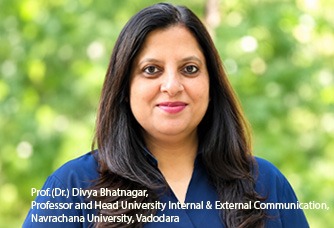
Dr. Divya Bhatnagar is a Professor and Head of University Communications at Navrachana University, Vadodara. She specializes in journalism, mass communication and strategic communication, with a focus on bridging academic learning and professional media practice.




We use cookies to ensure you get the best experience on our website. Read more...