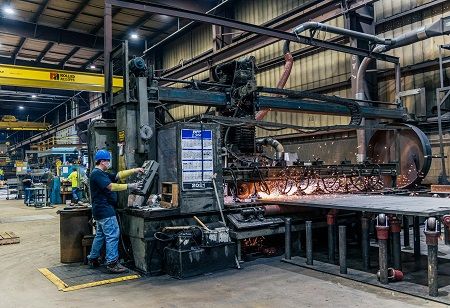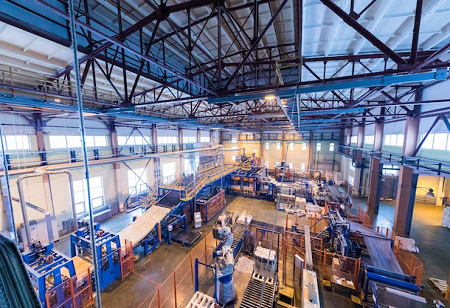
In a conversation with Thiruamuthan, Assistant Editor at Industry Outlook, Pandurang Landge, President of Manufacturing Business at Deepak Fertilisers and Petrochemicals Corporation Ltd, provided insights on how India’s chemical sector is addressing rising environmental and operational pressures. He underscored the sector’s move toward sustainable manufacturing, customer-aligned innovation, and technology-driven systems that reduce resource dependency and strengthen long-term competitiveness.
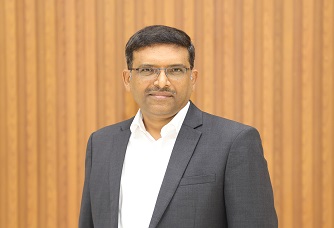
Pandurang Landge is a senior chemical manufacturing leader with 39 years of global experience, specialising in large-scale operations, project development, commercialisation, and transformation initiatives, backed by deep expertise in process optimisation and new product development.
Freshwater stress is intensifying across key chemical production zones. What strategic steps can the sector take to decouple growth from freshwater dependency in manufacturing?
Freshwater stress is no longer just an environmental issue; it has become a direct industrial and competitiveness challenge for India’s chemical sector. Decoupling growth from freshwater dependency requires a decisive shift toward fundamentally circular water systems. This includes basin-level water planning aligned with local hydrological realities, greater utilisation of recycled municipal and industrial water, adoption of closed-loop cooling and recovery systems, and aggressive efficiency measures across process water consumption.
To give an illustrate it vividly, we at DFPCL are advancing this transition by reducing reliance on freshwater through the use of third-party treated water, significantly expanding internal recycling, rainwater harvesting and operationalising Zero Liquid Discharge (ZLD) systems at critical sites such as Taloja, Srikakulam, and Panipat. These interventions have meaningfully lowered our freshwater footprint and demonstrated that production reliability and sustainability can scale together.
Technology-enabled circularity will be central to the next era of chemical manufacturing, and early pilots already show how membrane-assisted recovery can meaningfully cut emissions and energy use.
India lacks a unified green certification standard for chemical products. How does this regulatory gap impact sector competitiveness, particularly for global market access?
The absence of a unified national green certification standard creates fragmentation across India’s chemical value chain and directly affects global competitiveness. Without a single benchmark, companies must navigate a patchwork of international ecolabels, customer-specific audits, and diverse reporting requirements. This increases compliance costs, delays market entry, and dilutes the credibility of Indian exporters in highly regulated global markets. Until a national framework emerges, the sector must move toward Life Cycle Assessment (LCA) based disclosures, standardised environmental product data, and globally aligned transparency norms to remain competitive.
We have proactively strengthened our sustainability credentials through enhanced BRSR reporting, supply chain ESG disclosures, improved product-level traceability, and investments in data systems aligned with global disclosure expectations. These efforts ensure that even in the absence of a unified Indian certification, we maintain export readiness, build trust with international customers, and stay future-ready in a world where transparency and environmental assurance are key differentiators.
Leader's Thoughts: Crafting Enterprise Eco-Strategies For Long-Term Growth
Solvent recovery inefficiencies raise costs and emissions across chemical plants. How can membrane filtration or solvent exchange improve efficiency and environmental outcomes sector-wide?
Solvent losses represent both a major economic cost and a significant environmental liability for the chemical industry particularly as energy prices rise and emission norms tighten. Advanced technologies such as membrane filtration, organic solvent nanofiltration, and solvent-exchange systems offer high-efficiency alternatives to traditional distillation by enabling high-purity solvent recovery with much lower energy demand. When deployed as part of hybrid recovery systems, these technologies can reduce VOC emissions, extend solvent life cycles, and substantially cut greenhouse gas footprints across manufacturing operations.
We see strong potential in these next-generation recovery solutions and are currently exploring membrane-assisted solvent recovery pilots across select units. Early assessments show clear improvements in energy efficiency and recovery rates, reinforcing our conviction that technology-enabled circularity will be central to greener, more resilient chemical manufacturing platforms.
Stringent Zero Liquid Discharge (ZLD) norms strain plant-level economics in key chemical zones. How can the sector adopt scalable, cost-effective ZLD without compromising compliance?
Zero Liquid Discharge (ZLD) is critical for ecological protection, yet its cost and operational complexity can be challenging—particularly for mid-sized manufacturers. The sector needs a scalable and cost-effective approach centred on energy-efficient evaporators, membrane-based pre-treatment, effluent segregation at source, and, where feasible, cluster-level ZLD systems that reduce individual burden through shared infrastructure.
Viewed through a resource-recovery lens rather than as a compliance obligation, ZLD can unlock long-term value by supplying reusable water and recoverable salts.
Our experience at DFPCL underscores this. By implementing ZLD in phases at sites such as Taloja and Panipat, deploying multi-effect evaporators, and prioritising waste minimisation at source, we have established a scalable, cost-balanced framework that ensures compliance while maintaining operational sustainability. This approach is both economically viable and environmentally responsible.
Scope 3 emissions from chemical supply chains remain underreported. What sector-wide measures are needed to accurately assess and mitigate upstream and downstream emissions?
Scope 3 emissions remain the largest blind spot in the sector’s sustainability agenda, driven by data gaps, inconsistent calculation methods, and limited supplier readiness. Closing this gap requires the adoption of digital data systems that standardise activity-level inputs across the value chain, capability building for suppliers, especially MSMEs and alignment on common reporting templates.
As carbon-intensity norms increasingly influence procurement decisions, decarbonisation will evolve into a value-chain mandate rather than a company-specific initiative.
We are strengthening the foundation for this transition by enhancing supplier-engagement frameworks, improving logistics efficiency, expanding cleaner fuel adaptation, and investing in robust systems to generate high-quality emissions data. We have completed Scope 3 emissions inventory estimations, and this level of transparency is essential not only for regulatory preparedness but also for earning global customer confidence as sustainability-linked procurement becomes the norm.
Bio-catalysis and electrified reactors offer greener chemical production. Which of these technologies could significantly transform India’s chemical sector by 2047?
Both bio-catalysis and electrified reactors will help reshape India’s chemical sector each transforming different parts of the value chain. Bio-catalysis is already demonstrating high selectivity and low-temperature efficiency, making it ideal for pharmaceutical intermediates, fine chemicals, and specialty chemistries. In contrast, the deep decarbonisation of bulk and commodity chemicals will depend on electrified reactors capable of replacing traditional thermal processes, increasingly powered by renewable energy.
By 2047, India will likely witness dual transitions: precision-driven biochemical manufacturing for specialty segments and fully electrified process pathways for large-volume commodity chemicals.
At DFPCL, we are actively evaluating both pathways. We are exploring enzyme-enabled process options for select value-added products while strengthening energy-efficiency programmes and expanding renewable power adoption both essential enablers for long-term electrification. This balanced approach ensures we remain at the forefront of India’s transition toward green and future-ready manufacturing.





We use cookies to ensure you get the best experience on our website. Read more...