India’s expanding power infrastructure is placing greater demands on the equipment and engineering ecosystem that supports transmission line construction. As transmission networks extend across increasingly challenging terrains and projects require higher capacities, Transmission Line Stringing Equipment Manufacturers are expected to deliver more than individual machines.
Reliability, precision, safety, equipment availability and responsive technical support have become integral to project execution, particularly for EPC contractors working against demanding schedules. This is where UNO Engineering has built its positioning.
Established in 2019, the Faridabad-based company has developed a single-window model for EHV power transmission line construction, bringing manufacturing, trading and distribution, equipment rental, import-export and technical services together under one roof. Its approach is centred on understanding the practical requirements of EPC contractors and providing equipment and application-oriented solutions accordingly.
Building a Single-Window Transmission Equipment Business
UNO Engineering was founded with a specific objective: simplifying equipment procurement for EPC contractors involved in EHV power transmission projects. Rather than operating solely as a manufacturer or distributor, the company has developed capabilities across the equipment lifecycle.
Its portfolio includes mechanical and hydraulic power winch machines, hydraulic joint compressor machines, single, double and four-sheave stringing pulleys, drum lifting jacks, automatic clamps, bolted clamps and a wider range of transmission line tools, tackles, machinery and consumables.
The model has enabled UNO Engineering to work with major EPC and infrastructure organisations including L&T, Tata Projects, Bajel, RS Infra, Adani, Sterlite, APAR, TLL, KEC and KPTL. These relationships have also exposed the company to diverse project environments and practical site requirements, strengthening its understanding of how equipment needs to perform beyond specifications and workshop conditions.
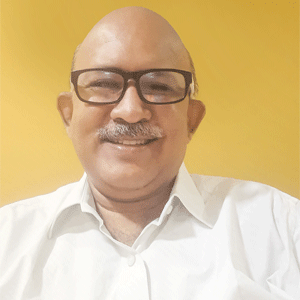
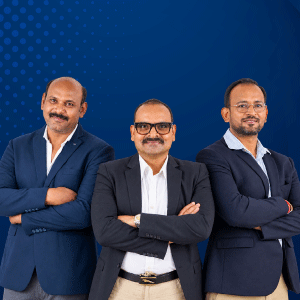
Raj Kumar, Head - Marketing has been instrumental in shaping this journey. Under the leadership of its management team, UNO Engineering has focused on combining commercial responsiveness with engineering capability, while steadily expanding from equipment supply into manufacturing, rental and technical support. The company’s growth reflects this broader evolution: from a turnover of approximately INR 1 crore in FY2019–20 to INR 90 crore in FY2025–26.
Engineering Equipment Around the Application
Transmission line construction rarely follows a uniform template. Conductor specifications, line voltage, terrain, stringing methodology, working loads, accessibility and site conditions can differ considerably from one project to another. UNO Engineering therefore approaches equipment requirements from an application perspective rather than relying exclusively on standard configurations.
Its manufacturing and engineering capabilities allow the company to work around requirements for pulling capacity, rope capacity, pulling speed, power source and operating conditions when configuring winch machines.
For hydraulic joint compressors, factors such as conductor type and size, compression force, die specifications and field conditions influence equipment selection. Similarly, stringing pulleys can be configured in single, double or four-sheave arrangements based on conductor diameter, working load and the intended stringing application.
The same approach extends to drum lifting jacks and conductor clamps, where drum dimensions, lifting requirements, conductor compatibility, gripping range and working loads become important considerations. Where a standard product does not fully address an application, UNO Engineering can evaluate whether the equipment should be configured, sourced, rented or developed as a customised solution.
“This engineering-led approach is complemented by testing and validation. The company cites its 5-ton Hydraulic Power Winch Machine as an example of equipment that has undergone in-house testing and has been demonstrated to officials from leading EPC organisations. Such exercises provide an opportunity to evaluate functional performance while incorporating practical feedback before deployment”, says Raj Kumar, Head - Marketing.
Quality and safety are also embedded within the company's operating framework. UNO Engineering holds ISO 9001:2015 certification for quality management, ISO 14001:2015 for environmental management and ISO 45001:2018 for occupational health and safety. Together, these systems provide a structured foundation for manufacturing, inspection, testing, environmental practices and workplace safety.
More Than Equipment Supply
For EPC contractors, specialised machinery is often required for defined project periods rather than as a permanent addition to their equipment fleet. UNO Engineering addresses this requirement through its rental business, giving customers access to specialised equipment without necessarily requiring permanent ownership.
The rental model forms part of a wider support ecosystem. Customers can engage the company for equipment selection, supply or rental, deployment support, troubleshooting, servicing and maintenance-related assistance. This becomes particularly relevant when project schedules are tight and equipment downtime can affect manpower deployment and execution timelines.
Its trading and distribution capabilities further expand the product basket beyond equipment manufactured in-house. Through sourcing and import-export operations, UNO Engineering can provide customers with additional tools, tackles, accessories, consumables and specialised products according to project requirements. The result is a procurement model in which an EPC contractor can consolidate several equipment requirements through one partner.
This integration is central to the company's proposition. Manufacturing gives UNO Engineering control over product development and customisation; trading and distribution widen its offering; rental provides flexibility; and technical services extend its involvement beyond the point of delivery. Together, these capabilities position the company as an equipment and engineering partner rather than simply another product vendor.
From Field Experience to Indigenous Innovation
UNO Engineering's next phase of development is increasingly connected to indigenous product development. The company is exploring the design and manufacture of specialised transmission equipment that has traditionally been sourced from markets such as Europe and China. Its current development focus includes Transmission Stringing Equipment pullers in different capacities, automatic reel winders and other specialised stringing machinery.
“This transition represents an important shift in the company's business model - from supplying and distributing equipment toward developing greater control over the engineering and manufacturing cycle. The objective is to build capabilities spanning design, fabrication, assembly, testing, supply and subsequent service”, shares Raj Kumar.
Customer and project feedback plays a significant role in this process. Field experience can reveal practical issues around transportation, equipment handling, maintenance, operator convenience, site accessibility and deployment that may not emerge during initial design. UNO Engineering uses such inputs to inform product improvements and custom engineering.
The company's experience with leading EPC organisations provides another source of application knowledge. Exposure to different project requirements enables its engineering team to understand variations in conductor configurations, pulling requirements, terrain and construction methodologies. This feedback loop between project sites, engineering and manufacturing is becoming increasingly important as the company develops its indigenous product portfolio.
Scaling Manufacturing & Expanding the Transmission Footprint
UNO Engineering's growth roadmap centres on strengthening its manufacturing and engineering capabilities while expanding its geographic reach. Having established a pan- India presence, the company is now looking towards the Gulf and Africa as the next markets for its equipment, rental, supply and technical service capabilities. UNO Engineering's growth roadmap centres on strengthening its manufacturing and engineering capabilities while expanding its geographic reach
Over the next three to five years, the company intends to deepen its R&D and product-development efforts, expand manufacturing capacity and build greater capabilities across design, fabrication, machining, assembly, testing and quality control. It also sees strategic collaborations with EPC contractors, infrastructure companies, technology providers and component manufacturers as a means of strengthening its ability to address specialised requirements.
“The broader opportunity lies in India's continuing investment in transmission infrastructure, renewable-energy evacuation and railway development. For equipment manufacturers, these projects create demand for higher-capacity machinery, specialised stringing solutions and dependable equipment support. At the same time, they raise expectations around quality, safety, testing, customisation and service responsiveness”, mentions Raj Kumar.
UNO Engineering's response is to build depth across the entire value chain rather than depend on a single product category. Its vision is to evolve into an engineering and manufacturing-led infrastructure solutions company, supported by trading, rental, import-export and technical services.
From a INR 1 crore business in its first year to INR 90 crore in FY2025–26, the company's journey has been marked by a steady expansion of capabilities alongside its customer base. Its next chapter will be defined less by simply adding products and more by developing indigenous technology, strengthening manufacturing and translating field experience into better engineering solutions. As transmission networks become increasingly complex, UNO Engineering is positioning itself to remain close to the projects - and to the evolving equipment requirements that keep those projects moving.



We use cookies to ensure you get the best experience on our website. Read more...