In a transformer, motor, generator or traction machine, the winding wire is rarely the component that gets noticed. Yet it has a direct bearing on how the equipment performs, handles heat and holds up over years of operation. As manufacturers work towards higher efficiency, tighter designs and greater reliability, the conductor has become less of a commodity and more of an engineered component.
Vidya Metal Manufacturing Company Pvt. Ltd. has spent the last two decades building its business around precisely this requirement. As the flagship company of VMI Group, it has established a significant manufacturing presence in aluminium winding wires, with an installed capacity of around 30,000 tonnes a year across facilities in Rajasthan, Haryana, Daman and Jammu. The company also manufactures around 12,000 tonnes of copper products, including rods, bus bars and strips.
What makes the journey interesting is that Vidya Metal did not enter aluminium as a response to a recent market trend. The company backed aluminium as a serious conductor material well before its wider acceptance, and subsequently built its manufacturing processes, technical capabilities and customer relationships around the material. Today, it describes itself as India’s largest manufacturer of super enamelled aluminium winding wire.
Where Material Choice Meets Manufacturing Discipline
For Vidya Metal, its proposition starts well before the wire reaches a customer's production line. The company controls the manufacturing process from the rod stage through drawing, annealing, enamelling and curing, allowing it to maintain closer control over the characteristics that ultimately determine winding performance.
Its enamelled wires are manufactured to IS 13730 and IEC 60317 requirements and carry the BIS mark. The product range includes polyester, polyesterimide and polyamide-imide enamel systems, including dual-coat constructions, with thermal classes extending up to the 200/220°C range.
The technical detail matters because winding wire performance is determined by much more than conductor dimensions. Breakdown voltage, pinhole and continuity, elongation, springback, adhesion, flexibility, heat shock, cut-through and conductor resistance all influence how the wire behaves during winding and subsequent operation. Vidya Metal therefore combines in-line process monitoring with laboratory testing, while maintaining batch-level traceability for every spool.
Its approvals from BHEL, Power Grid Corporation of India and Indian Railways' RDSO provide another indication of the level of process control involved.
These relationships are significant not simply as customer credentials, but because such approvals require manufacturers to demonstrate repeatable manufacturing capability and quality systems over time.
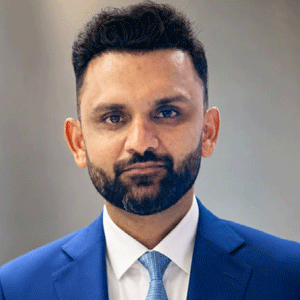
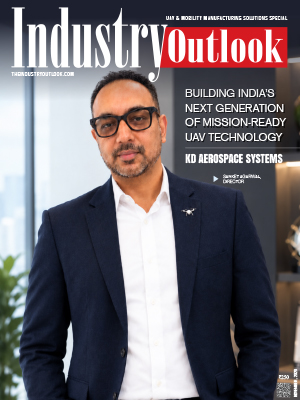
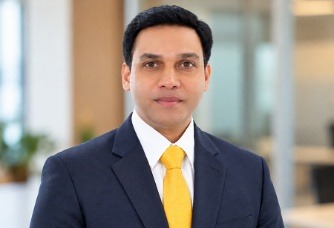
This manufacturing depth has been developed under the leadership of Abhinav Goyal, Director, Vidya Metal Manufacturing Company Pvt. Ltd., who represents the next generation of the family-run VMI Group. Under his leadership, the company is continuing to build on its established strengths in aluminium winding wire while expanding its technical and market capabilities.
The Wire Changes With the Machine
A major part of Vidya Metal's business is understanding that there is no single specification that works across every electrical application. A fan motor does not impose the same demands as a distribution transformer, just as a traction machine or generator can require a different combination of thermal performance, mechanical strength and winding behaviour.
“The company consequently works with customers' design and winding teams before finalising a product. Conductor dimensions and shape, enamel system, build, temper and spool format are considered around the application, with trials conducted on customers' machines where required. This application-led approach allows the company to move beyond supplying a standard wire towards developing a conductor that fits a particular manufacturing process”, shares Abhinav Goyal, Director.
That capability also extends across materials and insulation constructions. Alongside enamelled round and rectangular aluminium and copper wires, Vidya Metal produces paper-covered and fibreglass-covered conductors. For transformer and motor manufacturers, this creates the possibility of addressing several conductor and insulation requirements through one manufacturing partner.
Its expanding geographical footprint supports that proposition. With facilities across Bhiwadi, Chopanki, Pathredi, Bandapur, Manesar, Daman and Jammu, the company has built a network positioned around India's major manufacturing clusters. The scale is not being pursued simply for capacity's sake; it also allows Vidya Metal to stay closer to customers and build supply resilience across locations.
From an Aluminium Bet to a Broader Market
The case for aluminium is becoming more relevant as electrical equipment manufacturers look closely at weight, material economics and design efficiency. Aluminium is lighter than copper, widely available and recyclable, while offering manufacturers an alternative in applications where its electrical and mechanical characteristics can be engineered appropriately. Vidya Metal aims to establish its name as a reference point for aluminium winding wires, first across India and increasingly in international markets
“For Vidya Metal, this creates an opportunity that extends beyond domestic demand. India's investments in power infrastructure, renewable energy, railway electrification, electric mobility and higher-efficiency electrical equipment are creating multiple avenues for winding-wire manufacturers. At the same time, the company sees opportunities in markets where transformer and motor manufacturers are considering aluminium as an alternative conductor material”, says Abhinav Goyal.
The company's own priorities reflect this shift. Having reached around 30,000 tonnes of annual aluminium winding-wire capacity, it is now looking to deepen its export business, particularly across markets in Africa, the Middle East and other international regions. Capacity expansion will be accompanied by greater automation, stronger in-house expertise in enamels and process technology, and a larger technical service capability.
The longer-term ambition is not merely to produce more wire. Vidya Metal wants to establish its name as a reference point for aluminium winding wires, first across India and increasingly in international markets. Its next chapter will be shaped by higher-performance insulation systems, expanded capacity, export markets and closer technical partnerships with OEMs. For a product that ultimately disappears inside the equipment it powers, that is a substantial ambition - and one built on an unusually deep understanding of what happens before the finished machine ever switches on.
We use cookies to ensure you get the best experience on our website. Read more...