
Industrial lubrication is moving beyond the conventional idea of protecting machinery from wear. As manufacturing environments become more demanding, lubricants are increasingly expected to contribute to equipment reliability, energy efficiency, uptime and operating economics. This is particularly relevant across steel, mining, automotive and energy applications, where machines operate under extreme loads, temperatures and speeds, leaving little room for lubrication-related failures.
For lubricant manufacturers, therefore, the challenge is no longer simply to offer a technically superior product, but to understand the application closely enough to engineer what it actually needs.
This is the space in which MOSIL Lubricants has built its proposition. Rather than approaching the market with a catalogue-first mindset, the company works backwards from application challenges, developing lubrication solutions around the operating conditions of the equipment. Its recent growth across mining, steel and auto components reflects this approach, with customised products, field validation and indigenous alternatives to imported lubricants becoming important parts of its business.
From Application Challenges to Commercial Solutions
Established as an industrial lubrication specialist, MOSIL Lubricants has built its capabilities around specialised greases and lubrication solutions for demanding industrial environments. Its portfolio spans applications across heavy industry, automotive and other sectors where conventional lubrication approaches may not adequately address operating requirements. Over the past 18 months, the company has grown by more than 20 percent, with a significant contribution coming from mining, steel and auto-component applications.
The growth has been supported by solutions such as open gear compounds, roll neck and rolling mill bearing greases, high-temperature greases and specialised auto-component greases. At the same time, MOSIL has deepened its presence across Indian industrial clusters and expanded its reach in Southeast Asia.
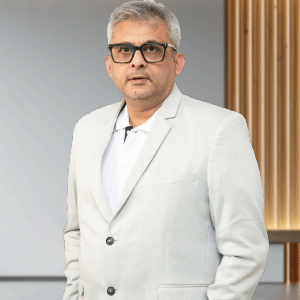
What distinguishes the company is the way products enter its portfolio. Development typically begins with a specific machine, operating condition or performance problem rather than an attempt to find an application for an existing product. As Samvar Mavani, Director, MOSIL Lubricants Private Limited, explains, “We don't start with a product and search for an application. We start with the application and engineer the right solution.”
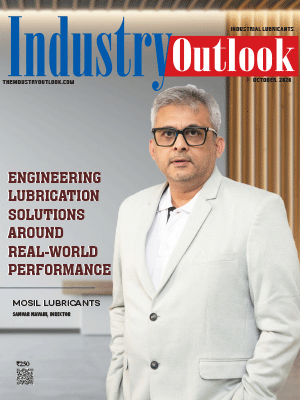
Samvar Mavani brings a strongly application-oriented perspective to the company’s growth, with an emphasis on technical development, customer engagement and building capabilities that can translate laboratory work into measurable plant-level performance.
Engineering for the Machine, Not the Datasheet
MOSIL’s work with OEMs illustrates how this philosophy translates into product development. In mining and steel, the company is developing indigenous alternatives to imported lubricants, while in automotive it is working with OEMs on specialised greases for next-generation vehicles expected to enter the market over the coming years.
The distinction is important. Import substitution, in MOSIL’s view, is not about reproducing an imported formulation and offering it locally. The objective is to develop a solution suited to the actual duty cycle and operating conditions of the application. Similarly, where an application is new, the company develops the formulation from the ground up.
Its recent field trials at leading integrated steel plants demonstrate this process. MOSIL’s roll neck bearing greases were tested in cold rolling mill applications, successfully completed trials and subsequently moved into regular business. For the company, the transition from trial to repeat ordering is a more meaningful validation than the trial itself.
This application-led development is also expanding into newer areas. “MOSIL has developed specialised greases for robotic applications in the automobile industry and a specialised grease for upstream oil and gas applications in Southeast Asia. Some products that originate as bespoke solutions eventually become part of the broader portfolio when similar requirements emerge elsewhere”, speaks Samvar Mavani, Director, MOSIL Lubricants.
Testing What Customers Actually Experience
Behind this approach is an expanding R&D and testing infrastructure. Over the past year, MOSIL has strengthened its product-development capabilities, simulation equipment and application-specific test rigs, with particular attention to low-temperature testing for auto-component applications and heavy-load performance testing for steel applications.
The objective is not merely to reproduce standard laboratory test conditions. MOSIL seeks to replicate the conditions that a lubricant encounters inside the customer's equipment. Information from OEMs and plant operators regarding loads, speeds, temperatures and other operating parameters becomes an important input into the testing process. These conditions are then recreated through specialised rigs and jigs before a formulation is finalised.
This also enables the company to challenge another conventional assumption in industrial lubrication: that a higher specification automatically means a better product.
According to Samvar Mavani, “The objective is to arrive at the right solution rather than simply the most over-engineered solution. A formulation loaded with additives may achieve impressive technical specifications, but those specifications have little value if the application does not require them. In some circumstances, unnecessary formulation complexity can even contribute to higher power consumption.”
MOSIL therefore uses simulation data to understand which formulation components are genuinely contributing to performance under specific operating conditions. The aim is to remove what the machine does not need while retaining what it does. The same discipline applies to sustainability. Where the company replaces additives with more environmentally friendly alternatives, the revised formulation must still demonstrate performance under simulated operating conditions.
Customer Feedback as an Early Development Signal
For MOSIL, product development does not end when a formulation leaves the laboratory. Customer feedback from field trials and operating environments continuously feeds back into the development cycle. The company looks beyond immediate complaints to identify requirements that may become important in the future. Understanding what a customer expects to become difficult 12 or 18 months ahead gives the development team time to work on a solution before the requirement becomes urgent.
Field trials are consequently treated as data sources rather than simple pass-or-fail exercises. A successful trial provides evidence that a solution can potentially be applied across similar operating environments. A failed trial is equally valuable when its underlying cause is understood and documented.
“This philosophy also shapes MOSIL’s response to raw-material volatility. Instead of relying only on cost optimisation or inventory management, the company increasingly examines whether customers are using products that are heavier than their applications require. In such cases, savings may come not from negotiating a lower price for the same lubricant, but from selecting a formulation that is technically appropriate for the actual duty”, speaks Samvar Mavani.
The approach has helped MOSIL sustain business growth amid recent cost volatility, while conversion and repeat orders provide an important measure of whether the solution is creating lasting customer value. The objective is not merely to reproduce standard laboratory test conditions, MOSIL seeks to replicate the conditions that a lubricant encounters inside the customer's equipment
Scaling Capability with the Market
MOSIL is simultaneously strengthening the infrastructure required to support this growth. Production capacity at its Palghar unit has been expanded, while warehousing capabilities at Mahape in Navi Mumbai and Palghar have also been strengthened. The company deliberately maintains some capacity ahead of immediate demand, recognising that waiting for orders before expanding infrastructure can create delays at precisely the point when customers require responsiveness.
Geographically, the company is focusing on heavy-industry clusters in India, with East India emerging as an important area of expansion. Internationally, Southeast Asia, Gulf markets and North Africa are among its areas of interest, with oil and gas representing a significant application opportunity.
“Over the next three to five years, MOSIL plans to deepen its presence in Indian heavy industries and the energy sector while expanding its product portfolio and opportunities within existing customer accounts. Internationally, oil and gas exploration and energy-production markets are the immediate priority, while broader expansion into heavy industry will follow as part of a longer-term roadmap”, informs Samvar Mavani.
The sequencing reflects a deliberate approach to growth rather than an attempt to pursue every market simultaneously. As Samvar Mavani puts it, growth is not necessarily about finding another customer; it can also come from identifying another performance problem that MOSIL can solve for an existing customer.
That thinking ultimately captures the company’s larger proposition: The Performance Multiplier. MOSIL is not positioning lubrication as an isolated consumable, but as an engineering input into equipment performance. Whether the objective is longer equipment life, higher uptime, lower maintenance, reduced energy consumption or lower operating cost, the lubricant is the solution it engineers around the application. The performance improvement delivered in the field is where MOSIL sees the real value of its work - and the foundation on which it intends to build its next phase of growth.



We use cookies to ensure you get the best experience on our website. Read more...


