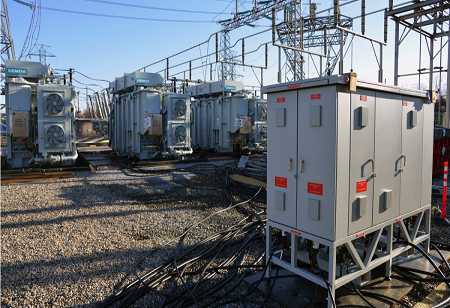
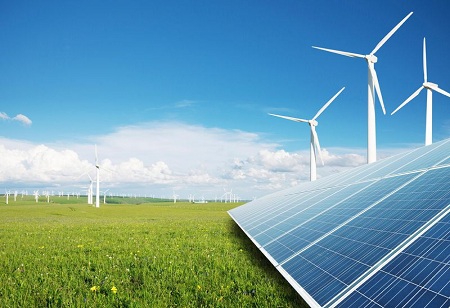
 The scheme allows batteries at the developer plant or at any location important for grid flexibility, with the aim of easing intermittency, congestion, peak-hour curtailment and non-solar-hour shortages.
The economics are demanding. Rs 50,000 crore for 50 GWh works out to about Rs 1 crore per MWh, and the Rs 6,000 crore support equals roughly Rs 12 lakh per MWh.
Roughly Rs 44,000 crore must therefore come from private balance sheets. On 4 November, the Cabinet separately approved Rs 14,500 crore of viability gap funding for 92 GWh of storage, including 30 GWh of batteries.
BESS investment in India is likely to draw renewable developers, independent power producers, standalone storage developers and utilities.
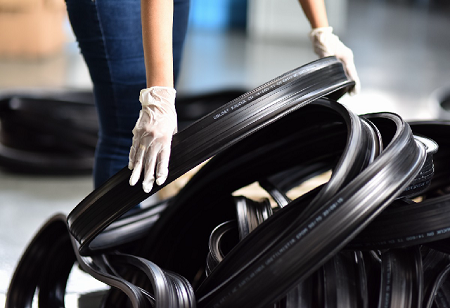
Supply is the weak link. India’s installed lithium-ion cell capacity is about 2 GWh at present, while demand from projects tendered for 2026 sits at around 260 GWh, so existing cell output meets under 1 percent of it.
Assembly is stronger, with 180-220 GWh of pack-to-container capacity announced for 2030.
Critical minerals deepen the exposure. India has limited domestic production of lithium, cobalt and nickel, and recycling will matter once early batteries retire in the 2030s.
Alternatively, pumped storage and other long-duration technologies may suit longer durations better than lithium-ion.
The official release names no state-wise allocation; however, reports point towards renewable-rich states such as Gujarat, Rajasthan, Madhya Pradesh and Andhra Pradesh.
Andhra Pradesh has proposed 7,872 circuit kilometers of lines and five 400 kV substations with 9,500 MVA of capacity, to integrate about 18 GW, including pumped storage, though no funds have been sanctioned as of yet.
Nationally, the scheme plans 51,126 circuit kilometers of lines and 2,28,903 MVA of transformation. Phases I and II covered roughly 24 GW and 20 GW, so this phase is over three times larger than both combined.
The Ministry of Power’s 2025-26 Annual Report records 9,170 circuit kilometers of GEC-I lines built against 9,767 envisaged, and 22,116 MVA of substations against 22,689 MVA. Six states had achieved their target, while Gujarat and Maharashtra received extensions to March 2026.
GEC-II, covering seven states and about 10,753 circuit kilometers, was scheduled to finish in 2025-26. The annual report records 76 of 91 packages tendered and 74 awarded, with implementation at various stages.
The state contrast is stark: Karnataka had tendered and awarded all 10 sanctioned packages by June 2026, while Himachal Pradesh had awarded only three of eight. The Ladakh evacuation project drew a single bid.
Generation has clearly outrun transmission. ICRA found about a third of 54.8 GW of recently commissioned renewable capacity was evacuating through temporary access in May 2026.
Some estimates report that the national plan needs roughly 21,000 circuit kilometers of lines a year, against around 14,200 in FY24.
Rajasthan, with about 23 GW of commissioned capacity, and Gujarat show the gap most clearly. Without parallel progress on substations and lines, states with the largest solar and wind pipelines risk repeating the pattern of stranded generation.







We use cookies to ensure you get the best experience on our website. Read more...