 A credible budget separates four layers: charger hardware, electrical and grid infrastructure, civil and site development, and software and payment systems. Charger purchase price is only one of them, and on many sites, not the largest.
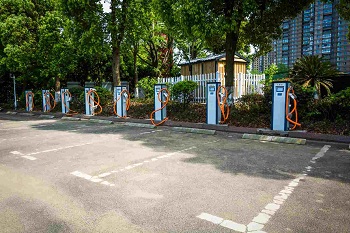
Hardware cost follows power class and connector count. AC chargers are the simplest and least expensive, suited to long-dwell locations.
DC units in the 30-60 kW range serve smaller fast-charging sites, while 120 kW and above, and ultra-fast systems, move into high-throughput corridors and fleet hubs. Each step up raises the equipment price, and also the upstream capacity needed to support it.
Connector configuration matters too. CCS2 is the principal standard for four-wheeler DC charging in India, with other connector types applying to specific vehicle segments.
Multi-gun and dual-connector designs improve vehicle throughput but share the same power, which affects how a hub should be sized. In project terms, hardware is a design variable, not a standalone purchase.
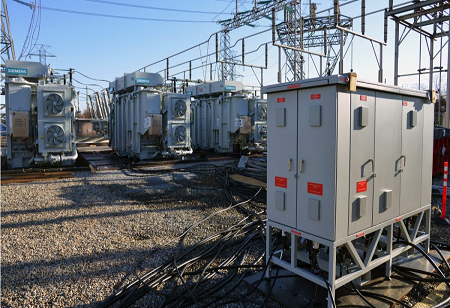
This is the layer most consumer-oriented cost pages underweight. It includes the transformer, HT/LT connection, switchgear, distribution panels, cables, protection systems, metering, earthing, power equipment, and the sanctioned-load arrangement with the DISCOM.
Government guidance treats this upstream layer as a core part of charging-station setup. Under PM E-DRIVE, financial support is directed at upstream infrastructure such as transformers, cables, circuit protection, mounting structures, fencing and civil works.
Reported benchmark costs used under the scheme for upstream infrastructure rise from roughly Rs 6.04 lakh for chargers up to 50 kW to Rs 24 lakh for those above 150 kW, against a reported benchmark of Rs 7.25 lakh for a 50 kW CCS-II charger.
These are scheme benchmarks, not market quotes, but they show why charger hardware should not be assumed to be the majority of project CapEx.
Civil scope covers foundations, trenching, parking bays, canopies, drainage, signage, lighting, accessibility provisions and safety barriers. Site condition drives the difference.
A brownfield installation inside an existing car park or fuel station may need limited intervention, while a greenfield hub must create access, drainage, lighting and power routes from scratch. Trenching distance and ground conditions can shift this layer considerably.
Software is part of the operating infrastructure of a charging network. A Charging Station Management System, built on OCPP for interoperability, handles authentication, session control, remote monitoring, uptime tracking, and energy management.
UPI and payment integration, RFID, and a mobile app determine how revenue is collected. Without reliable monitoring, uptime and billing accuracy suffer, and both feed directly into returns.
Also Read: How India's Tyre Industry Is Responding to a Changing Mobility Market
.jpg "Saksham Enterprises: Optimizing Mission- Critical HVAC Infrastructure For The High Precision Sector")

.jpg "JDS Group of Companies: Innovating Smart Solutions For Modern Power Transmission & Distribution Infrastructure")




We use cookies to ensure you get the best experience on our website. Read more...