India’s energy sector is advancing in renewable manufacturing, nuclear energy infrastructure and fuel supply chain networks, highlighting the rising importance of energy capabilities and energy diversification.
Solar manufacturer Navitas Solar has secured up to USD 20 million from Swiss asset manager responsAbility to support its expansion into solar-cell manufacturing.
Meanwhile, Livguard is exploring a potential entry into solar panel and cell production, while India and Australia are looking to strengthen clean-energy cooperation.
In the nuclear power segment, Larsen & Toubro (L&T) has completed deliveries of eight steam generators for India’s 700 MWe reactor program.
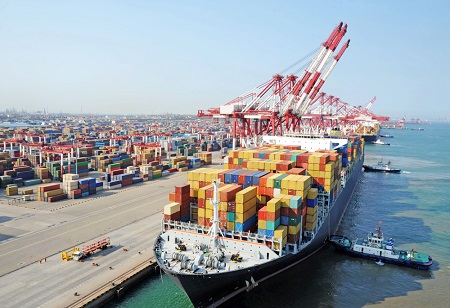
Separately, rising liquefied natural gas (LNG) imports highlight how India is adapting its fuel procurement strategy amid international supply disruptions.
Navitas Solar has raised USD 20 million in funding from Swiss asset manager responsAbility to scale up its manufacturing facility and deepen its presence in the solar cell supply chain.
The investment will support a planned 2.2 GW solar-cell manufacturing facility in India, advancing the company’s backward integration strategy.
Navitas director Vineet Mittal said the investment would support the company’s next phase of growth, while responsAbility’s Jay Bathija highlighted the potential for deeper integration across the solar value chain.
India’s solar manufacturing industry has shown rapid growth, but its module production capability far exceeds its solar-cell manufacturing capacity.
According to a credible source, the country’s cumulative solar module manufacturing capacity reached 261.7 GW as of June 2026, compared with 36.6 GW for solar cells.
Greater upstream manufacturing could help address supply-chain gaps, although competitiveness will depend on technology, production costs and execution.
The investment signals a broader shift in the energy sector towards stronger domestic manufacturing capabilities.
Also Read: How Silicon Anodes Could Reshape India's EV Battery Market
Livguard Energy Technologies is considering entering solar panel and cell manufacturing as part of its potential business expansion. The company currently manufactures inverters and lead-acid and lithium-ion batteries.
Alankar Mittal, president and business head of Livguard’s Energy Solutions Business, said that the company would assess market conditions before making a decision.
A move into solar manufacturing could broaden Livguard’s product portfolio across power electronics, energy storage and solar generation.
However, establishing a competitive cell production facility would require investment in specialized equipment, technology and manufacturing capabilities.
India and Australia plan to strengthen their joint capabilities across critical minerals, engineering and manufacturing sectors to accelerate the global clean energy transition.
Australian High Commissioner to India Philip Green said cooperation could strengthen supply chains, expand renewable energy deployment and support a more secure energy future.
Potential areas of collaboration include:
Larsen & Toubro has completed delivery of all eight steam generators for India’s 700 MWe Pressurized Heavy Water Reactor program. The final unit was dispatched from its Heavy Engineering Complex in Hazira, Gujarat, three months ahead of its contractual schedule.
Steam generators carry the heat from the reactor’s primary coolant circuit to produce the steam that generates electricity, and building them requires specialized engineering, rigorous quality control and precision fabrication.
L&T executive Anil V. Parab said completing the deliveries ahead of schedule demonstrated the company’s nuclear manufacturing and engineering capabilities.
For India’s energy sector, the ability to manufacture critical nuclear components locally could support project execution and strengthen the industrial supply chain as the country pursues its long-term nuclear capacity ambitions.
India’s LNG imports increased 9 percent year-on-year between March and September 2026, with supplies from the United States, Oman and Nigeria helping offset reduced deliveries from Qatar and the United Arab Emirates.
The shift underscores the value of supplier diversification amid global energy trade disruption. With LNG still vital for fertilizers, chemicals and city gas supply chains, its availability and cost have a direct impact on industrial output.
The development underscores how fuel security and manufacturing competitiveness remain interconnected across India’s energy sector.
These five developments highlight the expanding role of domestic manufacturing, international partnerships and diversified fuel procurement in India’s energy landscape.
Their long-term impact will depend on investment execution, commercial competitiveness and the ability to convert supply-chain opportunities into reliable industrial capacity.






We use cookies to ensure you get the best experience on our website. Read more...