Unilever Global CEO Fernando Fernandez expressed India as “the blueprint of what we are doing in emerging markets,” underlining the country’s strategic importance to the British consumer goods major.
Speaking at the Barclays Global Consumer Staples Conference, Fernandez said India is probably the only large FMCG market with true exponential growth potential over the next five years.
India is emerging as a critical growth market for global consumer businesses, with Unilever identifying the country as a blueprint for its broader strategy across emerging economies.
The company sees rising incomes, urbanization, premiumization and changing household structures creating a rare opportunity for sustained FMCG growth.
Fernandez said India’s growth opportunity is being supported by several structural changes. Urbanization is bringing more consumers into organized markets, while rising incomes are increasing spending capacity and encouraging consumers to move towards higher-value products.
Greater female workforce participation is also contributing to household income and consumption. At the same time, household fragmentation is creating new consumption occasions and increasing demand across product categories.
Fernandez described India as “probably the only exponential growth opportunity globally” for Unilever. He pointed to rising consumption in premiumization, the emergence of new categories and adjacent opportunities as factors that could support the company’s expansion.
The CEO also highlighted Unilever’s performance in India as evidence of the market’s potential. He said the business is delivering double-digit growth, with momentum accelerating during the year.
Unilever believes its long-standing presence in India provides an advantage as consumer preferences continue to change. Fernandez highlighted the company’s brand portfolio, local market understanding and talent base as important strengths.
The company’s distribution network is another major advantage. Fernandez emphasized Unilever’s deep understanding of Indian markets, pointing to its ability to reach consumers across different regions and market segments.
This distribution strength could become increasingly important as consumption expands beyond major urban centers. Companies are also adapting their portfolios to address new consumer needs, regional preferences and premium segments.
India’s retail landscape is simultaneously undergoing significant change. Modern retail, e-commerce and quick-commerce platforms are expanding, while traditional stores continue to account for a substantial share of FMCG purchases.
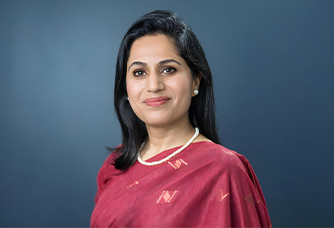
Hindustan Unilever Managing Director and CEO Priya Nair said general trade continues to remain the backbone of India’s retail ecosystem despite the expansion of modern retail and quick commerce.
She also pointed to the growing importance of specialist retail formats, particularly cosmetics and beauty stores. These channels are becoming more relevant as consumers seek specialized products and shopping experiences.
For FMCG companies, the challenge is therefore not simply to expand digital and modern channels but to manage a fragmented retail environment effectively. Maintaining strong general-trade distribution while building capabilities in newer channels could remain important as Indian consumption patterns evolve.
The combination of premiumization, new categories, rising incomes and changing retail formats is creating a broader growth opportunity. For Unilever, India’s significance extends beyond its domestic business, with the market increasingly serving as a model for how the company approaches emerging economies.
Unilever is a global consumer goods company operating across beauty and wellbeing, personal care, home care, nutrition and foods. Its portfolio includes widely recognized brands serving consumers across more than 190 countries. India is one of its important markets, with Hindustan Unilever operating a broad portfolio across multiple consumer categories and retail channels.


.jpg "Building EV Bus Ecosystems for India's Clean Mobility Goals")
We use cookies to ensure you get the best experience on our website. Read more...