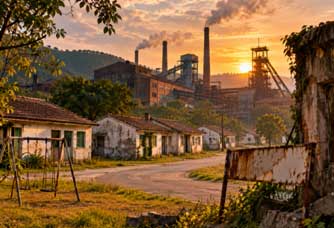
Drive far enough into oil country, and you might spot something odd on the horizon. Rows of identical modular buildings, gravel lots full of pickup trucks, and lights burning all night in the middle of nowhere. It looks like a town, but it wasn't planned like one.
These temporary settlements pop up wherever big industrial work lands far from established communities. Oil fields, gas plays, mines, pipelines, and massive construction projects all need workers, and those workers need somewhere to sleep, eat, and shower between long shifts.
Some of these places house a handful of crews. Others hold hundreds or even thousands of people at their peak. They appear quickly, run around the clock, and can disappear almost as fast as they arrived, leaving surrounding communities to adjust either way.
Why Industries Build Temporary Communities
Remote projects create a simple problem. The work is in one place, and the housing is somewhere else, or doesn't exist at all. Small rural towns rarely have enough apartments, hotels, or rental homes to absorb a sudden wave of workers.
Man camps are the industry's answer. These workforce accommodations, sometimes called crew camps or work camps, provide beds, meals, and basic services near job sites. They let companies bring in large crews without waiting years for permanent housing to be built from scratch. Speed matters most.
They're common in oil and gas fields, mining regions, and large infrastructure projects. During the oil boom in North Dakota's Bakken region in the early 2010s, for example, temporary worker housing became a defining feature of the landscape, drawing national attention and debate.
The Strange Economics of a Town Built Around One Industry
Employment demand drives everything. When a new oil field opens or prices climb, companies race to hire, and workers arrive faster than housing can be built. Rents spike, hotels fill up, and temporary lodging suddenly becomes the most practical option for everyone.
Project schedules shape the numbers too. A pipeline or plant construction project may need a huge workforce for a defined period, then far fewer people once it's finished. Building permanent homes for a temporary surge rarely makes financial sense for anyone. Timelines drive decisions.
Infrastructure costs add pressure. Roads, water systems, sewage treatment, and emergency services all strain under rapid population growth. Temporary housing can concentrate that demand in one place, making it easier to manage, though local governments may still face significant costs and difficult planning decisions.
What Daily Life Looks Like in a Remote Workforce Camp
Living quarters are usually simple. Many facilities use modular units with small private or shared rooms, a bed, storage, and sometimes a private bathroom. Some are basic, while larger operations can offer surprisingly comfortable accommodations for long-term workers. Comfort levels vary widely.
Meals are often provided in shared dining halls, sometimes around the clock to match rotating shifts. Larger facilities may include laundry, gyms, recreation rooms, and internet access. Transportation to job sites may be arranged by employers, especially when roads are rough or distances long.
The hardest part is often the distance. Workers may spend weeks away from spouses, children, and friends, working long shifts with little downtime. Isolation, fatigue, and the strain of rotating schedules can take a real toll, even when living conditions are decent. Morale matters.
What Happens When the Work Disappears?
Industrial booms rarely last forever. Oil prices fall, wells get drilled out, mines close, and construction projects finish. When that happens, demand for temporary housing can drop sharply, sometimes within months rather than years. The silence can arrive remarkably fast.
Camps may shrink, sit empty, or close entirely. Modular buildings are often designed to be moved, so they may be hauled away to the next project. What remains can include gravel pads, utility hookups, and questions about cleanup and restoration. Some sites revert to open land.
Local economies feel the shift too. Businesses that grew to serve workers may lose customers, and towns that expanded infrastructure may be left paying for it. Some communities plan carefully for the bust, while others are caught off guard by how fast things change.
Conclusion
Temporary worker settlements reveal a fascinating side of industrial growth. When valuable work appears far from established towns, companies and communities improvise, creating short-lived places that function like towns without ever being designed to last. It's improvisation on an industrial scale.
These settlements reflect the economics behind them. Employment demand, project timelines, infrastructure limits, and housing shortages all shape how they appear, how big they grow, and how quickly they fade once the work slows or moves on. Each one tells an economic story.
They also show how geography and industry shape people's lives. For workers, they mean long stretches far from home. For nearby communities, they bring both opportunity and strain. Either way, they're a striking reminder of how quickly economic change can reshape a landscape. Change comes fast.







We use cookies to ensure you get the best experience on our website. Read more...