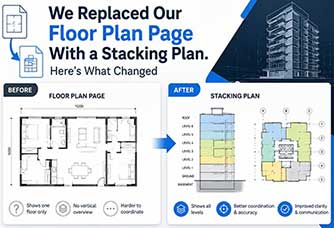
For two lease-ups in a row, our project websites had the same "Floorplans" page everyone has. A grid of PDF thumbnails sorted by unit type, a photo carousel, a contact form at the bottom. It looked fine. It also produced the same phone call over and over: a prospect would ask about a unit type, we'd explain which ones were actually left and on which floors, and half the time the one they wanted had leased weeks earlier.
On the third project we tried something else and put an interactive stacking plan front and centre. The whole building in cross-section, every unit colour-coded by availability.
Quick definition, in case the term is new
A stacking plan is the floor-by-floor view of a building. Each level is a row, each unit is a block you can click. Brokers and asset managers have kept static versions internally forever. The interactive kind lives on your public website and stays in sync with real availability. We built ours on planpoint.io, mainly because it embedded into the site we already had and there was no contract to sign, though a few platforms offer the format these days.
What actually changed
The phone calls, first of all. Prospects stopped asking "so what do you have" and started asking about one specific unit. Is 804 still the one at $2,150? They'd already toured the building in cross-section before calling. Our agents were closing conversations instead of starting them.
The awkward availability talks went away too. With the PDF page, somebody would inevitably fall in love with a floor plan whose last unit was long gone, and we'd have to break the news. When the stacking plan updates the moment a unit leases, the website just stops promising things we don't have.
Then the one I didn't see coming: scarcity started doing our marketing for us. A building visibly filling up on screen works on people in a way no "limited availability" banner ever has. Prospects mentioned it on calls. One told us she'd been checking the ninth floor every few days to make sure her unit was still there.
Where I'd pump the brakes
It isn't magic. If your availability data is stale, an interactive stacking plan broadcasts your disorganization in real time, so keeping it current has to be somebody's actual job. And on a tiny project of eight or ten units the format is overkill. A plain list does fine.
For a mid-sized or large lease-up though, I'm not going back to the PDF grid. The stacking plan turned our website from a brochure into the first stage of the sales process, and it didn't cost us a hire. Of everything we changed between project two and project three, this is the swap I'd defend the hardest.
.jpg "AR Enterprises: Building The Supply Networks Behind India's Construction Growth")
.jpg "Industrial Packers: Engineering Industrial Packaging for India's Manufacturing Future")





We use cookies to ensure you get the best experience on our website. Read more...