Why Advanced Chemical Recycling is a Strategic Imperative Today
With the global recycling market expected to grow at a 25% CAGR, the advanced chemical recycling segment remains central to its growth and accomplishing carbon neutrality goals. Many consumer companies have tripled or quadrupled their recycling content targets in recent years.
Advanced recycling is both a cornerstone of sustainability and a strategy to diversify feedstocks. Although technical progress has been achieved, the full commercial viability of advanced chemical recycling remains hindered by several risk factors, including high project failure rates.
Only 10% of these projects successfully move from pilot phases to full-scale commercial operations, whereas about 50% of large facilities fail to meet commissioning deadlines. It is noted that Internal R&D teams often struggle to handle the complexity of circularity across various value chains. Therefore, without an effective risk-reduction strategy, ACR failed to become a strategic asset and rather became a capital-intensive process. This highlights the need for specialized strategic advisory and consulting services.
Let's explore key barriers to ACR commercialization, the role and impact of consulting partnerships, and the path ahead for companies in the chemical sector.
What are the Challenges to Commercializing Advanced Chemical Recycling?
A chemical industry expert at Stellarix mentioned, “In my observation, most of the advanced projects fail in the last phase, which is the execution phase, irrespective of strong conceptualization, because the problem lies in the misaligned value chain, not technological feasibility.”
1. Feedstock Complexities
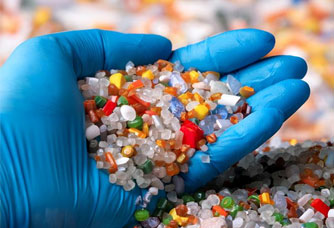
There is a need for plastic waste to have a consistent composition when deploying advanced recycling technologies, but sourcing and consistency are complex because feedstocks vary significantly. It is estimated that about 40% of accumulated plastic waste is discarded due to moisture or contamination, which leads to unexpected shutdowns, yield losses, and inconsistent operations. This ultimately erodes investors’ confidence and affects plant economics.
From a technology perspective, depolymerization and purification require a clean, polymer-specific stream. Additionally, pyrolysis is highly sensitive to moisture and PVC, while gasification can process heavily contaminated waste, but increases costs and complexity.
Here, expert consultation plays a crucial role, as chemical consultants can actively assist in developing profitable feedstock strategies through contamination-tolerance modeling and regional mapping of waste flows and feedstock offtake agreements.
2. Technology Selection and Scaling Risk
Companies often depend on vendor data. This vendor data performs well in the pilot stage but breaks down at the commercial level. Also, assumptions about energy use, emission profiles, and yields are not accurately estimated, creating significant risks when moving from TRL 5-6 to TRL 8-9.
From a technological standpoint, depolymerization provides high circularity but limited feedstock flexibility. Additionally, gasification poses synthesis risks, and pyrolysis struggles to maintain consistent oil quality.
Through the chemical consulting services of Stellarix, you can mitigate technology selection and scaling risks through energy modelling and mass-balance validation.
3. Commercial Risks: Project Economics and Capital Intensity
Compared to traditional recycling, advanced recycling facilities require approximately $100-275 million in CAPEX and have high operating costs. As a result, most projects fail to reach final investment decisions when long-term offtake agreements are not in place.
Pyrolysis and gasification are advanced recycling technologies that require significant energy. Such high energy use adversely affects lifecycle assessment when renewable resources are absent. Despite the need for recycled content, any uncertainty about volume, pricing, and regulatory issues poses challenges for financing and contract negotiations.
Consultants assist in building integrated commercial models and aligning financing structures, offtake pricing, and feedback contracts to enhance bankability and reduce financial risks related to commercialization.
How Expert Consulting Facilitates Seamless Commercialization of ACR by De-Risking
Successful commercialization of advanced chemical recycling requires a well-defined roadmap that aligns engineering, finance, strategy, operations, and waste systems.
Final Words
The advanced chemical recycling industry, poised for bright growth prospects of $50-75 billion over the next decade, can be effectively leveraged by companies that adopt an orchestrated strategy. The primary differentiator will be their business and market approach, as organizations that rely solely on internal R&D and technology risk being unable to scale.
Some major questions that often arise are:
Stellarix, with over 15 years of chemical consulting experience, helps industry leaders shape the next decade of circular chemical leadership through a carefully crafted strategic roadmap, secure capital efficiently, and build strong circular portfolios.






We use cookies to ensure you get the best experience on our website. Read more...