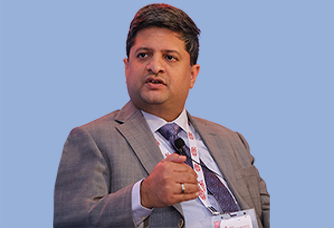
In an exclusive interview with Thiruamuthan, Assistant Editor at Industry Outlook, Pramod Sharma, COO of Sun Mobility, discusses how battery swapping is shaping India’s EV adoption, outlining its impact on affordability and fleet productivity. He also reflects on the evolving role of Battery-as-a-Service in enabling reliable operations and supporting the next phase of commercial electrification.
Pramod Sharma is an energy and mobility sector executive with 40+ years of experience across oil & gas, EV mobility, and IT, with expertise in strategy, business development, digital transformation, partnerships, and operations.
With battery swapping gaining regulatory clarity under the government’s draft policy, how is Battery-as-a-Service easing India’s EV affordability challenge and redefining total cost of ownership?
Over the last one to one and a half years, significant policy clarity has emerged regarding battery swapping in India. The government has largely enabled the sector, aligning directionally with the battery swapping players’ wish list. This includes recognition by various departments such as the Ministry of Power, Bureau of Energy Efficiency, BIS, and, more recently, the Ministry of Heavy Industries (MHI), which has included battery swapping under the ₹2,000 crore allocated in the PM e-drive for infrastructure development. While demand-side subsidies are not yet included, these policy advancements provide a positive outlook for the sector.
Battery swapping addresses several critical challenges in India’s EV ecosystem. First, it reduces the high capital cost of EVs, as customers do not pay for the battery upfront, lowering the initial purchase cost by 40–45 percent. This is particularly beneficial for all vehicle types that are used for commercial applications, making the business case stronger. Second, it ensures the availability of charged batteries within minutes, significantly reducing downtime compared to conventional charging, which can take one to four hours. Third, the dense network of swapping stations mitigates range anxiety, providing convenient access within urban areas and enabling consistent productivity.
Additionally, battery swapping resolves concerns around battery performance and technology obsolescence, giving customers access to the latest technology without worry. Financing becomes easier and comparable to ICE vehicles, as rest of the electric vehicle is a proven asset without the uncertainty of battery lifespan. With proven operations in two- and three-wheelers, covering 23 cities and over 1 billion kilometers, Sun Mobility is now extending this model to larger vehicles, including trucks and buses, driving faster ecosystem growth.
Also Read: How Smart Factories Driving Efficiency in Auto Manufacturing
As interoperability pilots expand across leading OEMs and energy providers, how are BaaS platforms tackling the technical and commercial complexities of battery standardization in two- and three-wheelers?
Battery interoperability in two- and three-wheelers remains a subjective topic. Over the last 2–3 years, government discussions have progressed, and the stakeholders have recognized the need for a structured approach due to the nascent technology. Interoperability can be defined as a single battery working across multiple vehicle types, including slow-speed and high-speed two-wheelers, e-rickshaws, e-autos, and e-loaders. Battery swapping players provide interoperability of batteries in their respective ecosystems. Standardization of battery safety has been achieved and widely welcomed by the industry. However, full cross-OEM battery compatibility faces challenges, as safety standards for micromobility swap stations are yet to be published, and different OEMs and operators manage battery handling, station design, and charging conditions differently to meet varying customer requirements innovatively. Battery technology is still evolving; the industry's view is to let the market decide which standard to finalise. All over the world in battery space, focus is on safety, which is of paramount importance.
Despite these challenges, vehicle OEMs can partner with multiple battery-swapping service providers. OEMs like Omega Seiki Mobility have tied up with Sun Mobility and Honda Power for their three wheelers, Piaggio also collaborates with various players. This ensures that customers have flexibility and choice in accessing battery-swapping services today.
Given the surge in telematics and IoT integration across EV fleets, how are service operators leveraging data analytics to enhance battery lifecycle efficiency and predictive maintenance?
Battery swap operators (BSOs) and charge point operators leverage extensive data access to optimize operations. They gain insights into traffic patterns, bottlenecks, and optimal locations for station deployment and expansion. This geographical and customer movement data enables strategic planning and growth. From the fleet operator's perspective, data helps monitor vehicle performance, energy efficiency, and driver behavior. Operators receive insights on which vehicles and drivers are performing well and how energy usage varies across the fleet. Telematics data thus provides a deeper understanding of operational efficiency, enabling predictive maintenance, enhanced battery lifecycle management, and informed decision-making for both operators and fleet managers.
BaaS transforms the way vehicles move, providing certainty and continuity while supporting a circular economy and long-term growth of electric mobility.
With state EV policies increasingly linking incentives to battery lifecycle traceability, how are BaaS players ensuring compliance while scaling their swap-station and logistics networks?
The scaling of the logistics network is primarily driven by demand, and network growth follows areas with higher customer adoption. Incentives are not directly linked to battery lifecycle traceability; this aspect is more relevant to battery recycling and safe disposal, overseen by the Environment Ministry/the Central Pollution Control Board under EPR/EPA guidelines.
For BaaS customers, this does not pose a challenge, as the cost of the battery is not borne by the customer. Traceability is ensured through IoT devices, which track battery usage, cycles, and overall performance. All data regarding the entire battery lifecycle is captured and monitored by the centralized system, allowing operators to manage utilization, detect malfunctions, and maintain optimal battery health. Post usage for mobility applications, batteries are used for secondary applications, and post that through state-certified agencies, responsible disposal is ensured.
While state governments currently provide demand-side incentives to battery swap players, the expectation is that subsidies may gradually reduce. BaaS operators are therefore focusing on ensuring their business models remain viable without incentives, offering technology at an affordable cost while maintaining profitability. Government policies continue to play an important role in supporting and encouraging the sector, even as operators optimize operational efficiency and battery lifecycle management.
Amid rising focus on circular battery economies and second-life reuse, what barriers are BaaS operators facing in building sustainable recycling and material recovery channels?
Second-life and third-life applications for batteries are gaining attention, and BaaS is emerging strongly, supported by favorable government policies. Currently, the batteries in use have been operating for up to five to seven years without requiring second-life deployment. As and when they reach the end of their primary life, operators plan to repurpose them for other applications such as, BSS, solar pumps, inverters, and other secondary uses. This second-life potential is actively being explored by operators as part of their business strategy, ensuring extended utilization of battery assets before recycling.
In terms of recycling and material recovery, several companies, including Attero, Lohum, and BATX Energies, provide these services and offer financial returns for spent batteries. However, the technology is still evolving, and the cost of operations remains relatively high. While various recycling and recovery technologies are emerging globally, Indian companies are also developing capabilities in this space. BaaS operators are navigating these evolving solutions to build sustainable recycling and material recovery channels, ensuring environmental compliance and creating value from end-of-life batteries while exploring optimal second-life applications.
Also Read: Sustainable Battery Materials Driving Clean Energy Transition
As India moves toward grid-interactive charging and energy storage integration, how do you see the BaaS model evolving to support large-scale commercial fleet electrification?
Battery swapping is inherently grid-friendly because it distributes load evenly throughout the day, unlike fixed batteries, where sudden end-of-day charging can stress the grid. The system deployed by BaaS operators maintains a constant load, making it suitable for large-scale integration.
Additionally, the deployed system features two-way communication, allowing batteries at swap stations to feed power back to the grid. In two- and three-wheeler operations, an average of 10-14 batteries per station can be integrated to support grid stability. For larger vehicle segments, each station may have one to five megawatts of battery capacity, which can be used during emergencies or to stabilize the grid.
From the fleet electrification perspective, BaaS ensures uptime and productivity comparable to or better than diesel vehicles on use case basis. Vehicles are available for use without downtime, replicating ICE vehicle behavior, while electricity and charged batteries are consistently available through the grid and backend storage systems. This proven technology reassures fleet operators that their vehicles will remain operational, supporting large-scale commercial fleet electrification efficiently and reliably.

.jpg "Powering Industries With Precision And Excellence In Distribution")
.jpg "Engineering Innovation Powering The Next Industrial Wave")



We use cookies to ensure you get the best experience on our website. Read more...