As metal-processing industries seek greater productivity, energy efficiency, process consistency, and lower operational downtime, induction heating equipment manufacturing is becoming increasingly important to modern industrial infrastructure. From melting and billet heating to forging, hardening, and heat treatment, induction technology enables manufacturers to generate heat directly within the workpiece, offering precise control while reducing avoidable thermal losses.
Yet, the value of an induction system increasingly depends not only on its heating capacity, but also on how intelligently it can be controlled, maintained, upgraded, and integrated into a plant's wider production ecosystem.
It is in this intersection of thermal engineering, power electronics, automation, and digitalization that ALSMITH Engineering has established its presence. Founded in 2020 by technocrats with experience across the energy, steel, power, and metal-processing sectors, the company has evolved from a specialized engineering team into a turnkey supplier and international solution provider.
Its proposition, captured in the philosophy ‘Simply Induction’, is focused on making sophisticated induction technology more user-friendly, modular, serviceable, and adaptable to individual industrial requirements.
From Engineering Expertise to an Integrated Induction Platform
ALSMITH Engineering was established by a team whose technical experience in energy, steel, power, and metal processing dates back to 2007. The company's formation in 2020 marked the beginning of a focused effort to simplify complex power electro-thermodynamic applications and make induction technology more accessible to industrial users.
Rather than positioning itself only as an equipment manufacturer, ALSMITH has developed capabilities spanning induction melting, holding, billet heating, forging, hardening, coil manufacturing, panel engineering, refurbishment, automation, energy auditing, and technical consultancy. This broader engineering approach enables the company to address both new installations and existing systems requiring modernization.
The company's early milestones established the direction of this journey. In 2020, it launched an in-house coil manufacturing and reconditioning facility and developed its first 750kW/12-pulse Solid State Induction Controller (SSIC) panel with integrated IoT and Industry 4.0 capabilities. The same year, ALSMITH exported a 25T/9MW LFC Green Coil to Ethiopia, establishing an early international reference for its engineering capabilities.
The company's growth has subsequently been driven by a philosophy centred on simplicity and durability. Its equipment is designed to be easier to service and troubleshoot, while its modular architecture allows individual panels and components to be replaced or configured without necessarily disrupting an entire system.
This philosophy has become particularly relevant in an industry where equipment downtime can directly affect production schedules and operating economics.
The Technology Behind Simpler Induction
ALSMITH's technology proposition is built around the understanding that induction systems must deliver more than high power. Industrial users require predictable heating, energy optimization, repeatable processes, ease of maintenance, and the flexibility to adapt equipment to changing production requirements.
The company's SSIC architecture is central to this approach. Its modular panels are designed as independent plug-and-play systems, enabling easier installation, servicing, troubleshooting, and replacement. The company has progressively developed modular systems capable of handling higher power levels, culminating in the development of a 10MW modular SSIC controller in 2025.
“Customization is another important component of ALSMITH's engineering model. Instead of relying solely on standardized coils and configurations, the company designs induction coils around specific workpiece geometries and process requirements.
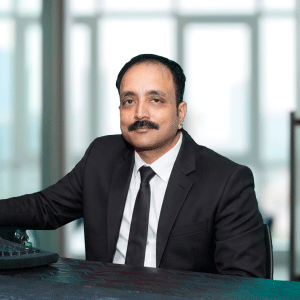
These include billets, pipes, bar ends, nose heating applications, and specialized sheet-heating applications for slabs up to 20mm thick. Thermography is used to validate thermal performance and support more controlled heating”, speaks Sathiya Narayanan, General Manager.
Its solutions can operate across a wide range of industrial applications and power requirements, incorporating SCR, IGBT, and MOSFET-based power electronic architectures. The company also develops specialized systems for melting, holding, billet heating, and induction hardening, allowing its engineering capabilities to address different stages of metal processing.
For customers operating older equipment, this engineering capability takes on another dimension. ALSMITH has developed proprietary conversion designs to retrofit legacy German, Korean, and Chinese induction billet-heating systems into its SSIC architecture. This approach provides manufacturers with a pathway to modernize existing assets without necessarily replacing entire systems.
Bringing Industry 4.0 to the Furnace Floor
Digitalization has become an important part of ALSMITH's evolution. The company was an early adopter of Industry 4.0 integration within induction technology, beginning this journey in 2020 with IoT-enabled SSIC systems.
Today, its technology stack combines IoT, PLC, SCADA, HMI, remote monitoring, data logging, and automation. Server-based IoT systems allow operational information to be monitored remotely, while Ethernet and fiber-optic connectivity support data communication and diagnostics. These capabilities can help plant teams monitor equipment performance and identify operational issues before they develop into prolonged downtime.
“ALSMITH also extends automation beyond the induction panel itself. Depending on the project, systems can incorporate automated pushers, conveyors, traction mechanisms, robotic arms, PID-based thermal control, and load-cell-based weighing systems for liquid-metal and charge management. Such integration can reduce manual intervention and create a more connected production workflow”, says Sathiya Narayanan.
Energy management represents another area where digitalization becomes practically useful. The company's systems incorporate power optimization, automatic power sharing, fiber-optic modular power optimizers, booster SSIC technology, power-factor compensation, and harmonic-filtering solutions. Alongside these technologies, ALSMITH conducts energy audits and thermography to help identify power and thermal inefficiencies.
The company has also incorporated AI-based load-factor reporting and automated power-sharing concepts into its technology proposition. Rather than treating energy management as a separate activity, ALSMITH seeks to integrate it into the operational architecture of the induction system itself.
Scaling Through Projects, Refurbishment, and Global Reach
ALSMITH's capabilities have translated into a growing portfolio of domestic and international projects. The company reports serving more than 100 customers, with its footprint extending across India and international markets in Africa, South America, the Middle East, and Southeast Asia.
ALSMITH's technology proposition is built around the understanding that induction systems must deliver more than high power
Its project experience includes the export and commissioning of a 9MW/25T LFC Green Coil furnace in Ethiopia, the upgrade of a 4.5MW/10T system in Uganda, and the refurbishment of a 10MW/25T furnace into an SSIC IoT model in Maharastra. It has also supplied and upgraded systems in industrial centres across India, including installations involving 750kW, 4.5MW, and multiple 3MW furnace configurations.
The company's cumulative green-energy equipment aggregate has crossed 85MW across more than 21 induction melting furnace and 18 induction billet-heating installations, according to company information. Its international activities have expanded across countries including Ethiopia, Uganda, Nigeria, Kenya, Madagascar, Brazil, Ecuador, Argentina, UAE, Saudi Arabia, Oman, and Malaysia.
“This geographical expansion has been supported by a service philosophy centred on long-term equipment usability. ALSMITH's refurbishment capabilities allow customers to modernize obsolete or service-abandoned systems, while its in-house manufacturing capabilities support the production and reconditioning of coils, panels, PCBs, semiconductor circuits, and related electrical systems”, as informed by Sathiya Narayanan.
The company's commercial growth reflects this expanding capability base. Its reported annual turnover increased from approximately INR 1.19 crore in FY2021–22 to INR 2.33 crore in FY2025–26. During this period, the company also expanded its product architecture from individual induction systems to modular solutions that can be configured and deployed according to specific plant requirements.
Engineering the Next Chapter of Growth
For ALSMITH, the next phase is expected to move beyond equipment supply toward a more comprehensive engineering and industrial-services model. The company is expanding its focus on EPC projects, consultancy, energy and thermal audits, plant production support, maintenance contracts, skilled training, and manpower services. This reflects a broader ambition to participate across the lifecycle of an industrial induction installation rather than limiting its role to equipment delivery.
“ALSMITH is also exploring opportunities beyond conventional induction engineering. Its future roadmap includes technologies and ventures associated with microgreens, containerized agriculture, solar vegetable dryers, hydroponic agricultural equipment, and 3D printing of electronic parts. The company is additionally exploring financial advisory, investment, mutual fund, and asset-management-related opportunities as part of its broader diversification plans”, informs Sathiya Narayanan.
By combining customized engineering with modular power electronics, digital controls, refurbishment expertise, and energy intelligence, ALSMITH Engineering is building an approach to induction technology that focuses not only on what the equipment can produce, but also on how easily it can be operated, maintained, upgraded, and integrated. As manufacturers continue to modernize their thermal-processing infrastructure, this balance between technological sophistication and practical simplicity could remain central to the company's evolution.
We use cookies to ensure you get the best experience on our website. Read more...