

India’s renewable energy transition is entering a more integrated phase. The opportunity is no longer limited to adding solar and wind capacity; it increasingly lies in creating energy systems that connect waste management, clean fuels, industrial applications and resource recovery.
As policy support strengthens around compressed biogas (CBG), green hydrogen, biofuels and circular bioenergy, renewable energy solutions are evolving from standalone projects into interconnected ecosystems capable of delivering both environmental and economic value.
It is within this changing landscape that Topaz Solar is carving a distinctive position. Rather than restricting its focus to conventional renewable energy, the company is developing projects that bring together CBG, Green Hydrogen, Cryogenic Dry Ice, Bio Fertiliser, Bio Ethanol and Bioplastics.
Guided by Chief Mentor Ganesan Natarajan, Topaz Solar has built its strategy around an ability to anticipate policy and market shifts and translate emerging opportunities into commercially viable projects. Its approach reflects a broader ambition: to help build India’s circular bioenergy economy by turning agricultural residues and invasive biomass into valuable energy and industrial resources.
Anticipating the Energy Transition
Topaz Solar was established with a clear vision of contributing to India’s energy transformation through projects that are commercially sustainable, environmentally responsible and socially relevant. That vision has evolved into an ambitious development portfolio, with five projects currently in the pipeline across Tamil Nadu, alongside a proposed four-site Bio Refinery initiative in Assam.
The company’s journey has been shaped significantly by Natarajan’s understanding of central and state policies, technology selection and project implementation. This policy-led approach enabled Topaz Solar to identify opportunities in CBG, Green Hydrogen and other circular technologies before they became prominent national priorities. Its Palani initiative for Yogan Green Private Limited has received MNRE recognition as a “Flagship Project”, while its Veppur initiative is positioned as India’s first commercial-scale Green Hydrogen project.
The company’s expansion into Assam further demonstrates its willingness to look beyond conventional feedstocks.
Its proposed Integrated Water Hyacinth Bio Refinery seeks to transform an invasive aquatic weed into an industrial resource, aligning environmental remediation with energy and economic value creation.
From Waste Streams to Value Streams
Innovation at Topaz Solar is less about adopting technology for its own sake and more about connecting processes that are traditionally treated separately. Its integrated projects are designed to extract multiple forms of value from the same feedstock, creating a more circular and resource-efficient model.
The Veppur project illustrates this philosophy. Alongside CBG and Green Hydrogen, Topaz Solar plans to recover carbon dioxide separated during biogas upgrading and convert it into Cryogenic Dry Ice. Instead of allowing this stream to be released into the atmosphere, the company intends to create a marketable product serving applications such as fisheries, pharmaceuticals and food cold chains. Bio Fertilizer forms another part of this integrated model, while future projects extend the concept into Bio Ethanol and Bioplastics.
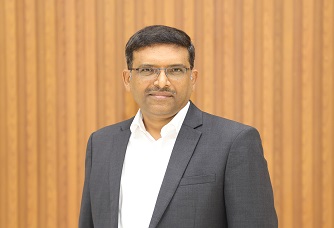
“This ability to connect energy production with resource recovery gives Topaz Solar a differentiated proposition. Its projects are designed not merely to produce clean energy, but to maximize the economic value of every usable component within the production cycle”, speaks Ganesan Natarajan, Chairman.
Converting Policy Momentum into Execution
One of the company’s strongest capabilities is its understanding of how policy can shape the commercial viability of renewable energy projects. The Union Cabinet’s approval of the GOBARdhan–National Circular Bioenergy Scheme in August 2026 provides a significant policy push to India’s circular bioenergy ecosystem. The framework, with an outlay of Rs 23,731 crore through FY 2035-36, includes measures such as assured offtake through City Gas Distribution networks, an administered CBG price and capital assistance for eligible projects. Topaz Solar was established with a clear vision of contributing to India’s energy transformation through projects that are commercially sustainable, environmentally responsible and socially relevant
“For Topaz Solar, this policy direction closely complements projects already under development. The company’s focus on agricultural residue and invasive biomass also strengthens its alignment with India’s broader self-reliance objectives by developing domestic alternatives to imported energy resources and equipment”, shares Ganesan Natarajan.
At the execution level, Topaz Solar places emphasis on technology selection, equipment quality, project management and timely commissioning. With five CBG projects being developed simultaneously, disciplined execution has become central to ensuring plant longevity, investor confidence and long-term customer value.
Scaling a Circular Energy Future
Topaz Solar’s next phase is defined by scale. Over the coming three years, the company is targeting annual Green Hydrogen production of 10,000 tonnes through its biogas projects. Its roadmap also includes expansion of CBG capacity, greater integration of Bio Fertiliser production and the development of Bio Ethanol and Bioplastics from invasive weeds across Tamil Nadu and Assam.
The company sees policy-led demand as an important catalyst. With CBG blending targets under GOBARdhan increasing from 3 percent in FY 2026-27 to 5 percent by FY 2028-29, the sector is gaining greater visibility and demand certainty. For Topaz Solar, this creates an opportunity to move from individual projects toward a broader circular bioenergy platform. As India’s clean-energy conversation expands from generation to integration, Topaz Solar is positioning itself to be part of that next chapter, where waste becomes feedstock, emissions become products and renewable energy becomes a truly circular economic opportunity.




We use cookies to ensure you get the best experience on our website. Read more...


