
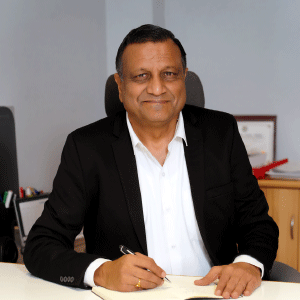
For more than three decades, Raman Gupta has built Kadkraft Systems around a deceptively simple principle: the best time to solve a manufacturing problem is before it reaches the shop floor. His journey from hardware service engineer to engineering-technology entrepreneur reflects a consistent preference for technical depth over volume, specialised solutions over generic software selling and long-term customer value over transactions.
When Kadkraft Systems began in 1991, Raman Gupta was not setting out to build the engineering-solutions business it is today. The company started in computer hardware, drawing on his earlier experience as a hardware service engineer. A defining shift came in 1993 when Kadkraft entered the Autodesk AutoCAD ecosystem.
As customers began asking for capabilities beyond drafting, Gupta recognised that the larger opportunity was not simply to distribute more software. It was to understand the engineering challenges behind those requests and find technologies capable of solving them. Kadkraft could have followed the path of a broad, volume-driven software reseller. Gupta chose specialisation instead.
That choice continues to shape the company. Today, Kadkraft works across CAD/CAM, engineering simulation, gear and transmission design, manufacturing-process simulation, 3D scanning, reverse engineering, 3D printing and engineering consultancy, serving automotive, heavy engineering, defence, aerospace, foundry and industrial manufacturing organisations.
Selling Engineering Outcomes, not Software Licences
Gupta's approach is built on the belief that sophisticated engineering software has little value unless the supplier understands where and how it should be applied. Kadkraft therefore focuses on a relatively limited number of specialised, high-value engagements rather than pursuing software volume for its own sake.
Its assignments can range from approximately Rs. 5 lakh to more than Rs. 1 crore. Such engagements demand more than a product demonstration and a purchase order. They require technical evaluation, benchmarking, process understanding, implementation, optimisation, training and continued application support.
This philosophy changes the nature of the customer relationship. Manufacturers are not merely buying technology. They are buying confidence - that the problem has been understood correctly, that the proposed solution is technically appropriate and that the engineering team will remain engaged when implementation becomes difficult.
Over the years, this consultative model has helped Kadkraft build relationships with organisations including Tata Motors, Mahindra, Daimler, L&T, Maruti Suzuki, Bharat Forge, Bajaj Auto, Hero MotoCorp, Shanti Gears, Elecon, Premium Transmission, Shivalik Engineering, Nipha Exports and other leading manufacturers.
Design, Simulate, Manufacture & Inspect
At the centre of Gupta's industrial proposition is a practical question: why discover an expensive manufacturing problem after material, machine time and labour have already been committed. The conventional sequence - design, manufacture, discover a defect, modify and try again - can consume weeks of development time and repeated shop-floor trials. Kadkraft promotes a digital-first workflow built around four stages: Design, Simulate, Manufacture and Inspect.
Advanced CAD creates the digital definition of the product. Engineering and manufacturing simulation then allows engineers to predict behaviour and evaluate alternatives before production. Kadkraft's specialised solutions address problems in gear design, casting, forging, welding, injection moulding, electroplating and corrosion. Once the process is validated virtually, manufacturing can proceed with greater confidence. 3D scanning and inspection then provide the feedback loop by comparing the manufactured component with the original digital model.
The objective is not simulation for simulation's sake. It is fewer physical trials, lower scrap, better material utilisation, improved quality, shorter development cycles and faster time to market.
Specialised Solutions for Difficult Manufacturing Problems
Kadkraft's portfolio has grown through a series of selective technology partnerships rather than through a desire to offer every available engineering product. A major milestone came in 2004 with Switzerland-based KISSsoft, whose technology supports sophisticated gear and transmission design. The portfolio subsequently expanded to include Simufact for forming and forging simulation, Hitachi ADSTEFAN for casting simulation, Siemens technologies across CAD/CAM/CAE and other specialised solutions from international technology providers.
The common thread is the problem being solved. Gear design requires accurate strength, geometry and system-level engineering. Casting demands insight into filling, solidification and defect formation. Forging requires engineers to understand material flow, die loading and process conditions. Welding introduces distortion and residual-stress challenges. Injection moulding requires control over filling, cooling, shrinkage and warpage. Electroplating and corrosion add electrochemical complexity. Kadkraft's role is to connect each industrial challenge with an appropriate specialised engineering technology and the expertise needed to deploy it.
When Simulation becomes a Business Decision
The value of this approach is clearest when technical improvements translate into measurable economics. At Tanishq's jewellery manufacturing operations, Hitachi's ADSTEFAN casting-simulation technology was used to study mould filling, gating systems and process parameters before physical production. Jewellery casting is an especially unforgiving application because defects involve precious material. According to the information reported by Kadkraft, rejection level has been reduced by over 70 percent. The result was not merely a better simulation model - it was a substantial reduction in material loss and an improvement in production efficiency.
"The software is the tool. The real value lies in understanding the customer's engineering problem deeply enough to know what should be done with it"
A different problem was addressed at Shanti Gears. Using KISSsoft's parametric modelling capabilities, gearbox families could be developed from master models instead of engineering each variant independently. According to Kadkraft, this reduced gearbox design time by nearly 80 percent while helping maintain consistency across a large product catalogue.
These examples illustrate Gupta's larger argument: engineering technology should ultimately improve business performance. Less scrap, fewer interruptions, lower warranty exposure, shorter design cycles and faster product introduction convert simulation and digital engineering from an IT expenditure into a strategic manufacturing investment.
Experience without Attachment to the Past
Thirty-five years in technology spans several generations of change - from PC hardware to CAD, from digital drafting to advanced simulation and from physical prototyping to virtual validation. The next transition is already under way as artificial intelligence, automated optimisation, digital twins and immersive engineering alter how products and processes are developed. CAD changed engineering. Simulation changed manufacturing. AI will undoubtedly change both again. Good engineering means seeing the problem early enough to do something about it - and good business may not be very different
Kadkraft is extending its portfolio in the same spirit. AI-assisted engineering can accelerate iteration and optimisation. Digital twins and virtual environments allow engineers to examine products and processes before they exist physically. More recent areas such as corrosion and electroplating simulation extend virtual engineering into manufacturing challenges that have traditionally depended heavily on experience and physical experimentation.
For Gupta, the technologies may change, but the underlying question remains remarkably consistent: how can an engineer know more before committing material, tooling, machine time and capital to the real world?
From Software Vendor to Engineering Partner
There is an important distinction between supplying a software licence and becoming the organisation a manufacturer calls when the engineering problem itself is difficult. Kadkraft's ambition increasingly lies in the latter.
Having worked with several of India's major industrial organisations, Gupta's next objective is not simply to add more logos. It is to deepen customer relationships by bringing complementary technologies across a larger part of the engineering lifecycle - from design and simulation to manufacturing validation and inspection.
That requires Kadkraft's engineers to sit on the same side of the table as the customer: understand the problem, challenge assumptions, evaluate alternatives and help establish a technically sound path forward.
A Philosophy Shaped by Engineering
Gupta's business philosophy ultimately mirrors the engineering philosophy behind the solutions Kadkraft represents. Understand the problem before prescribing the answer. Do not optimise merely for the number of transactions. Go deep enough to create measurable value. Do not wait for an expensive physical failure when knowledge and simulation can help prevent it.
Longevity alone is not what makes the Kadkraft story noteworthy. What matters is the consistency of the idea that has survived through multiple generations of technology: engineering expertise becomes most valuable when it helps customers make better decisions earlier.
We use cookies to ensure you get the best experience on our website. Read more...


