

Industry today is facing the pressure of global competitiveness under evolving strict sustainability mandates. Consequently, energy efficiency has moved from being a cost-saving metric to a core business strategy. The question is increasingly about how much production can be extracted from every unit of energy used. Yet, for many industrial plants, the road to sustainable operations and reduced energy intensity can seem complex and costly.
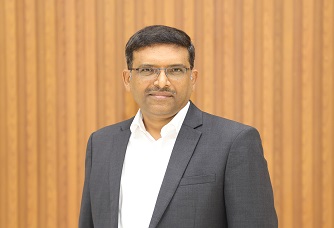
According to Pradyumna Nair, Technical Director at Forbes Marshall, the most immediate high-impact move a plant can make is often right in front of them: optimising their existing steam systems. “Energy efficiency, in itself, has a potential to reduce energy intensity in steam systems anywhere between 30–50 percent. Maximising thermal efficiency first will help ensure that any subsequent shift to renewable energy is appropriately scaled and is cost-effective”, explains Nair.
A Foundation Built on Delivering Value
For Forbes Marshall, this deep focus on end-to-end efficiency is not a newly adopted strategy. It is a continuation of an eight-decade legacy, guided by the simple philosophy of founder, Darius M Forbes, “We are always conscious that we are selling more than just equipment. We are providing increased production, improved product quality, production at a lower cost and quite often a combination of all three”.
Recognising early on that industrial facilities needed long-term solutions rather than isolated products, the organisation built a foundation around deep process application knowledge. Over time, this understanding has driven a continuous pipeline of specialised technologies and services designed to optimise steam system performance, streamline processes, and bring down energy bills.
Energy Efficiency and Industrial Decarbonisation
When companies set out to achieve ambitious carbon-reduction targets, high-tech or high-capital installations often take precedence. However, Nair stresses the importance of prioritising quick-return efficiency gains before committing to large-scale capital investments. The low-hanging fruit to improve energy efficiency lies directly in maximising steam system efficiency. Process and other heat recoveries, including heat pumps, also present huge opportunities, but a detailed evaluation and feasibility analysis is required for seamless integration.
Nair also points out the economic contrast: “The ROI for steam efficiency lies anywhere between 4 months to 2 years, whereas ROI for heat recovery ranges between 3 to 7 years, higher for the heat pump”.
Engineering Impact Through an Integrated Approach
Forbes Marshall stands out for its holistic, system-level approach backed by a strong understanding of industrial applications. An approach that begins with understanding the customer’s process, followed by the right system design, efficient technology selection, and seamless integration. Once implemented, performance is supported through predictive maintenance, and digital monitoring.
“What differentiates Forbes Marshall is our integrated approach,” says Nair. “We address both critical equipment-level performance and plant-level system optimisation, engineering solutions based on each customer’s specific process requirements. We combine deep application knowledge, world-class products, on-ground engineering expertise, and long-term service support to optimise the entire system. This enables our customers to achieve measurable and sustainable improvements in productivity, reliability, operating costs, and environmental impact.”
The impact of this approach is best illustrated by Forbes Marshall’s work with the Indian brewing industry. Over two decades, the company collaborated with 84 breweries across India to optimise their steam systems and refine process parameter controls. This targeted focus helped slash the industry's average Specific Fuel Consumption by nearly 50 percent. Most strikingly, even as beer production surged by over 60 percent between 2021 and 2025, overall energy consumption and CO₂ emissions stayed virtually flat. In real terms, this avoided over one billion kilograms of CO₂ emissions as compared to 2003 levels and a 46 percent reduction in boiler make-up water consumption.
Yet, as Nair points out, this success represents the opportunity in the broader industrial landscape: “This isn't just a brewery industry success story. The same principles have been applied across varied sectors like pharmaceuticals, chemicals, textiles, and many others where steam is the primary driver, with similar results.” Forbes Marshall stands out for its holistic, system-level approach backed by a strong understanding of industrial applications
Achieving energy reduction and improved plant performance is just the first step; maintaining peak levels over time is where the real challenge lies. Historically, industrial plants have struggled to sustain operational gains over time due to process deviations, maintenance issues, or shifting operating conditions. To tackle this, Forbes Marshall offers real-time digital monitoring and consultative support.
“Supplying products alone does not address issues in steam system efficiency improvement,” Nair emphasises. “Because steam systems operate as closed loops, establishing real-time visibility into key performance indicators is critical. We are working more towards not only delivering savings through our products and solutions but also sustaining them year on year through our digital services.” By bringing these continuous insights to plant operators, facilities can identify drift early, adjust maintenance schedules proactively, and lock in efficiency gains permanently.
Attributing the company's recognition as a top provider of Process and Energy Efficiency Solutions to strong customer partnerships, Nair emphasises the team effort behind the milestone. “This recognition reflects the dedication of our teams working alongside our customers every day,” reflects Nair. “It validates our integrated approach to steam system optimisation and fuels our mission to help plants across sectors cut energy intensity, lower emissions, and sustain performance and savings for the long haul.”




We use cookies to ensure you get the best experience on our website. Read more...


