

India’s knitwear manufacturing industry is being shaped by a more demanding fashion market, where brands need manufacturers that can balance quality, speed, compliance and commercial flexibility. As sourcing teams manage shorter trend cycles and increasingly stringent quality expectations, the role of a manufacturer is moving beyond production capacity.
The ability to understand fabrics, respond quickly, maintain consistency and execute reliably is becoming equally important.
It is in this space that Asha Creations has built its proposition. Founded in January 2014 in Ludhiana with just 1,200 sq ft and five machines, the company has grown into a 40,000 sq ft knitwear manufacturing facility with more than 200 machines. Today, it manufactures T-shirts, polos, sweatshirts and jackets for established fashion businesses, including Aditya Birla Fashion and Retail, Mufti, Landmark Group, Apparel Group and Cobb, while also serving in-house brands on Myntra.
The company’s evolution has been driven less by capacity expansion alone and more by an understanding of what brands expect from a dependable manufacturing partner. From fabric selection and product development to sampling, bulk production and final inspection, Asha Creations has built processes around reducing uncertainty for its customers. Its SEDEX SMETA 4-Pillar audit, ISO 9001:2015 and ISO 14001:2015 certifications further strengthen its readiness to work with organised fashion businesses.
Building Around the Buyer
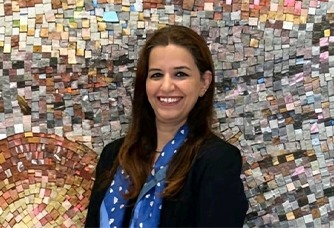
At the helm of Asha Creations is Ankush Bhatia, Founder and Managing Director, whose approach has been to make the manufacturer an extension of the brand’s sourcing function rather than simply a production vendor. His emphasis on fabric, execution and consistency has shaped the company’s growth from a small Ludhiana unit into an established manufacturing operation.
The transformation has been significant. By 2016, Asha Creations was supplying customers across India; in 2020, it entered white-label manufacturing for leading fashion brands; and in 2022, it moved into a larger facility. The next phase came in 2024, with upgraded machinery, stronger systems and continuous running orders for Aditya Birla Fashion and Retail.
For Ankush Bhatia, however, the real measure of growth is not machines or square footage, but whether Asha Creations makes its customers’ jobs easier.
Quality Begins Before Production
Asha Creations approaches quality as a process that begins well before garments reach the production floor.
Every style moves through four defined stages - fabric, sampling, bulk and finishing - with the next stage commencing only after the preceding one is approved.
Fabric is assessed for GSM and shrinkage based on the actual lot, while colour fastness to washing, rubbing and light is tested before production. Pre-production samples require written approval before bulk manufacturing begins. In-line checks then monitor measurements and stitching, allowing deviations to be corrected before they become larger production issues. Final inspection follows AQL 2.5 for major defects and 4.0 for minor defects.
This process-driven approach is particularly relevant for fashion brands, where a small inconsistency repeated across a large order can quickly become a commercial issue. The company’s objective is therefore to ensure that the product approved during development remains consistent when it reaches the customer.
“We manufacture knitwear for brands, and we sell our own. So I see what actually sells through, not just what ships out and that comes back into every range we build,” says Ankush Bhatia, Founder and Managing Director.
The company also brings an unusual market perspective through Reprise, its own direct-to-consumer brand sold online and through offline retail. Being exposed to end-consumer behaviour gives Asha Creations a closer view of what products perform, what customers return and how preferences evolve. That insight feeds into its conversations with brand customers, particularly around fabric, hand-feel and product development.
Flexibility as a Competitive Advantage
Fashion manufacturing increasingly requires flexibility, particularly as brands test new styles and colourways without committing to large volumes. Asha Creations addresses this through a minimum order quantity of 500 pieces per style, with the flexibility to split quantities across colours. Asha Creations approaches quality as a process that begins well before garments reach the production floor
“This allows brands to test multiple colourways and respond to market demand without taking an oversized inventory position. The company also works with buyers during development, offering recommendations on fabrics and trends rather than limiting its role to executing an already-finalised specification”, says Ankush Bhatia.
Its manufacturing capability has grown alongside this flexibility. From five machines in 2014, the company now operates more than 200 machines in its 40,000 sq ft facility. It has also demonstrated the ability to accelerate production when circumstances demand it, including completing a crew-neck T-shirt order in five days on one occasion. While this is not positioned as a standard lead time, it reflects the responsiveness possible through an established team and structured processes.
Preparing for the Next Phase
The next chapter for Asha Creations is centred on technology, product development and market expansion. As brands increasingly consolidate their vendor networks and expect manufacturing partners to combine compliance, consistency and speed, the company is preparing to deepen these capabilities. It is digitising shop-floor operations through barcode-based production and quality tracking, giving greater visibility from cutting through dispatch. At the same time, it is strengthening fabric development capabilities so that its teams can contribute earlier to range-building conversations with customers.
The company is also taking its first steps towards export programmes for T-shirts and polos, opening a new avenue for growth as international sourcing continues to diversify.
For Asha Creations, the ambition remains grounded in the same principle that shaped its journey from five machines in Ludhiana: become the knitwear partner brands can rely on without constant follow-up. Through every sample, shipment and season, the company is looking to make manufacturing more predictable while contributing greater value to the brands it serves.
.jpg "Industrial Manufacturing")



We use cookies to ensure you get the best experience on our website. Read more...


