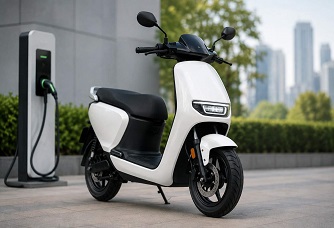
E2W growth in India has gained another policy boost after the government increased funding for electric two-wheelers under the PM E-DRIVE scheme.
The Ministry of Heavy Industries has raised the E2W allocation from Rs 1,772 crore to Rs 2,767 crore and expanded the supported vehicle target to 45.79 lakh units.
The move comes as electric two-wheelers gain a larger share of India’s two-wheeler market and manufacturers seek greater policy visibility.
The revised support could strengthen EV adoption, improve pricing visibility for manufacturers and buyers, and give India’s electric mobility market a longer runway for E2W growth.
The Centre has increased the PM E-DRIVE allocation for electric two-wheelers by Rs 995 crore, from Rs 1,772 crore to Rs 2,767 crore. The revised allocation accompanies an extension of demand incentives through March 31, 2028, giving manufacturers and consumers more time to access government support.
The government has also raised the number of E2Ws eligible for support from 24.79 lakh to 45.79 lakh units. That represents an increase of about 21 lakh vehicles and gives the market substantially more room to expand under the scheme. The higher allocation directly supports E2W growth by extending demand-side assistance across a much larger vehicle base.
The wider PM E-DRIVE scheme now carries an overall outlay of Rs 11,900 crore, up from Rs 10,900 crore. The program supports multiple segments, including electric two-wheelers, three-wheelers, buses, trucks, ambulances and charging infrastructure.
Also Read: Why India's Mobility Future Depends on Leadership and Innovation
The government has retained the existing incentive structure for eligible electric two-wheelers. Buyers can receive Rs 2,500 per kWh of battery capacity, subject to a maximum benefit of Rs 5,000 per vehicle. The incentive also cannot exceed 15 per cent of the vehicle’s ex-factory price, while the eligible vehicle must have an ex-factory price of no more than Rs 1.5 lakh.
The revised structure differs from the incentive applicable during FY2024-25, when the rate stood at Rs 5,000 per kWh with a maximum benefit of Rs 10,000 per vehicle. The government has therefore extended the lower existing incentive rather than increasing the per-vehicle subsidy.
For EV adoption, the continuation matters because electric scooters remain highly price-sensitive. Maintaining the incentive through FY28 can help manufacturers plan pricing and production while giving buyers continued access to a direct purchase benefit.
The expansion of the supported vehicle pool represents the biggest change for E2W growth. The earlier PM E-DRIVE structure targeted around 24.79 lakh electric two-wheelers, while the revised program raises the ceiling to 45,79,120 vehicles.
Government data had already recorded 14.31 lakh incentivised E2Ws by January 27, 2026, against the original 24.79 lakh target. The revised target therefore gives the segment considerably more headroom as electric two-wheeler registrations continue to expand.
The longer incentive period also provides greater policy visibility for electric mobility companies. Manufacturers can use the extended window to plan production capacity, product launches and pricing strategies without facing an immediate subsidy deadline.
The larger allocation does not increase the subsidy available for each vehicle. Instead, it increases the number of electric two-wheelers that can receive support and extends the program to March 2028. This distinction makes the policy primarily a demand-visibility measure rather than a higher-value consumer incentive.
The government has also retained PM E-DRIVE as a fund-limited scheme. If the allocation for a particular component runs out before March 31, 2028, that component can close earlier and stop accepting further claims. The final date for submitting claims stands at December 31, 2027, while no payments will continue beyond March 31, 2028.
For the Indian EV industry, the revised framework creates a larger policy-backed market for electric two-wheelers. If manufacturers continue expanding products and consumers continue shifting toward electric scooters, the additional funding and longer support period could strengthen E2W growth, while also supporting India’s broader EV adoption and electric mobility targets.

.jpg "Electrical & Electronics Companies")





We use cookies to ensure you get the best experience on our website. Read more...