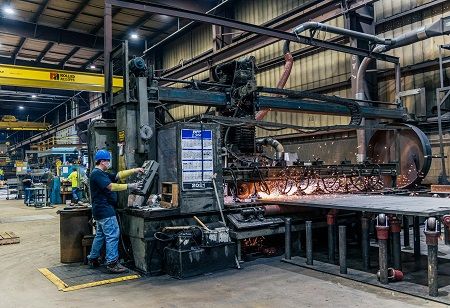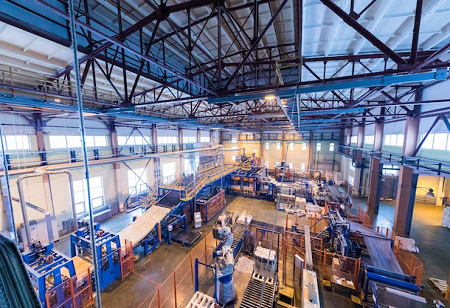
Ask a production manager at a 150-person manufacturer what runs the shop floor day to day, and the honest answer usually involves a spreadsheet sitting next to whatever ERP finance bought years ago. Scheduling happens in Excel because the system can't do finite capacity planning. Material shortages surface on the floor, not in the planning screen. Every month, finance waits days for production costs to land in the general ledger before the books can close.
None of that is a people problem. It's a software gap, and it's the reason manufacturing ERP for mid-size companies has become such an active buying category in the last two years.
Part of the push comes from above. SAP ECC's mainstream maintenance ends on 31 December 2027, with an optional extended maintenance window to the end of 2030 at a premium on top of standard fees. That date isn't a switch-off, but it's forcing thousands of manufacturers off ECC and SAP Business One into a genuine platform decision, usually within a budget and timeline that rules out enterprise S/4HANA from the start (implementation runs 12 to 36 months, and total cost commonly clears £800,000 once licensing, consulting, and internal time are counted).
The other push comes from below. Manufacturers who outgrew QuickBooks, Sage 50, or Sage 200 years ago carry the same symptoms: production planning that lives outside the ERP, shop floor visibility built from paper travellers and phone calls, and finance reconstructing production costs by hand every month.
The mid-market segment has matured enough now that credible platforms exist for both problems without an enterprise price tag or timeline. Six stand out for discrete and process manufacturers alike, and this guide works through each against the pain points that actually drive a replacement decision.
Every ERP demo looks the same: clean dashboards, a friendly sales engineer, a scripted workflow that never breaks. What it doesn't show is what happens six months after go-live, when the exceptions start piling up.
Planning that can't see the shop floor. If MRP runs on an overnight batch, planners start each morning with numbers that are already wrong. A machine went down yesterday afternoon, a supplier missed a delivery this morning, and nobody who's supposed to react has visibility until the next batch run.
Multi-level bills of materials that break on revision. An engineering change order should ripple through every affected BOM automatically. Without proper revision control, someone re-enters it by hand across departments, and errors creep in exactly where they're most expensive to catch.
A shop floor the ERP can't see. Work order status, labour hours, material consumption, and machine utilisation should feed back into planning as they happen. When they don't, capacity planning is a guess dressed up as a spreadsheet.
Traceability bolted on after the fact. For serialised or lot-tracked goods, quality documentation handled outside the production workflow creates gaps that surface during audits, usually at the worst possible moment.
A month-end close that runs late every month. When production costs sit in a different system from the general ledger, finance spends the first week of every month reconciling numbers by hand instead of reporting them.
An ERP built for manufacturing solves these problems and earns its licence fee back within a year. One that doesn't just becomes a more expensive spreadsheet.
Start with the bill of materials. Multi-level BOM management needs to handle revision control and engineering change orders without manual re-entry across departments. MRP and MPS engines should work against live data, not an overnight batch that leaves planners starting each day already behind.
Shop floor visibility is what separates a genuine manufacturing ERP from a finance platform with a production module stapled on. Work order status, labour hours, material consumption, and machine utilisation need to feed into planning in real time, and capacity planning should offer both finite and infinite scheduling so a team can adjust when a customer changes an order or a supplier misses a window.
Not every mid-size manufacturer is building the same thing, though, and the software needs differ by production type. Discrete manufacturers assembling distinct units need strong BOM control, work order management, and assembly line scheduling. Process manufacturers making formulated or batch-based products, food, chemicals, pharmaceuticals, need something else entirely: formula and recipe management, batch production with yield tracking, by-product and co-product handling, and traceability that follows a lot through blending rather than assembly. A platform strong on one side and weak on the other will leave a real gap once production doesn't fit its assumptions. Priority's Best ERP for Process Manufacturing page is worth a look if formula, batch, and yield management matter more to your operation than BOM revision control, since it covers both routes rather than treating process manufacturing as an afterthought.
1. Priority Software
Priority takes the top spot for mid-size manufacturers on a combination that's genuinely hard to find at this price tier: real production depth paired with a three to six month implementation window.
Multi-level BOM management, MRP with sales order to work order pegging, finite and infinite capacity scheduling, shop floor data collection, quality management, and serial and lot traceability all come as native functions, not add-ons or third-party middleware. An order book spanning standard catalogue products and custom or configured work can run make-to-stock, make-to-order, engineer-to-order, and configure-to-order within the same instance, and the platform supports process manufacturing alongside discrete, with formula and recipe management, batch production, and yield optimisation built in rather than bolted on. Product data management gives engineering version-controlled BOM access with CAD integration, so change orders move through the system without anyone re-entering data by hand.
Priority released aiERP in 2025, building AI into the core rather than layering it on as a reporting add-on. Teams can query the system in plain language, generate reports, run demand forecasting, and set up automated business rules without leaving the platform. IDC named Priority a Major Player in its 2025 Worldwide AI-Enabled Midsize Business ERP Applications assessment.
Manufacturers running Priority report measurable results: one operations team saw manufacturing throughput rise 20% within months of go-live, another moved from 10,000 to 15,000 order lines a day during peak periods, and a third cut external audit costs by 60% once clean financial data meant auditors stopped chasing numbers by hand.
Full implementations land in three to six months, and pricing starts at $600 a month for five users plus $120 a month for each additional user (Priority quotes in USD; UK buyers should confirm GBP pricing through a partner). That subscription model avoids the heavy upfront licensing fees that make mid-market ERP projects hard to justify.
TEC ranked Priority the top ERP vendor in its 2025 Insight Report on ERP Solutions for SMBs, Panorama Consulting included it in the 2025 Top 10 Manufacturing ERP Systems Report, and the platform appears in the 2024 Gartner Magic Quadrant for Cloud ERP for Product-Centric Enterprises.
Best fit: discrete or process manufacturers between roughly 50 and 500 employees who need genuine production depth without an enterprise timeline or budget.
2. Epicor Kinetic
Epicor has built ERP for discrete manufacturers for decades, and it shows in Kinetic's shop floor capabilities. Production scheduling, MES-level execution, BOM and routing management, quality workbenches with statistical process control, and supply chain operations are all core modules, and the Advanced Planning and Scheduling module offers finite capacity planning through a visual scheduling board.
Job shops and engineer-to-order operations in machinery, fabricated metals, electronics, or automotive supply will find Kinetic in every serious evaluation. Gartner placed Epicor in the Leader quadrant of its 2024 Magic Quadrant for Cloud ERP for Product-Centric Enterprises, and the manufacturing depth backs that up.
Where it gets harder is the day-to-day experience. G2 reviewers average 3.9 out of 5 and describe the interface as clunky, with reporting complexity and mixed support responsiveness recurring themes across review sites. Implementation runs five to ten months, and total cost of ownership for a full deployment ranges from $100,000 to $500,000, with per-user pricing around $80 a month.
Best fit: mid to larger discrete manufacturers in job shop, MTO, or ETO environments where MES-level shop floor execution is the deciding factor and the budget can absorb a heavier implementation.
3. Oracle NetSuite
NetSuite built its mid-market reputation on financial management, and that's still its strongest card. Multiple subsidiaries, international tax compliance, and consolidated multi-entity reporting can all be set up without bolting on third-party modules or paying a systems integrator to build custom bridges.
The Advanced Manufacturing module extends NetSuite's native work order and BOM functionality with production scheduling, quality management, and more sophisticated inventory controls. For manufacturers running light to moderate production alongside real financial complexity, NetSuite's financial core paired with its manufacturing modules makes for a coherent cloud-native system.
The gap worth pressure-testing is production depth. Shop floor execution, finite scheduling, and the capacity planning a high-complexity manufacturer needs tend to require third-party add-ons. A CFO will find plenty to like here; a plant manager may find the native manufacturing modules leave gaps to fill.
Pricing starts at $999 a month base plus $99 per user per month, with implementation running three to nine months.
Best fit: multi-entity manufacturers operating internationally, or private-equity-backed and pre-IPO companies where financial architecture and global compliance carry as much weight as production management.
4. Microsoft Dynamics 365 Business Central
If a company already lives in Outlook, Teams, Excel, and Power BI, Business Central plugs into all of it without middleware or custom connectors, and that integration is the single biggest reason manufacturers choose this platform.
Native manufacturing covers production orders, BOMs, routing, capacity planning, inventory, and basic MRP, enough for light to moderate production complexity. Finite scheduling, MES-level shop floor execution, or advanced quality workbenches mean bringing in ISV solutions from the AppSource marketplace.
The core constraint is manufacturing depth. Evaluated on production capability alone, Business Central falls behind what Priority or Epicor deliver out of the box. Manufacturers comfortable extending through ISV partners as production demands grow will get good mileage here.
Best fit: Microsoft-ecosystem organisations where IT wants an ERP administered with familiar tools, finance wants live Power BI integration, and manufacturing operations stay light to moderate.
5. Infor CloudSuite Industrial (SyteLine)
SyteLine targets the upper end of the mid-market, where planning requirements have grown complex enough that most ERPs start falling short. Advanced production scheduling with finite capacity planning, constraint-based promise dates, MRP, project and engineer-to-order manufacturing, quality management, and multi-site operations all come built in.
Finding capable local implementation partners takes more legwork than with Epicor or Dynamics. A manufacturer at £5 million to £25 million in revenue will likely find SyteLine more system and more cost than the business should absorb; one at £50 million to £200 million or above with real advanced planning and scheduling requirements will find the investment proportional to what comes back.
Best fit: mid-market to enterprise discrete manufacturers running finite capacity planning, ETO or project-based manufacturing, and multi-site operations, with the team bandwidth to commit to the learning curve.
6. Acumatica
If per-user ERP fees climb every time someone new needs access, Acumatica built its mid-market pitch around exactly that problem. Consumption-based licensing means warehouse staff, field technicians, and managers can all access the system at different levels without justifying a full seat for each person.
BOM control, production scheduling, cost accounting, MRP, material requirements, and basic shop floor visibility all come included. Manufacturers leaving older on-premise systems, Dynamics GP, Sage 50, or an ageing SAP Business One install, tend to land on Acumatica when they want a modern cloud platform without Epicor's complexity or NetSuite's price tag.
The trade-off is production depth. Advanced scheduling demands, MES requirements, or tight quality compliance needs will push you into gaps the native capabilities don't cover. Consumption-based pricing starts around $1,800 a month for the base manufacturing bundle.
Best fit: small to mid-size manufacturers leaving older on-premise systems who want a modern cloud ERP with solid financials and flexible licensing, where production complexity doesn't demand MES-level capabilities.
The decision comes down to three factors: how complex the production environment is today, how large the organisation is and where it's headed, and what the business can commit over five years in total cost of ownership. The per-user licence fee on its own tells you almost nothing about what you'll actually spend.
For mid-size companies that need genuine production depth with a predictable implementation timeline, Priority covers the most ground across both discrete and process manufacturing. Epicor Kinetic competes on shop floor execution depth and MES integration, though implementation runs longer. Business Central makes sense where the Microsoft ecosystem is embedded across the business and manufacturing requirements stay light to moderate. NetSuite fits where multi-entity financial complexity rivals the manufacturing requirements. SyteLine serves the upper mid-market where finite capacity planning and multi-site operations drive the decision. Acumatica earns its place when licensing flexibility and a clean cloud migration sit at the top of the list.
The mistake manufacturers make most often is weighing general-purpose capabilities too heavily against production-specific requirements. A system that impresses finance in the demo but can't handle multi-level BOMs, batch yields, or finite scheduling on the floor will cost more in workarounds than the licence fee ever saved. Start with what the production environment actually demands, and evaluate everything else around that constraint.
How long does manufacturing ERP implementation take for a mid-size company?
Across the platforms here, implementation runs from three months at the fast end (Priority, Acumatica) to five to ten months for Epicor Kinetic, and up to nine months for NetSuite depending on scope.
What happens if we stay on SAP ECC past 2027?
The system keeps running. What changes is support: mainstream maintenance ends 31 December 2027, and without buying extended maintenance (available to the end of 2030 at a premium), you lose security patches, legal change updates, and new functionality.
Is there a real difference between ERP for discrete and process manufacturing?
Yes. Discrete manufacturing needs strong BOM management, work order tracking, and assembly line scheduling. Process manufacturing needs formula and recipe management, batch production with yield tracking, and traceability built around blending and mixing rather than assembly. A platform built for one and adapted for the other usually shows the seams.
Can a mid-market ERP handle mixed production modes?
Yes, though not all of them do it natively. Priority and Epicor Kinetic both support make-to-stock, make-to-order, engineer-to-order, and configure-to-order within the same instance. Business Central and Acumatica typically need ISV add-ons for the more complex modes.
Is subscription pricing cheaper than a traditional licence over five years?
Usually, for mid-size manufacturers, because it avoids the large upfront licensing spend that makes traditional ERP projects hard to greenlight. What matters is total cost of ownership over five years, not the monthly per-user rate on its own.
The manufacturers who get the most out of a new ERP start with the pain points, not the feature list. A system that fixes the specific things costing time and money every month, a late month-end close, a shop floor nobody can see into, or planning that runs on yesterday's numbers, will earn its cost back long before the contract renews.







We use cookies to ensure you get the best experience on our website. Read more...