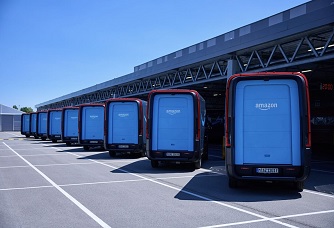
Amazon bets on EV charging in India as the e-commerce giant looks to strengthen its electric vehicle (EV) delivery network across the country.
The company plans to rely more on its own charging infrastructure to support the growing EV fleet and reduce dependence on public charging stations.
his EV Charging strategy is expected to improve vehicle uptime, streamline operations, and help Amazon scale its sustainable delivery network in India.
The move comes as the company continues to expand its electric mobility efforts and invests heavily in green logistics solutions.
Amazon is increasingly building and managing its own charging infrastructure to support the expansion of its electric delivery fleet in India. According to the report, the company believes dedicated charging facilities can offer greater reliability and operational efficiency compared to depending entirely on third-party charging networks.
The company has already crossed its target of deploying 10,000 electric vehicles in India and is now focusing on strengthening the ecosystem needed to support a larger fleet. Reliable charging access remains one of the biggest challenges for commercial EV operations, especially for delivery vehicles that operate on strict schedules.
Key benefits of Amazon's in-house charging approach include:
Also Read: Sustainable Last-Mile Delivery: Innovations Driving Green Logistics in India
Amazon has been steadily expanding its electric mobility footprint in India as part of its sustainability goals. The company currently operates thousands of electric delivery vehicles across hundreds of cities and towns.
The latest charging infrastructure push aligns with Amazon's broader strategy of reducing carbon emissions from its logistics network. The company has also announced plans to add more than 1,000 electric light- and medium-duty trucks to its transportation network in India over the coming years.
Industry experts believe that building dedicated charging facilities can help large fleet operators overcome infrastructure bottlenecks that often slow EV adoption. By investing directly in charging assets, Amazon can ensure uninterrupted operations while preparing for future fleet growth.
India's electric vehicle market is witnessing rapid growth, supported by government initiatives, rising fuel costs, and increasing focus on sustainability. However, charging infrastructure continues to be one of the biggest challenges facing widespread EV adoption.
For large logistics companies, charging availability directly impacts delivery timelines and fleet productivity. As a result, many businesses are exploring captive charging networks to support their commercial EV fleets.
Amazon's decision reflects a growing trend among major fleet operators who prefer greater control over charging operations rather than relying solely on public charging providers. The strategy could also encourage further investments in private EV charging infrastructure across India's logistics sector.
With e-commerce demand continuing to grow, efficient charging solutions will play a crucial role in supporting the next phase of electric mobility adoption in the country.
.jpg "Saksham Enterprises: Optimizing Mission- Critical HVAC Infrastructure For The High Precision Sector")

.jpg "JDS Group of Companies: Innovating Smart Solutions For Modern Power Transmission & Distribution Infrastructure")




We use cookies to ensure you get the best experience on our website. Read more...