.jpeg "Executive Insights")
A clear view from industry leaders shows India’s industrial landscape evolving toward smarter, sustainable manufacturing and long-term value creation. Innovation is becoming part of daily operations, improving efficiency, reliability, and performance. These insights reflect an industry balancing growth with responsibility, positioning India to compete and lead globally.
Piyush Arora is a seasoned business expert with deep expertise spanning the automotive market. In an interaction with The Industry Outlook, he discusses how R&D teams are navigating the complexities of data integration while maintaining operational efficiency in India’s evolving automotive landscape. As the sector moves toward electric mobility, Arora also shares insights into the challenges R&D functions face in accelerating development cycles, localising innovation, and balancing speed with quality amid rising technological and market demands.
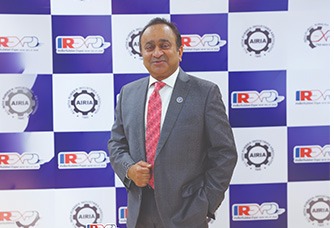
Amit Gossain, a seasoned industrial leader with three decades of experience across global and Indian markets, explains how India’s elevator manufacturing sector is evolving through the integration of advanced technologies like IoT, AI, and robotics. These systems enhance precision, reduce human error, and enable predictive maintenance, allowing manufacturers to monitor operations in real time and optimize production processes. As assembly lines become more automated, the workforce is being reskilled to supervise and configure complex systems, ensuring quality across multiple product variants.
Sustainability is also central, with eco-smart elevators using regenerative drives, lightweight designs, and intelligent passenger grouping to lower energy consumption and carbon emissions. By combining innovation, automation, and skilled manpower, India’s elevator industry is setting new operational standards, driving efficiency, and contributing to a greener, future-ready urban mobility landscape.
Vinod Bahety, is a seasoned corporate strategist with over 25 years of experience in manufacturing and finance, explains how India’s infrastructure is being transformed through nanomaterial-enhanced concretes. These advanced materials improve durability, structural longevity, and sustainability across metro, highway, and urban projects, enabling predictive monitoring and lower maintenance costs. With nano-additives like graphene, nano-silica, and TiO₂, concrete gains higher strength, self-cleaning properties, and compatibility with smart monitoring systems.
As factories scale production, workforce reskilling and regulatory alignment become critical to ensure quality and safety. Nanotechnology also reduces cement usage and carbon emissions, supporting greener construction. By merging innovation, strategy, and sustainability, India’s construction sector is adopting smarter, longer-lasting, and eco-efficient materials, driving a resilient and future-ready urban infrastructure landscape.
Satendra Singh, a global business leader with over 30 years of expertise in operations, strategy, and supply chain, explains how OEMs are strengthening supply chains through strategic partnerships, multi-sourcing, and localizing production. By leveraging AI, blockchain, and collaborative networks, manufacturers enhance transparency, traceability, and resilience amid global disruptions. Risk-sharing agreements and technology-driven forecasting enable proactive responses to volatility, while co-innovation with suppliers ensures continuity. Singh emphasizes that aligning growth with self-reliance and adopting predictive, automated systems positions India’s manufacturing ecosystem for long-term agility and competitiveness.



.jpg "Building EV Bus Ecosystems for India's Clean Mobility Goals")
We use cookies to ensure you get the best experience on our website. Read more...