India added close to 50 gigawatts (GW) of renewable energy capacity in 2025, supported by investments of nearly ₹2 trillion, strengthening the country’s transition toward non-fossil fuel power generation. The expansion marks one of the largest annual additions of clean energy capacity globally and reflects sustained momentum in solar and wind deployment across states.
The new capacity additions have pushed India’s total non-fossil fuel installed power capacity to about 262 GW, crossing the 50 percent mark of overall electricity capacity ahead of the country’s 2030 climate commitments. India’s total installed power capacity now stands at roughly 510 GW, with fossil fuels accounting for around 247 GW and renewables and other clean sources contributing the rest.
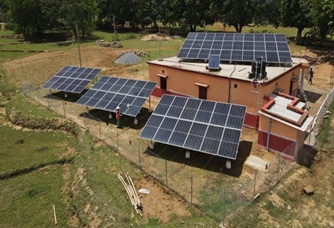
Solar energy formed the largest share of new installations during the year, followed by wind power. Capacity was added through a mix of utility-scale projects, rooftop solar systems, and decentralized installations in rural and semi-urban areas. Government-backed schemes aimed at household solar adoption and farm-level renewable deployment continued to drive installations, alongside large projects commissioned by private developers.
Between January and November 2025 alone, approximately 45 GW of renewable capacity was commissioned, with the remaining additions expected to be completed by the end of the year. Officials said the pace of deployment reflects improvements in project execution, financing access, and demand from distribution companies seeking long-term clean power supply.
However, sector participants continue to flag challenges such as land availability, transmission constraints, and delays in signing power purchase agreements. Grid integration and storage capacity are also emerging as priorities as renewable penetration increases.
Despite these constraints, the scale of investment and capacity addition underscores the growing role of renewables in India’s energy mix. With electricity demand rising steadily, policymakers are focusing on transmission expansion, energy storage, and hybrid renewable projects to ensure reliability.
Also Read: Indias Water-Soluble Fertiliser Import Hold Steady Despite China Curbs
The 2025 capacity milestone positions India to maintain high annual additions in the coming years, reinforcing its status as one of the world’s largest and fastest-growing renewable energy markets.


.jpg "Powering Industries With Precision And Excellence In Distribution")




We use cookies to ensure you get the best experience on our website. Read more...