The future belongs to learners who are adaptable, interdisciplinary, and skilled in solving real-world problems. For many years, higher education systems relied heavily on grades and degrees as the primary indicators of merit and employability. However, as automation, artificial intelligence, and emerging technologies continue to reshape industries, employability today is defined less by what learners memorise—and far more by how effectively they innovate and respond to changing environments.
This shift is clearly visible in evolving employer expectations. A PwC Global Workforce Study indicates that nearly 69% of organisations believe graduates with interdisciplinary and applied learning experience perform better in dynamic work environments compared to those with purely theoretical backgrounds. Complementing this, a NASSCOM talent forecast notes that around 65% of emerging job roles in India now require hybrid competencies—where academic foundations must be strengthened through digital fluency, problem-solving capabilities, and hands-on experience. These insights reinforce what many of us in academia now acknowledge: education must balance conceptual depth with practical capability.
At the Centre for Interdisciplinary Computing Science (CICS), Navrachana University, this philosophy is steadily shaping pedagogy and student engagement models. One illustration of this approach is AlgAI, a project where students work at the intersection of artificial intelligence and biological systems.
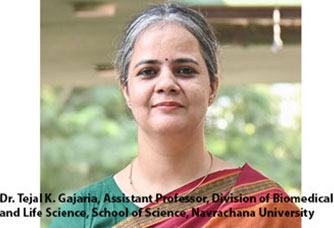
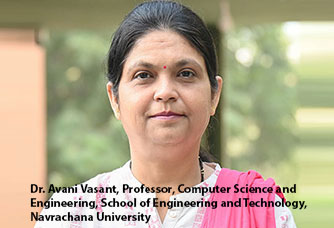
The trans-disciplinary application of artificial intelligence is the core competency of AlgAI. This project has been conceptualised and guided under the leadership of Prof. (Dr.) Avani Vasant, Professor, Computer Science and Engineering, and Dr. Tejal K. Gajaria, School of Science, Navrachana University. Through this AI-driven framework, students design algorithms capable of analysing complex biological datasets. Using machine learning pipelines, predictive modelling, and optimisation techniques, learners experience how artificial intelligence can move beyond abstraction and function as a practical decision-making tool as the algae based environmental solution systems.
A defining feature of AlgAI is its close engagement of students with faculties in designing industry oriented environmental solutions. While students and faculty undertake the ground-level research—developing algorithms, conducting biological analyses, and refining integrated models wherein the inclusion of industrial aspects provides essential insights in terms of process validation and scalability. Such blended models are critical for India as it seeks to accelerate innovation cycles and translate academic research into deployable solutions on the path toward becoming a developed nation.
AlgAI also demonstrates strong relevance to UN sustainable developmental goal and various algae based environmental sustainability and bioenergy programmes. Algae are globally recognised as promising feedstock for sustainable bioenergy due to high growth rates, minimal competition with food crops, and efficient resource utilisation. By using AI to analyse algal lifecycle stages—optimal growth conditions, harvesting windows, and productivity thresholds—AlgAI can generate data-backed insights that support scalable and predictable biofuel planning. These AI-driven lifecycle models can aid policymakers and implementing agencies in designing more efficient and resilient renewable energy strategies.
Equally important is the project’s contribution to carbon sequestration research. Scientific studies have shown that algae can capture carbon dioxide at substantially higher rates than terrestrial plants due to rapid biomass accumulation and high photosynthetic efficiency. On average, one tonne of algal biomass production can sequester approximately 1.8 tonnes of CO₂. By integrating artificial intelligence with biological modelling, AlgAI enables the development of optimised, measurable carbon capture frameworks relevant to climate policy, industrial sustainability goals, and environmental planning.
Experiences like AlgAI reaffirm a broader shift in higher education—from content-driven teaching to capability-building learning environments. As the world of work continues to evolve, it is increasingly clear that students need more than just a degree; they need confidence, competence, and the ability to convert knowledge into meaningful outcomes.
Dr. Avani Vasant, Professor, Computer Science and Engineering, School of Engineering and Technology, Navrachana University
Dr. Tejal K. Gajaria, Assistant Professor, Division of Biomedical and Life Science, School of Science, Navrachana University
For more details - https://nuv.ac.in/centre-for-interdisciplinary-computing-science/
.jpg "AR Enterprises: Building The Supply Networks Behind India's Construction Growth")
.jpg "Industrial Packers: Engineering Industrial Packaging for India's Manufacturing Future")
We use cookies to ensure you get the best experience on our website. Read more...