
According to NITI Aayog, nearly 70 percent of India's water is contaminated, and the country continues to face mounting pressure on its freshwater resources. At the same time, stricter environmental regulations and growing corporate sustainability commitments are encouraging organizations to invest in efficient water recycling solutions. It is within this changing landscape that Tellus Habitat has built its niche.
Founded with the objective of making decentralized wastewater treatment more efficient, intelligent, and practical, Tellus Habitat is a Bengaluru-based clean-tech company specializing in sustainable water and waste management solutions.
Built on years of research and technical expertise, Tellus Habitat has carved a niche by developing wastewater treatment solutions tailored to India's unique environmental and operational needs. The company's approach moves beyond conventional sewage treatment by offering compact, automated, and energy-efficient systems that simplify deployment while delivering consistent performance.
Serving sectors ranging from hospitality and healthcare to industrial, institutional, and commercial infrastructure, Tellus Habitat is steadily strengthening its position as a trusted partner in decentralized wastewater management.
Challenging Conventional Wastewater Treatment
For Tellus Habitat, innovation begins with research. Both founders bring together more than two decades of combined research and development experience, a foundation that has shaped the company's technology-first approach. Instead of adapting conventional wastewater treatment models, the team developed proprietary systems tailored to India's climatic conditions and wastewater characteristics. The result is a fully modular and automated treatment solution that minimizes operator dependency while consistently delivering high-quality treated water.
The company has also addressed one of the biggest limitations of traditional treatment infrastructure - its lack of flexibility. Conventional sewage treatment plants are often bulky, energy-intensive, and difficult to relocate once installed. Tellus Habitat's systems, in contrast, can be rapidly deployed, relocated, recommissioned, or even resold depending on project requirements.
This flexibility has made them particularly suitable for commercial developments, hospitality projects, institutional campuses, and industrial facilities where operational needs frequently evolve. Equally notable is the company's effort to change perceptions around wastewater infrastructure. By designing systems that integrate seamlessly into modern built environments, Tellus Habitat has demonstrated that sustainability infrastructure need not be hidden away but can complement contemporary architectural spaces.
Creating Value Beyond Regulatory Compliance
While regulatory compliance remains a fundamental requirement for wastewater treatment, Tellus Habitat believes customers increasingly expect solutions that generate measurable operational benefits as well.
Its treatment systems are designed to consistently meet discharge standards while enabling safe water reuse through advanced automation and IoT-enabled monitoring. Continuous system monitoring and preventive maintenance capabilities help minimize downtime, ensuring reliable performance with minimal manual intervention.
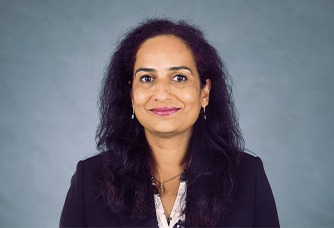
“Energy efficiency forms another key pillar of the company's offering. Tellus Habitat's proprietary technology enables treatment costs of less than ₹6 per 1,000 litres of recycled water while consuming nearly 50 percent less energy than many conventional treatment systems. For organizations seeking to reduce both operating expenses and freshwater dependence, this translates into tangible long-term savings”, says Dr. Seema Sukhani, Director.
Automation has also transformed the way facilities manage wastewater operations. By significantly reducing human intervention, the company has minimized worker exposure to wastewater while simplifying day-to-day plant management.
Today, more than 50 Tellus Habitat systems operate across different parts of the country with virtually no manual intervention, enabling customers to achieve operational expenditure savings of nearly 70 percent compared to conventional systems.
“This combination of regulatory compliance, operational efficiency, and resource conservation has positioned Tellus Habitat as a trusted technology partner for organizations looking to strengthen their sustainability initiatives without compromising on performance”, adds Dr. Seema Sukhani.
From Commercial Infrastructure to Community Impact
Over the years, Tellus Habitat has delivered projects for several leading organizations, including Prestige Group, Century, Radisson Group, Saint-Gobain, and Gokuldas. While these engagements reflect the industry's confidence in its technology, one of the company's most meaningful contributions lies in public sanitation.
Recognizing that many public sanitation facilities, particularly in tourism destinations and underserved regions, lack adequate wastewater treatment infrastructure, Tellus Habitat developed a compact decentralized blackwater treatment system capable of recycling wastewater directly at the source. The treated water is then reused for flushing, significantly reducing freshwater consumption while improving sanitation management.
Tellus Habitat has demonstrated that sustainability infrastructure need not be hidden away but can complement contemporary architectural spaces
The company has already implemented successful pilot projects across multiple public sanitation facilities in Odisha and is now working towards expanding the solution further. For the leadership team, this initiative represents the original vision behind the company - bringing decentralized wastewater treatment closer to communities and demonstrating that sustainable sanitation can be both practical and scalable.
Among its notable milestones, the company was selected by the Department for Promotion of Industry and Internal Trade (DPIIT), leading to an invitation to the prestigious Republic Day 'At Home' Reception hosted by the Hon'ble President of India. While such recognitions are encouraging, the company measures success primarily through the scale of environmental impact it creates.
Expanding the Vision for Circular Waste Management
Tellus Habitat’s future roadmap includes expanding into solid waste management, developing treatment solutions for diverse industrial effluents, and strengthening its predictive maintenance capabilities through artificial intelligence and machine learning.
At the same time, the company is exploring ways to create value from treatment by-products by building market linkages for recycled water, compost, and other recoverable resources. The objective is not merely to treat waste but to transform it into usable assets that deliver economic as well as environmental returns for customers.
With plans to significantly expand installations over the coming years, Tellus Habitat remains focused on strengthening decentralized infrastructure that enables organizations and communities to manage waste where it is generated.
As water security, resource efficiency, and circular economy principles become central to India's sustainability agenda, the company's technology-led approach positions it to play an increasingly important role in shaping the future of decentralized wastewater and waste management.




We use cookies to ensure you get the best experience on our website. Read more...